Author: D. Giovanni

  • Scriptures That Every Christian Entrepreneur Should Live By

    Scriptures That Every Christian Entrepreneur Should Live By

    As a Christian entrepreneur, your faith is more than just a personal belief—it’s a guiding force in your business. Integrating biblical principles into your entrepreneurial journey can set you apart and lead to a company that honors God and serves others with integrity and purpose. This post will explore five key scriptures every Christian entrepreneur should live by, providing practical applications for each.

    Integrity in Business

    Proverbs 11:1 – “The Lord detests dishonest scales, but accurate weights find favor with him.”

    Integrity is the cornerstone of a God-honoring business. Proverbs 11:1 reminds us that honesty and fairness are non-negotiable in our dealings. Whether you’re negotiating contracts, setting prices, or interacting with clients, maintaining integrity is essential. Dishonest practices may yield short-term gains, but they erode trust and undermine the foundation of your business. On the other hand, when you operate with transparency and fairness, you build a reputation that honors God and attracts loyal customers.

    Practical Application: To ensure integrity in your business, be transparent in all transactions. Review your pricing strategies, contracts, and client interactions regularly to ensure they reflect honesty and fairness. When faced with ethical dilemmas, seek guidance through prayer and scriptural reflection, ensuring your decisions align with God’s standards.

    Stewardship of Resources

    Matthew 25:21 – “His master replied, ‘Well done, good and faithful servant! You have been faithful with a few things; I will put you in charge of many things. Come and share your master’s happiness!’”

    As entrepreneurs, we are entrusted with resources—time, money, talents, and opportunities—that we must manage wisely. Matthew 25:21 speaks to the importance of stewardship, reminding us that our resources are gifts from God, and we are called to use them faithfully. Good stewardship involves managing these resources effectively and multiplying them for God’s glory.

    Practical Application: To practice good stewardship, create a budget that aligns with your business goals and reflects your values. Invest in your personal and professional growth, recognizing that enhancing your skills and knowledge is a form of stewardship. Consider ways to give back, whether through charitable contributions, mentoring others, or using your business to serve the community.

    Diligence in Work

    Colossians 3:23 – “Whatever you do, work at it with all your heart, as working for the Lord, not for human masters.”

    Diligence and excellence are marks of a Christian entrepreneur. Colossians 3:23 calls us to work with all our hearts as if we were working for the Lord Himself. This mindset transforms our approach to work, making it an act of worship rather than a means to an end. When we strive for excellence in our businesses, we reflect God’s nature and bring glory to Him.

    Practical Application: To cultivate diligence, set high standards for yourself and your team. Focus on delivering quality products or services, even when it requires going the extra mile. When challenges arise, view them as opportunities to demonstrate perseverance and commitment to excellence. Remember that your work ethic is a testimony of your faith.

    Generosity and Giving

    2 Corinthians 9:7 – “Each of you should give what you have decided in your heart to give, not reluctantly or under compulsion, for God loves a cheerful giver.”

    Generosity is a powerful expression of faith and gratitude. 2 Corinthians 9:7 teaches us that giving should come from the heart, not out of obligation. As Christian entrepreneurs, we can incorporate generosity into our business practices, whether through tithing, supporting charitable causes, or helping those in need. Generosity not only blesses others but also brings joy and fulfillment to the giver.

    Practical Application: Integrate generosity into your business by setting aside a portion of your profits for charitable giving. You can also create initiatives that allow your customers to contribute to a cause with each purchase. Look for ways to support your community through financial contributions or by offering your time and expertise to those in need.

    Faith in God’s Provision

    Matthew 6:33 – “But seek first his kingdom and righteousness, and all these things will be given to you as well.”

    In the fast-paced world of entrepreneurship, getting caught up in pursuing success is easy. However, Matthew 6:33 reminds us to seek God’s kingdom, trusting He will provide for our needs. When we prioritize our faith and align our business practices with God’s will, we can rest assured that He will guide and bless our efforts.

    Practical Application: Make prayer and scripture a daily part of your decision-making process. Before making significant business decisions, seek God’s guidance and wisdom. Trust in His provision, even when the path seems uncertain. By putting God first, you create a foundation of faith that will sustain your business through both triumphs and trials.

    Conclusion

    Christian entrepreneurs have the privilege and responsibility to reflect Christ in our businesses. By living out these scriptures—embracing integrity, practicing good stewardship, working diligently, giving generously, and trusting in God’s provision—we can build businesses that succeed and glorify God. Reflect on these verses and consider how to integrate these biblical principles into your entrepreneurial journey.

    Call to Action: What scriptures have guided you in your business? Please share your experiences in the comments below, and let’s inspire each other to live out our faith in every aspect of our entrepreneurial endeavors.


  • Building a Financial Legacy – Biblical Principles for Wealth Management

    Building a Financial Legacy – Biblical Principles for Wealth Management

    A financial legacy is more than just the wealth you leave behind; it’s the impact of your financial decisions on future generations. For Christians, building a financial legacy isn’t just about accumulating wealth—it’s about aligning financial practices with biblical principles. By managing resources wisely, giving generously, and planning for the future, you can create a legacy that honors God and provides for your family and community.

    The Biblical Foundation of Stewardship

    Stewardship is a foundational concept in the Bible, emphasizing that everything we have belongs to God, and we are merely caretakers of His resources. In Genesis 1:28, God gives humanity dominion over the earth, entrusting us with its care. This responsibility extends to how we manage our finances. Jesus’ parable of the talents in Matthew 25:14-30 further illustrates the importance of being faithful stewards. In the parable, servants are given different amounts of money to manage, and those who invest wisely are rewarded. This teaches us that God expects us to manage our resources responsibly, multiplying them for His glory.

    Generosity as a Key Component

    Generosity is at the heart of a biblical financial legacy. The Bible consistently teaches that giving is an act of obedience and a way to bless others and build God’s kingdom. In 2 Corinthians 9:6-7, Paul encourages believers to give cheerfully and generously, promising that those who sow will also reap sparingly, while those who sow generously will reap generously. By incorporating generosity into your financial legacy, you’re accumulating wealth and investing in eternal treasures. Generosity also teaches future generations the value of selflessness and the importance of using wealth to serve others.

    Planning for Future Generations

    Planning for the future is one of the most critical aspects of building a financial legacy, particularly for your children and grandchildren. Proverbs 13:22 says, “A good person leaves an inheritance for their children’s children, but a sinner’s wealth is stored up for the righteous.” This verse highlights the importance of accumulating wealth and ensuring it benefits future generations.

    To leave a lasting financial legacy, it’s essential to plan wisely. This involves creating a will, setting up trusts, and considering life insurance to protect your family’s financial future. Additionally, teaching your children biblical financial principles is crucial. By modeling good stewardship, generosity, and economic responsibility, you equip the next generation to manage wealth in a way that honors God.

    Managing Wealth with Integrity

    Integrity is a core biblical value, and it’s essential in wealth management. Proverbs 10:9 reminds us, “Whoever walks in integrity walks securely, but whoever takes crooked paths will be found out.” Building a lasting financial legacy requires honest and ethical economic practices. This means avoiding deceitful business practices, being transparent in your dealings, and ensuring that your financial growth doesn’t come at the expense of others.

    A financial legacy built on integrity honors God and is a powerful example to others. When your family, community, and business associates see that your financial success is rooted in ethical practices, it reinforces the value of living according to biblical principles. This legacy is not just about wealth but about building a reputation that reflects the character of Christ.

    The Eternal Perspective on Wealth

    While building a financial legacy is important, it’s essential to maintain an eternal perspective. Jesus teaches in Matthew 6:19-21, “Do not store up for yourselves treasures on earth, where moths and vermin destroy, and where thieves break in and steal. But store up for yourselves treasures in heaven, where moths and vermin do not destroy, and where thieves do not break in and steal. For where your treasure is, there your heart will be also.”

    This passage challenges us to consider how our financial decisions impact this life and eternity. A genuinely lasting financial legacy invests in the things of God—spreading the Gospel, helping those in need, and supporting ministries that advance the kingdom of God. By prioritizing spiritual wealth over material wealth, you build a legacy that transcends generations and impacts eternity.

    Practical Steps for Building a Biblical Financial Legacy

    Building a financial legacy grounded in biblical principles requires practical action. Here are some steps you can take:

    1. Budget Wisely: Create and follow a budget that reflects your values, prioritizing generosity, savings, and responsible spending. Use tools and resources that align with biblical principles to manage your finances effectively.
    2. Invest with Integrity: Choose investment opportunities that align with your Christian values. Consider socially responsible investing and avoid industries that conflict with your faith.
    3. Plan Your Estate: Create a will and set up trusts to ensure your wealth is distributed according to biblical principles. Consider how your financial resources can continue to support God’s work even after you’re gone.
    4. Teach and Mentor: Pass biblical financial wisdom to your children and others. Teach them the principles of stewardship, generosity, and ethical wealth management, ensuring that your legacy extends beyond your lifetime.
    5. Seek God’s Guidance: Continually seek God’s wisdom in your financial decisions. Pray for guidance and be open to the Holy Spirit’s leading in managing and distributing your wealth.

    Conclusion

    Building a financial legacy is about more than accumulating wealth—living according to God’s principles and ensuring that your financial decisions reflect your faith. By practicing good stewardship, living with integrity, and keeping an eternal perspective, you can create a legacy that honors God and blesses future generations. As you continue on this journey, remember to seek God’s guidance in every decision, trusting that He will lead you in building a legacy that reflects His love and faithfulness.

    May your financial legacy be a testament to the power of living according to biblical principles, and may it inspire others to do the same.

  • 25 Affirmations : Trusting God in Your Financial Journey – Overcoming Fear and Anxiety

    25 Affirmations : Trusting God in Your Financial Journey – Overcoming Fear and Anxiety

    1. “I trust in God’s provision for all my financial needs.
    2. “God’s peace guards my heart and mind in times of financial stress.
    3. “I release my financial worries to God and rest in His promises.”
    4. “My faith in God is greater than my fear of financial uncertainty.”
    5. “I make financial decisions with confidence, knowing God is with me.”
    6. “I trust that God’s plans for my finances are good and perfect.”
    7. “I am free from the anxiety of money, trusting God to guide me.”
    8. “God is my provider, and I rely on His wisdom in financial matters.”
    9. “I choose faith over fear in my financial journey.”
    10. “God’s Word is my guide, and I trust Him to lead me financially.”
    11. “I find peace in knowing that God cares for all my needs.”
    12. “I am confident that God will supply all my needs according to His riches.”
    13. “I face financial challenges with courage, trusting in God’s provision.”
    14. “I choose to trust God with my finances and reject the lies of fear.”
    15. “My security is in God, not in my bank account.”
    16. “I surrender my financial future to God and trust in His perfect plan.”
    17. “I am content with what I have, knowing God will provide more when needed.”
    18. “I trust God to open doors of opportunity in my financial life.”
    19. “God’s peace fills my heart as I trust Him with my finances.”
    20. “I reject financial anxiety and embrace God’s peace in all circumstances.”
    21. “I trust in God’s timing and provision for every financial need.”
    22. “I rely on God’s wisdom in every financial decision I make.”
    23. “I am free from the fear of lack, trusting God to supply abundantly.”
    24. “I choose to live in the peace of God, free from financial stress.”
    25. “God’s faithfulness in the past gives me confidence for my financial future.”

    Closing Prayer:

    “Heavenly Father, we come before You today, acknowledging that You are our provider and source of all things. We thank You for Your unwavering faithfulness and Your promises that assure us of Your care. Lord, we ask for Your peace to fill our hearts as we navigate our financial journey. Help us to trust in Your provision and to release our fears and anxieties to You.

    Teach us to rely on Your wisdom in every financial decision we make. Guide our steps as we seek to honor You with our resources. Give us the courage to face financial challenges with faith, knowing that You are with us and that Your plans for us are good.

    Lord, we surrender our financial worries to You. Replace our fears with confidence in Your ability to provide. May we experience the freedom that comes from trusting fully in You, and may our lives reflect Your peace and purpose.

    We thank You for Your love, Your guidance, and Your provision. In Jesus’ name, we pray. Amen.”

  • Biblical Meaning of #4

    Biblical Meaning of #4

    The number 4 in the Bible is rich in symbolism and is often associated with themes of creation, the earth, completeness, and universality. It represents the physical world, the order of creation, and the fullness of God’s creative work. Let’s explore these themes in greater detail:

    1. Creation and the Physical World

    • The Four Corners of the Earth: The number 4 frequently symbolizes the physical creation and the earth itself. In various biblical passages, the “four corners of the earth” are mentioned, representing the entirety of the world and all directions—north, south, east, and west (Isaiah 11:12; Revelation 7:1). This expression underscores the concept of the earth’s totality and the vastness of God’s creation, encompassing all nations and peoples.
    • The Four Elements: In the ancient world, the number 4 was often associated with the four basic elements of creation: earth, air, fire, and water. These elements were believed to make up the physical world, and their harmonious interaction was seen as essential for the sustenance of life. While the Bible does not explicitly reference these four elements in this manner, the number 4 is nonetheless tied to the physical components of the created order.

    2. Completeness and Universality

    • The Four Seasons: The number 4 is also connected to the cycle of seasons—spring, summer, autumn, and winter. These four seasons represent the completeness of time and the cyclical nature of God’s creation. The changing seasons symbolize the order and predictability that God has established in the world, as well as the full range of human experience.
    • Universality and Inclusivity: The number 4 can also signify universality and the inclusion of all creation in God’s plan. For example, in the vision of the four living creatures in Revelation 4:6-8, each creature represents a different aspect of creation—a lion (wild animals), an ox (domestic animals), a man (humanity), and an eagle (birds). These four creatures, standing around God’s throne, symbolize the entire created order, all of which is subject to God’s authority and part of His universal kingdom.

    3. Order and Structure

    • The Four Gospels: In the New Testament, the four Gospels—Matthew, Mark, Luke, and John—provide a complete and ordered account of the life, ministry, death, and resurrection of Jesus Christ. Each Gospel presents a unique perspective, yet together they form a comprehensive and harmonious portrayal of Christ’s mission on earth. The number 4, in this context, symbolizes the completeness and order of the Gospel message as it covers every aspect of Jesus’ life and teachings.
    • The Four Pillars: The Bible often uses the number 4 to describe structural elements that represent stability and strength. In Solomon’s temple, there were four pillars that supported the portico (1 Kings 7:15). These pillars were foundational to the structure, symbolizing the strength and stability of God’s house. Similarly, the number 4 can represent the foundational truths that support the faith and practice of believers.

    4. God’s Creative Works

    • Four Rivers of Eden: In the book of Genesis, the Garden of Eden is described as being watered by a river that divides into four headwaters—Pishon, Gihon, Tigris, and Euphrates (Genesis 2:10-14). These four rivers represent the life-giving abundance of God’s creation, flowing out to nourish the earth. The number 4 here symbolizes the completeness and sufficiency of God’s provision for His creation.
    • Four Directions of the Wind: In the Bible, the four winds are often mentioned as coming from the four directions of the earth (Jeremiah 49:36; Ezekiel 37:9; Revelation 7:1). These winds are seen as agents of God’s power and judgment, capable of bringing blessings or calamities upon the earth. The number 4, in this context, signifies the comprehensive nature of God’s sovereignty over the entire world.

    5. Judgment and Authority

    • Four Horsemen of the Apocalypse: In the book of Revelation, the four horsemen of the apocalypse symbolize God’s judgment upon the earth (Revelation 6:1-8). Each horseman represents a different aspect of divine judgment—conquest, war, famine, and death. The number 4 here is associated with the completeness of God’s authority to judge the world and bring about the fulfillment of His divine plan.
    • Four Beasts in Daniel’s Vision: In the book of Daniel, the prophet sees a vision of four beasts, each representing a different kingdom that will rise and fall before the establishment of God’s eternal kingdom (Daniel 7:3-7). These four beasts symbolize the totality of human power and authority that ultimately gives way to God’s sovereign rule. The number 4 in this vision highlights the completeness of God’s control over history and the destiny of nations.

    6. Spiritual and Moral Foundation

    • Four Points of the Cross: The number 4 is often associated with the cross of Christ, which has four points extending in four directions. This imagery represents the universal reach of Christ’s sacrifice, extending to all corners of the earth and offering salvation to all humanity. The cross’s four points also symbolize the completeness of God’s redemptive work, touching every aspect of human life.
    • Four Dimensions of God’s Love: In Ephesians 3:18, Paul prays that believers may “grasp how wide and long and high and deep is the love of Christ.” These four dimensions symbolize the fullness and completeness of God’s love, which surpasses all understanding. The number 4 here represents the boundless nature of God’s love and its ability to reach every person, no matter their circumstances.

    7. Prophetic Significance

    • Four Kingdoms in Nebuchadnezzar’s Dream: In the book of Daniel, King Nebuchadnezzar dreams of a statue made of four different materials, each representing a successive kingdom (Daniel 2:31-45). The number 4 here represents the completeness of human history and the progression of world empires, leading to the eventual establishment of God’s eternal kingdom. This prophetic vision underscores God’s sovereignty over the rise and fall of nations.
    • Four Living Creatures in Ezekiel’s Vision: In Ezekiel’s vision, he sees four living creatures, each with four faces and four wings (Ezekiel 1:5-10). These creatures represent God’s omnipresence and His authority over all creation. The number 4, in this vision, symbolizes the completeness of God’s rule and the universal reach of His power.

    8. God’s Providence and Provision

    • Four-fold Provision: The number 4 is often associated with God’s provision for His people. In the wilderness, God provided the Israelites with manna for four decades, sustaining them throughout their journey to the Promised Land (Exodus 16:35). This fourfold provision represents the completeness of God’s care and His faithfulness in meeting the needs of His people.
    • Four-fold Redemption: In Exodus 6:6-7, God promises the Israelites a four-fold redemption: “I will bring you out…I will rescue you…I will redeem you…I will take you as My people.” These four promises signify the complete and total deliverance that God offers to His people, highlighting the comprehensive nature of His salvation plan.

    9. Completeness in Creation

    • Fourfold Witness: The Bible sometimes uses the number 4 to emphasize the completeness of a testimony or witness. For example, in the Gospels, there are four women specifically mentioned at the cross of Jesus (John 19:25). This fourfold witness underscores the completeness of the testimony to Christ’s crucifixion, ensuring that it is fully attested and remembered.
    • Four Living Beings Around God’s Throne: In the book of Revelation, the four living beings around God’s throne represent the entirety of creation worshiping God (Revelation 4:6-8). These beings—each with a different appearance—symbolize all of God’s creation giving Him glory, honor, and praise. The number 4, therefore, is a symbol of the completeness and universality of worship that is due to God.

    10. Moral Integrity and Law

    • Four Tenets of Moral Law: The number 4 can also be associated with moral integrity and the law. In the Ten Commandments, the first four commandments deal with our relationship with God (Exodus 20:3-11), while the remaining six address our relationships with others. The four commandments focused on God emphasize the completeness of our duty to Him—worshiping no other gods, avoiding idolatry, honoring God’s name, and keeping the Sabbath holy.
    • Four Virtues of a Righteous Life: The Bible often presents lists of four virtues or qualities that characterize a righteous life. For example, in Philippians 4:8, Paul exhorts believers to focus on “whatever is true, whatever is noble, whatever is right, whatever is pure.” These four virtues represent the completeness of a life lived in accordance with God’s will, reflecting moral integrity and spiritual wholeness.

    11. Symbol of Universality

    • Four Corners of the Earth: The phrase “four corners of the earth” is used metaphorically in the Bible to represent the entire world. This symbolism signifies the universality of God’s sovereignty and the global reach of His power and authority. It also reflects the inclusion of all peoples in God’s redemptive plan, as His love and salvation extend to every corner of the globe.
    • Four Directions of the Wind: The Bible frequently mentions the four winds—north, south, east, and west—as symbols of God’s control over the natural world (Jeremiah 49:36; Matthew 24:31). These winds represent the farthest reaches of the earth and the comprehensive nature of God’s authority over creation. The number 4, in this context, signifies the universality of God’s influence and His ability to direct the course of history.

    In summary, the number 4 in the Bible is deeply symbolic, representing the earth, creation, completeness, and universality. It signifies the totality of God’s creation, the fullness of His provision, and the completeness of His plan for the world. The number 4 underscores God’s sovereignty over the physical and moral order of the universe, as well as His comprehensive care for all creation. Through this number, the Bible communicates the idea of divine order, stability, and the inclusion of all people and nations in God’s eternal plan.

    4o

  • Debt Management and Spiritual Freedom – A Biblical Approach

    Debt Management and Spiritual Freedom – A Biblical Approach

    A financial legacy is more than just the wealth you leave behind; it’s the impact of your financial decisions on future generations. For Christians, building a financial legacy isn’t just about accumulating wealth—it’s about aligning financial practices with biblical principles. By managing resources wisely, giving generously, and planning for the future, you can create a legacy that honors God and provides for your family and community.

    The Biblical Foundation of Stewardship

    Stewardship is a foundational concept in the Bible, emphasizing that everything we have belongs to God, and we are merely caretakers of His resources. In Genesis 1:28, God gives humanity dominion over the earth, entrusting us with its care. This responsibility extends to how we manage our finances. Jesus’ parable of the talents in Matthew 25:14-30 further illustrates the importance of being faithful stewards. In the parable, servants are given different amounts of money to manage, and those who invest wisely are rewarded. This teaches us that God expects us to manage our resources responsibly, multiplying them for His glory.

    Generosity as a Key Component

    Generosity is at the heart of a biblical financial legacy. The Bible consistently teaches that giving is an act of obedience and a way to bless others and build God’s kingdom. In 2 Corinthians 9:6-7, Paul encourages believers to give cheerfully and generously, promising that those who sow will also reap sparingly, while those who sow generously will reap generously. By incorporating generosity into your financial legacy, you’re accumulating wealth and investing in eternal treasures. Generosity also teaches future generations the value of selflessness and the importance of using wealth to serve others.

    Planning for Future Generations

    Planning for the future is one of the most critical aspects of building a financial legacy, particularly for your children and grandchildren. Proverbs 13:22 says, “A good person leaves an inheritance for their children’s children, but a sinner’s wealth is stored up for the righteous.” This verse highlights the importance of accumulating wealth and ensuring it benefits future generations.

    To leave a lasting financial legacy, it’s essential to plan wisely. This involves creating a will, setting up trusts, and considering life insurance to protect your family’s financial future. Additionally, teaching your children biblical financial principles is crucial. By modeling good stewardship, generosity, and economic responsibility, you equip the next generation to manage wealth in a way that honors God.

    Managing Wealth with Integrity

    Integrity is a core biblical value, and it’s essential in wealth management. Proverbs 10:9 reminds us that “Whoever walks in integrity walks securely, but whoever takes crooked paths will be found out.” Building a lasting financial legacy requires honest and ethical financial practices. This means avoiding deceitful business practices, being transparent in your dealings, and ensuring that your financial growth doesn’t come at the expense of others.

    A financial legacy built on integrity honors God and serves as a powerful example to others. When your family, community, and business associates see that your financial success is rooted in ethical practices, it reinforces the value of living according to biblical principles. This legacy is not just about wealth but about building a reputation that reflects the character of Christ.

    The Eternal Perspective on Wealth

    While building a financial legacy is important, it’s essential to maintain an eternal perspective. Jesus teaches in Matthew 6:19-21, “Do not store up for yourselves treasures on earth, where moths and vermin destroy, and where thieves break in and steal. But store up for yourselves treasures in heaven, where moths and vermin do not destroy, and where thieves do not break in and steal. For where your treasure is, there your heart will be also.”

    This passage challenges us to consider how our financial decisions impact this life and eternity. A genuinely lasting financial legacy invests in the things of God—spreading the Gospel, helping those in need, and supporting ministries that advance the kingdom of God. By prioritizing spiritual wealth over material wealth, you build a legacy that transcends generations and impacts eternity.

    Practical Steps for Building a Biblical Financial Legacy

    Building a financial legacy grounded in biblical principles requires practical action. Here are some steps you can take:

    1. Budget Wisely: Create and follow a budget that reflects your values, prioritizing generosity, savings, and responsible spending. Use tools and resources that align with biblical principles to manage your finances effectively.
    2. Invest with Integrity: Choose investment opportunities that align with your Christian values. Consider socially responsible investing and avoid industries that conflict with your faith.
    3. Plan Your Estate: Create a will and set up trusts to ensure that your wealth is distributed according to biblical principles. Consider how your financial resources can continue to support God’s work even after you’re gone.
    4. Teach and Mentor: Pass biblical financial wisdom to your children and others. Teach them the principles of stewardship, generosity, and ethical wealth management, ensuring that your legacy extends beyond your lifetime.
    5. Seek God’s Guidance: Continually seek God’s wisdom in your financial decisions. Pray for guidance and be open to the Holy Spirit’s leading in managing and distributing your wealth.

    Conclusion

    Building a financial legacy is about more than accumulating wealth—it is about living according to God’s principles and ensuring that your financial decisions reflect your faith. By practicing good stewardship, living with integrity, and keeping an eternal perspective, you can create a legacy that honors God and blesses future generations. As you continue on this journey, remember to seek God’s guidance in every decision, trusting that He will lead you in building a legacy that reflects His love and faithfulness.

    May your financial legacy be a testament to the power of living according to biblical principles, and may it inspire others to do the same.

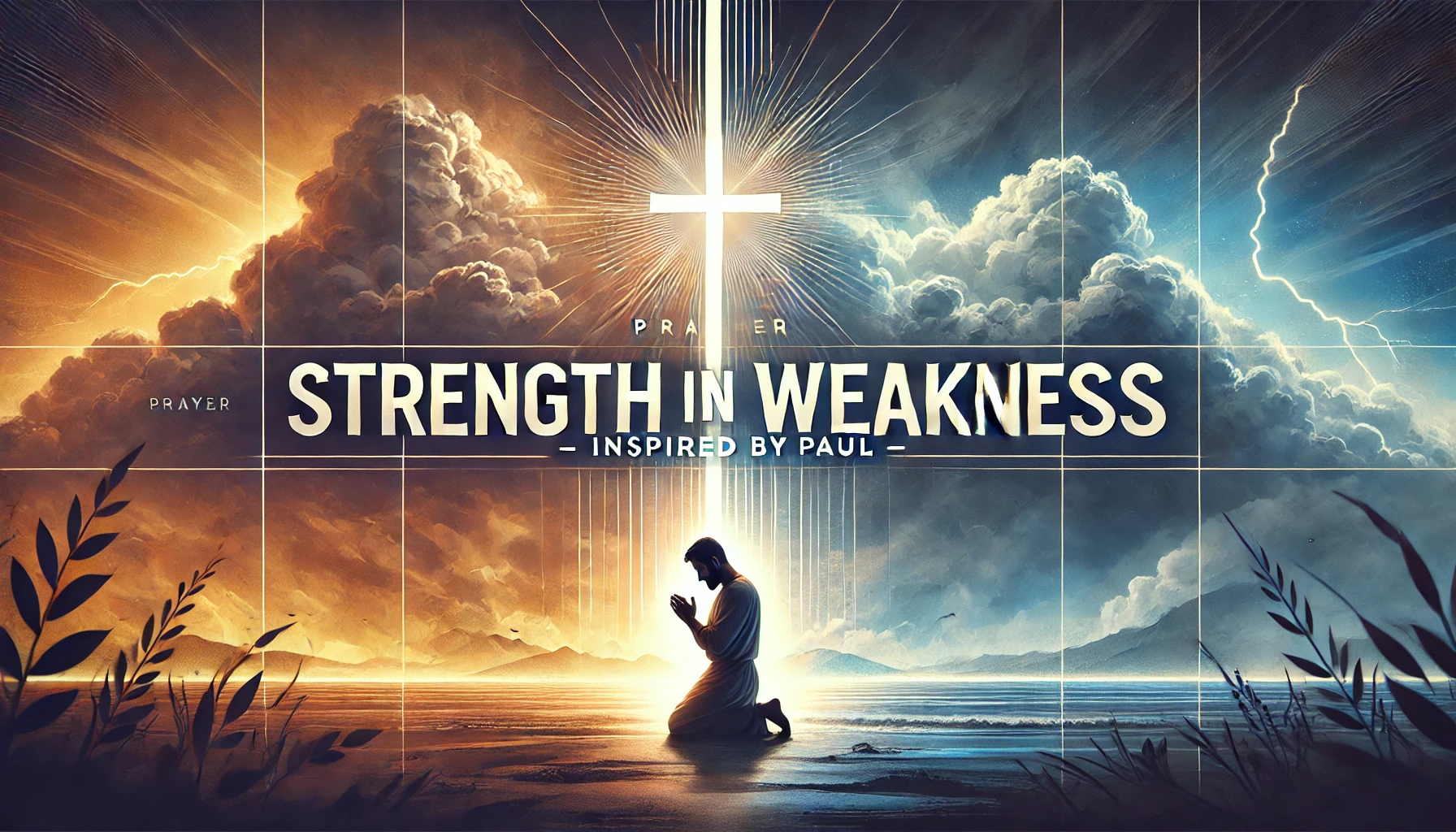
  • Prayer: Strength in Weakness – Inspired by Paul

    Prayer: Strength in Weakness – Inspired by Paul

    Opening Acknowledgment of God’s Power:
    Heavenly Father, I come before You acknowledging that You are the source of all strength and power. You are the One who sustains me through every trial, and I praise You for being my refuge and fortress, especially in times of weakness. Your power is made perfect in my weakness, and for that, I am grateful.

    Reflection on Paul’s Experience:
    Lord, I reflect on the words of Your servant Paul, who, despite his trials, found strength in You. He proclaimed in 2 Corinthians 12:9-10, “But he said to me, ‘My grace is sufficient for you, for my power is made perfect in weakness.’ Therefore I will boast all the more gladly about my weaknesses, so that Christ’s power may rest on me.” Paul’s life teaches me that in my own moments of frailty, Your power is revealed.

    Confession of Human Frailty:
    Father, I confess my weaknesses and the areas of my life where I have struggled and felt inadequate. There have been times when I have tried to rely on my own strength, only to find myself overwhelmed. I ask for Your forgiveness for these moments of pride and self-reliance. I acknowledge that apart from You, I can do nothing (John 15:5).

    Petition for God’s Strength:
    Lord, I ask that You fill me with Your strength in these areas of weakness. Let Your power rest upon me as it did with Paul. I pray that in every challenge I face, I would lean on You, knowing that Your grace is sufficient for me. Empower me to face these challenges with faith, resilience, and a deep trust in Your ability to carry me through.

    Meditation on Scripture:
    As I meditate on 2 Corinthians 12:9, I am comforted by Your words, “My grace is sufficient for you, for my power is made perfect in weakness.” This truth brings me assurance that even in my weakest moments, Your strength is at work in me. I also find hope in Isaiah 40:29, which says, “He gives strength to the weary and increases the power of the weak.” These scriptures remind me that I am never alone in my struggles.

    Prayer for Grace and Endurance:
    Father, I ask for Your grace to endure the trials and challenges I face. Help me to rely not on my strength but on Yours. When I feel weak, remind me that Your grace is sufficient. Grant me the perseverance to continue trusting in Your power, even when I feel like giving up. May Your strength be my shield and fortress.

    Affirmation of Trust in God’s Plan:
    Lord, I affirm my trust in Your plan. I believe that You work through my weaknesses to accomplish Your purposes. I declare my faith in Your ability to turn my weaknesses into opportunities for Your glory. As Paul did, I choose to boast in my weaknesses, knowing that it is in these moments that Your power is most clearly displayed.

    Expression of Gratitude:
    Thank You, Father, for Your grace and strength, which sustain me through every trial. I am grateful for the lessons I have learned in my weaknesses and for the ways Your power has been revealed in my life. Thank You for being my strength when I am weak, and for always being there to lift me up.

    Closing Commitment:
    Lord, I commit to embracing my weaknesses as opportunities for Your strength to be displayed. I declare my intent to rely on Your power in all areas of my life, trusting in Your sufficiency. May my life be a testimony of Your grace and power, and may others see Your strength in my weakness.

    In Jesus’ Name, Amen:
    In the name of Jesus, I seal this prayer, trusting that Your strength will continue to uphold me and carry me through every challenge. Amen.

  • Coming Soon

  • Submission to God’s Will Inspired by Mary the Mother of Jesus

    Submission to God’s Will Inspired by Mary the Mother of Jesus

    Opening Acknowledgment of God’s Sovereignty:
    Heavenly Father, I come before You, acknowledging Your supreme authority over all things. You are the Creator and Sustainer of the universe, and Your plans are perfect. I praise You for Your wisdom and the goodness of Your will for my life, trusting that You know what is best for me.

    Reflection on Mary’s Submission:
    Lord, I reflect on the humility and faith of Mary, who, when approached by the angel Gabriel, responded with grace and submission to Your will. Despite the uncertainties and the challenges that lay ahead, Mary accepted Your plan, saying, “I am the Lord’s servant. May your word to me be fulfilled” (Luke 1:38). Her example teaches me the importance of trusting in Your plan, even when it is difficult or unclear.

    Confession of Resistance to God’s Will:
    Father, I confess that there have been times when I have resisted Your will. Out of fear, pride, or a desire for control, I have struggled to submit to Your plans for my life. Please forgive me for these moments of hesitation and doubt. Help me to release my need for control and to trust fully in Your wisdom and timing.

    Petition for a Heart of Humility and Submission:
    Lord, I ask that You cultivate in me a heart of humility, like Mary’s, that is open and willing to submit to Your will. Grant me the grace to accept Your plans, even when they challenge my understanding or expectations. May I always be ready to say, “Let it be to me according to Your word,” just as Mary did.

    Meditation on Scripture:
    As I meditate on Luke 1:38, I am reminded of the beauty of surrendering to Your will. Mary’s response to the angel Gabriel was one of complete trust and obedience, despite the unknowns she faced. Help me to follow her example, surrendering my life to Your plans and trusting in Your goodness.

    Prayer for Strength and Faith:
    Father, I pray for the strength to follow Your will with faith and grace, especially in times of uncertainty or difficulty. Give me the courage to trust in Your plans, even when the path is unclear or challenging. Remind me that Your grace is sufficient, and that Your power is made perfect in my weakness (2 Corinthians 12:9).

    Affirmation of Trust in God’s Plan:
    Lord, I affirm my trust in Your perfect plan for my life. I declare my willingness to follow wherever You lead, knowing that You work all things together for my good (Romans 8:28). I commit to living with the same spirit of surrender that Mary exemplified, trusting that Your will is always best.

    Expression of Gratitude:
    Thank You, Lord, for the example of Mary and for the ways You are working in my life. I am grateful for Your guidance and for the peace that comes from submitting to Your will. Thank You for being a faithful and loving God, who desires what is best for me.

    Closing Commitment:
    Father, I commit to pursuing Your will above all else. Help me to live a life of faith, humility, and submission to Your plan. I trust in Your wisdom and timing, and I declare my intent to follow Your lead in every aspect of my life.

    In Jesus’ Name, Amen:
    In the powerful name of Jesus, I seal this prayer, trusting that You will provide the strength and grace needed to follow Your will. Amen.

    4o

  • Biblical Meaning of  #1

    Biblical Meaning of #1

    1. Unity and Oneness of God

    The number 1 is the foundational number in the Bible, symbolizing the unity and oneness of God. In Deuteronomy 6:4, it is declared, “Hear, O Israel: The Lord our God, the Lord is one.” This verse, part of the Shema, is a central declaration in Jewish tradition, emphasizing that there is only one true God, undivided and sovereign over all creation. This idea of oneness reflects God’s unique and unmatched authority in the universe.

    2. Primacy and Sovereignty

    The number 1 also signifies primacy, the first and foremost position. It is associated with God’s sovereign rule over all things. In the creation narrative (Genesis 1), the number 1 is linked to the first day when God brought light into existence, separating it from darkness. This act of creation on the first day symbolizes God as the initiator of all things, the One who precedes everything and from whom all life originates.

    3. Singularity of Purpose

    The number 1 can also represent singularity of purpose and direction. Jesus emphasized the importance of having a single focus when He said in Matthew 6:22, “The eye is the lamp of the body. If your eyes are healthy, your whole body will be full of light.” Here, “healthy” or “single” eyes symbolize a pure, undivided focus on God and His righteousness, leading to a life filled with spiritual light.

    4. Beginning and New Beginnings

    The number 1 is often associated with beginnings and new starts in the Bible. The first book of the Bible, Genesis, is the book of beginnings, describing the creation of the world, the start of humanity, and the initiation of God’s covenant relationship with mankind. Likewise, in the New Testament, the Gospel of John begins with “In the beginning was the Word, and the Word was with God, and the Word was God” (John 1:1), emphasizing the role of Christ (the Word) in the creation and the beginning of the new covenant.

    5. Unity in the Body of Christ

    In the New Testament, the concept of oneness is extended to the Church, the body of Christ. Paul writes in Ephesians 4:4-6, “There is one body and one Spirit, just as you were called to one hope when you were called; one Lord, one faith, one baptism; one God and Father of all, who is over all and through all and in all.” This passage highlights the unity and interconnectedness of believers, who are united under one Lord and one God, forming a single, unified body in Christ.

    6. The First Commandment

    The number 1 is also reflected in the first of the Ten Commandments, which declares, “You shall have no other gods before me” (Exodus 20:3). This commandment underscores the exclusivity of worship that is due to God alone, affirming His singular position as the one true deity deserving of all honor and reverence.

    7. The First Adam and the Last Adam

    In biblical theology, Adam is referred to as the first man (1 Corinthians 15:45-49), representing humanity’s initial relationship with God, which was marred by sin. Christ is referred to as the “last Adam” or “second man,” signifying the start of a new humanity, redeemed and restored through His sacrificial death and resurrection. The number 1, in this context, represents both the original creation and the new creation in Christ.

    In summary, the number 1 in the Bible symbolizes God’s ultimate unity, authority, and the beginning of all things. It emphasizes the importance of singular devotion to God, the primacy of His role in creation, and the unity of believers in Christ.

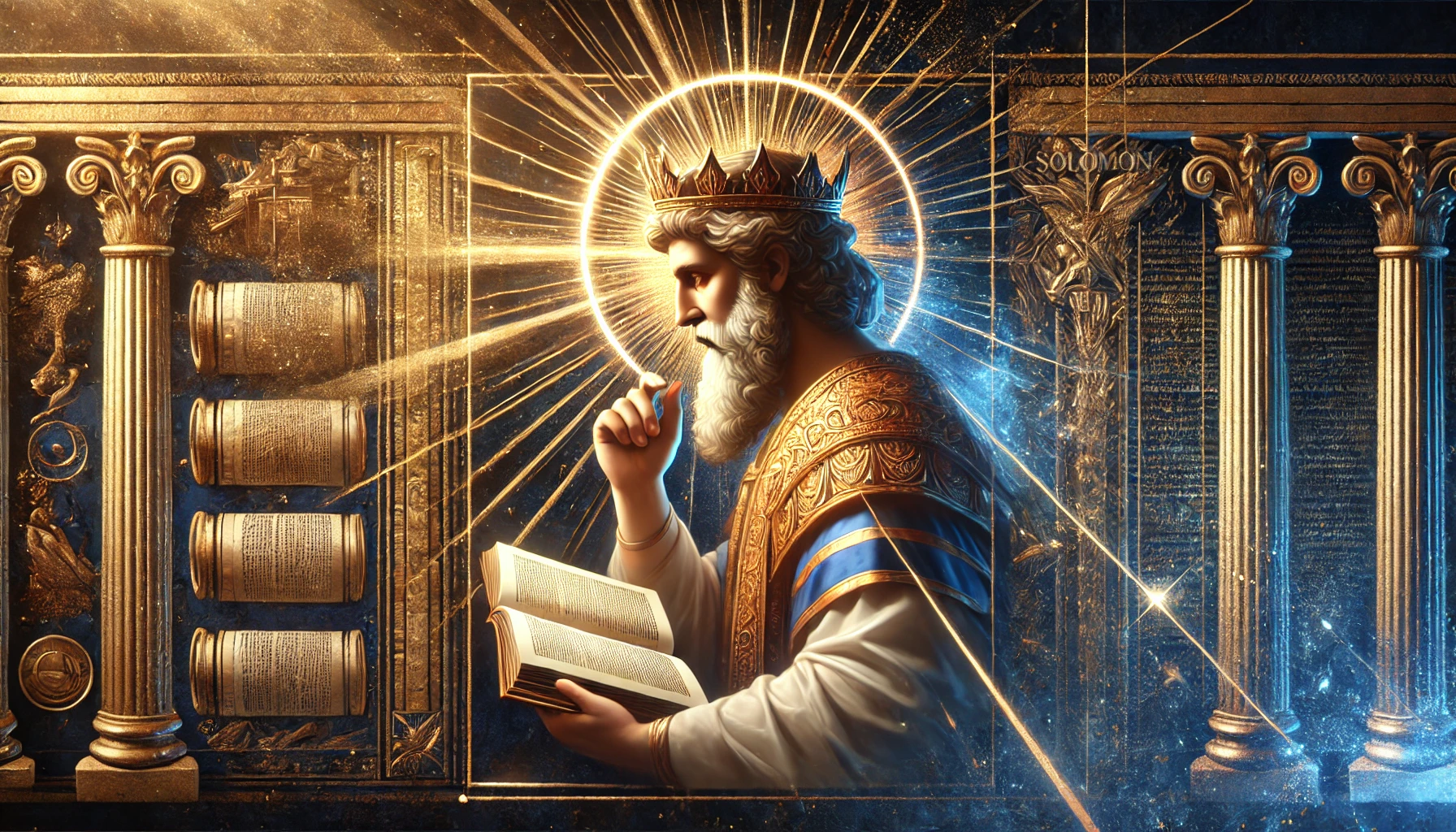
  • Prayer: Wisdom and Understanding – Inspired by Solomon

    Prayer: Wisdom and Understanding – Inspired by Solomon

    Heavenly Father, I come before You, recognizing that all wisdom and understanding flow from You. You are the source of infinite knowledge, and I praise You for Your generous spirit, willing to impart wisdom to those who seek it. You alone know the depths of my heart and the challenges I face, and I thank You for Your guiding hand in my life.

    Lord, I reflect on the story of Solomon, who, when given the opportunity to ask for anything, chose to request wisdom and an understanding heart (1 Kings 3:5-12). Solomon recognized the immense responsibility before him and humbly sought Your guidance to lead his people. His desire for discernment over riches or power serves as a powerful reminder of the value of wisdom in our lives.

    Father, I confess that I have often relied on my own understanding and knowledge rather than seeking Your wisdom first. There have been times when I have made decisions without consulting You, trusting in my judgment rather than Yours. Please forgive me for these moments of pride and self-reliance. Help me to always remember that true wisdom comes from You alone.

    Lord, I humbly ask for Your wisdom and understanding to guide me in every aspect of my life. Just as You granted Solomon wisdom to govern and discern right from wrong, I ask that You grant me the ability to make decisions that align with Your will. Help me to see situations through Your eyes and to act in a way that reflects Your righteousness and love.

    As I meditate on Your Word, I am reminded of the promise in James 1:5, where You assure me that if I lack wisdom, I should ask You, and You will give generously without finding fault. I also reflect on Proverbs 2:6, which says, “For the Lord gives wisdom; from his mouth come knowledge and understanding.” Let these scriptures sink deeply into my heart, guiding me to trust in Your wisdom above all else.

    Father, I ask for a discerning heart that seeks to understand Your will in all matters. Grant me discernment in my relationships, work, and personal decisions, so that I may reflect Your wisdom in all areas of my life. Help me to listen to Your voice and to follow Your guidance, even when it challenges my understanding.


    Lord, I affirm my trust in Your wisdom and Your plan for my life. I commit to seeking Your guidance in every decision, big or small, trusting that You will direct my paths as promised in Proverbs 3:5-6: “Trust in the Lord with all your heart and lean not on your own understanding; in all your ways submit to him, and he will make your paths straight.”

    Thank You, Father, for the wisdom You have already granted me and for the understanding You continue to provide. I am grateful for the example of Solomon and the lessons learned from his life. Thank You for being a God who desires to share Your wisdom with Your children.

    Lord, I commit to continuously seeking Your wisdom and understanding in all aspects of my life. I declare my intent to live by Your principles and to apply Your wisdom in every situation, trusting that Your guidance will lead me on the right path.

    In the powerful name of Jesus, I seal this prayer, confident that You will continue to grant me wisdom and understanding according to Your will. Amen.