Author: D. Giovanni

  • 25 Affirmations : The Widow’s Mite: Giving When It Hurts

    25 Affirmations : The Widow’s Mite: Giving When It Hurts

    1. “I trust God with my finances, knowing He will provide for all my needs.
    2. “I give sacrificially, knowing that my offering pleases God.
    3. “My faith grows stronger each time I give, even when it’s difficult.”
    4. “I am grateful for the opportunity to give, even when it requires sacrifice.”
    5. “God sees my heart and honors my sacrificial giving.”
    6. “I find peace in giving, knowing that God will take care of me.”
    7. “I give not out of abundance, but out of trust in God’s provision.”
    8. “My giving reflects my deep faith and trust in God.”
    9. “I embrace the joy that comes from giving, even when it hurts.”
    10. “God is faithful, and He will meet all my needs as I give generously.”
    11. “I release my fears and trust God with my financial future.”
    12. “My sacrificial giving is an act of worship, honoring God with my resources.”
    13. “I am part of God’s work on earth through my sacrificial generosity.”
    14. “I trust that God will use my gifts to bless others and further His kingdom.”
    15. “I am willing to give, even when it requires sacrifice, because I trust God completely.”
    16. “I find fulfillment in knowing that my giving has eternal significance.”
    17. “God strengthens my faith as I step out in sacrificial giving.”
    18. “I give with a joyful heart, knowing that God values my sacrifice.”
    19. “I am confident that God will provide for me as I prioritize giving.”
    20. “I embrace the peace that comes from aligning my finances with God’s will.”
    21. “My giving is a reflection of my love and devotion to God.”
    22. “I trust in God’s promises, knowing He will reward my faithfulness.”
    23. “I am content with what I have, knowing that God is my provider.”
    24. “My sacrificial giving inspires others to trust God with their resources.”
    25. “I experience the blessings of God’s provision as I give, even when it’s difficult.”

    Closing Prayer:

    “Heavenly Father, we come before You with humble hearts, grateful for the example of the widow’s mite and the powerful lesson it teaches us about sacrificial giving. Lord, we acknowledge that everything we have comes from You, and we thank You for Your abundant provision in our lives. As we give, even when it’s difficult, help us to trust in Your faithfulness and to believe that You will meet all our needs according to Your riches in glory.

    Father, we ask that You strengthen our faith and give us the courage to give sacrificially, knowing that our gifts, no matter how small, are precious in Your sight. Help us to surrender our fears and anxieties to You, and to find peace in the assurance that You are our provider. May our giving be an act of worship that honors You and reflects our deep trust in Your goodness.

    Lord, use our sacrificial gifts to bless others and to further Your kingdom. Let our generosity be a testimony of Your love and a witness to those around us. We pray that our acts of giving will inspire others to trust You more fully and to embrace the joy of living generously.

    Thank You, Lord, for the privilege of giving and for the blessings that come from trusting You with our resources. Fill our hearts with Your peace and joy as we continue to seek Your will in all that we do. In Jesus’ name, we pray. Amen.”

  • 25 Affirmations : The Harvest is Plenty: Reaping the Rewards of Faithful Investing

    25 Affirmations : The Harvest is Plenty: Reaping the Rewards of Faithful Investing

    1. “I trust in God’s perfect timing for my harvest.
    2. “I am planting seeds of faith, love, and wisdom in every area of my life.
    3. “I remain patient and diligent, knowing that a bountiful harvest is coming.”
    4. “I sow good seeds today, believing in a fruitful tomorrow.”
    5. “I am a faithful steward of the resources God has entrusted to me.”
    6. “I am grateful for every season, knowing that each has its purpose.”
    7. “I invest in relationships, knowing that love and care will yield abundant returns.”
    8. “I seek God’s guidance in all my investments, trusting Him to lead me.”
    9. “I celebrate the small victories, recognizing them as steps toward a larger harvest.”
    10. “I wait patiently for God’s blessings, confident in His faithfulness.”
    11. “I plant seeds of generosity, trusting that God will multiply them.”
    12. “I trust that God is working, even when I don’t see immediate results.”
    13. “I invest in my spiritual growth, knowing it will lead to a life of peace and fulfillment.”
    14. “I trust God to bring the increase from the seeds I sow.”
    15. “I am consistent and faithful in my efforts, knowing that diligence leads to abundance.”
    16. “I give thanks in all circumstances, recognizing God’s hand in every season.”
    17. “I trust that every seed I plant in faith will yield a bountiful harvest.”
    18. “I invest with intention, aligning my goals with God’s will.”
    19. “I am content in every season, knowing that God is in control.”
    20. “I trust that God will bring forth a harvest that exceeds my expectations.”
    21. “I remain faithful in my commitments, knowing that perseverance leads to success.”
    22. “I am grateful for the lessons learned in the waiting period.”
    23. “I believe that God’s blessings will overflow in my life as I stay faithful.”
    24. “I sow seeds of kindness, expecting a harvest of love and joy.”
    25. “I trust that God’s plan for my life includes a harvest of peace, prosperity, and purpose.”

    Closing Prayer

    “Heavenly Father, we come before You with hearts full of gratitude for the seeds You have given us to plant. We thank You for the promise of a bountiful harvest, and we trust in Your perfect timing to bring it forth. Lord, help us to remain faithful and patient as we wait for the harvest, knowing that You are always at work in our lives.

    Grant us the wisdom to make decisions that honor You, the diligence to stay committed to the process, and the faith to trust in Your provision. May we recognize and celebrate the small victories along the way, understanding that each step brings us closer to the abundant life You have planned for us.

    Father, we pray for strength in the waiting, for contentment in every season, and for a heart that is always thankful. Let us never grow weary in doing good, but continue to sow seeds of faith, love, and wisdom, believing that You will multiply our efforts and bring forth a harvest that exceeds our expectations.

    We thank You, Lord, for Your faithfulness, Your guidance, and Your blessings. May our lives be a testimony to Your goodness, and may we always trust in Your plan for us. In Jesus’ name, we pray. Amen.”

  • Day 29: Walking in Faith, Not by Sight

    Day 29: Walking in Faith, Not by Sight

    Scripture: 2 Corinthians 5:7 (NIV)
    “For we live by faith, not by sight.

    Revelation:
    In a world that often demands tangible results and visible outcomes, it can be challenging to trust in what we cannot see. However, as believers, we are called to walk by faith, not by sight. This means trusting in God’s promises, even when circumstances seem uncertain or when the path ahead isn’t clear. 2 Corinthians 5:7 encourages us to rely on our faith in God rather than on what is immediately visible to us.

    Direction:
    Today, reflect on any situations in your life where you’re struggling to see God’s hand at work. It could be a situation at work, a relationship, or a personal challenge. Remind yourself that walking by faith means trusting that God is working behind the scenes, even when you can’t see the outcome yet. Spend some time in prayer, asking God to strengthen your faith and to help you trust in His perfect timing. Consider writing down a faith statement for the day—something like, “Today, I choose to trust God, even when I cannot see the way forward.”

    Prayer:
    Lord, I thank You for the gift of faith that allows me to trust in You, even when I cannot see the full picture. Help me to walk by faith today, believing that You are guiding my steps and working all things for my good. Strengthen my faith in the areas where I struggle, and give me the courage to move forward with confidence, knowing that You are with me every step of the way. I trust in Your wisdom and Your plan for my life. In Jesus’ name, I pray. Amen.

  • Day 28: The Power of Gratitude in Financial Stewardship

    Day 28: The Power of Gratitude in Financial Stewardship

    Welcome to Day 28 of our 30-day journey. Today, we will focus on the power of gratitude in financial stewardship. Gratitude is a transformative attitude that shapes how we view and manage our resources. When we approach our finances with gratitude, we recognize that everything we have is a gift from God. This perspective shifts our focus from what we lack to what we have been blessed with, allowing us to steward our resources with a sense of responsibility and thankfulness. Gratitude not only influences how we manage our money but also enhances our overall well-being, leading to greater contentment and joy.

    Revelation:
    Gratitude is essential to financial stewardship. The Bible teaches us to give thanks in all circumstances (1 Thessalonians 5:18), and this includes our financial situations. When we cultivate a heart of gratitude, we acknowledge God as the source of all our blessings. This mindset encourages us to be more generous, to use our resources wisely, and to trust God with our needs. Gratitude helps us to focus on God’s provision rather than on our desires, leading to a life of peace and fulfillment.

    Scripture Reference:
    Colossians 3:17 – “And whatever you do, whether in word or deed, do it all in the name of the Lord Jesus, giving thanks to God the Father through him.”

    This verse emphasizes the importance of giving thanks in everything we do, including how we manage our finances. When we express gratitude in our financial decisions, we honor God and acknowledge His sovereignty over our lives. Gratitude also opens the door to greater blessings, as it aligns our hearts with God’s will and allows us to see His provision in every aspect of our lives.

    Direction:
    Today, take time to reflect on your financial situation and the blessings you have received. Are you approaching your finances with a heart of gratitude, or are you more focused on what you don’t have? Consider how you can incorporate gratitude into your financial stewardship, whether by giving thanks for the resources you have, being generous with others, or making wise decisions that honor God. Ask God to help you develop a heart of gratitude and to use your resources in a way that reflects His goodness.

    Meditation:
    Reflect on the story of the ten lepers in Luke 17:11-19. In this passage, Jesus heals ten lepers, but only one returns to thank Him. Jesus asks, “Were not all ten cleansed? Where are the other nine?” The one who returned to give thanks was a Samaritan, and Jesus tells him, “Rise and go; your faith has made you well.”

    This story highlights the importance of gratitude. The leper who returned to thank Jesus not only received physical healing but also experienced a deeper spiritual blessing. Gratitude is not just about saying “thank you”; it’s about recognizing God’s work in our lives and responding with a heart of worship. As you meditate on this story, ask yourself: Am I like the one leper who returned to give thanks, or am I more like the nine who received blessings but forgot to express gratitude? Consider how you can cultivate a habit of gratitude in your financial life, recognizing and thanking God for His provision.

    Prayer:
    “Lord, I thank You for the many blessings You have given me, including the financial resources You have entrusted to my care. I confess that there are times when I focus more on what I lack than on what I have. Help me to develop a heart of gratitude, to recognize Your provision in my life, and to steward my resources in a way that honors You. Teach me to be generous with what I have, knowing that everything I possess is a gift from You. May my gratitude be a testimony of Your goodness and a reflection of my trust in Your faithfulness. In Jesus’ name, Amen.”

    Deeper Reflection:
    After your prayer, take some time to write down specific financial blessings you are thankful for. These could be big or small, such as a steady income, the ability to give, or even the lessons learned through financial challenges. Reflect on how these blessings have impacted your life and how you can use them to bless others. Consider starting a gratitude journal where you regularly record the ways God has provided for you financially and spiritually. This practice can help you maintain a heart of gratitude and trust in God’s ongoing provision.

    Action Step:
    As a practical step, commit to expressing gratitude in your financial decisions this week. Before making a purchase, giving a gift, or creating a budget, take a moment to thank God for the resources you have. Consider how you can use your finances to bless others, whether through charitable giving, supporting a friend in need, or simply being generous in your everyday interactions. Additionally, share your gratitude with others—whether by thanking someone who has blessed you financially or by sharing your testimony of God’s provision with those around you.

    Closing Thought:
    Gratitude is a powerful force that transforms how we view and manage our finances. When we approach our resources with a heart of thankfulness, we honor God and open ourselves to greater blessings. As you continue on this journey, remember that everything you have is a gift from God, and cultivating gratitude allows you to steward these gifts with joy and purpose. Let your financial decisions be guided by gratitude, and watch as God continues to bless and multiply your resources for His glory.

  • Day 26: Faith in God’s Provision

    Day 26: Faith in God’s Provision

    Welcome to Day 26 of our 30-day journey. Today, we will focus on cultivating faith in God’s provision. Throughout the Bible, God is portrayed as Jehovah Jireh, our Provider, who meets all our needs according to His riches in glory. However, in times of uncertainty or lack, it can be challenging to maintain faith in His provision. Developing a deep trust in God’s ability and willingness to provide for us is essential to living a life of peace and confidence, regardless of our circumstances.

    Revelation:
    God’s provision is rooted in His character. He is a good and faithful Father who delights in meeting the needs of His children. The Bible is filled with promises of God’s provision, from the manna He provided for the Israelites in the wilderness to the way He fed the multitudes with just a few loaves and fishes. God’s provision is not limited by our circumstances; it flows from His infinite resources and His deep love for us. Faith in God’s provision means trusting that He will supply all your needs, even when the path ahead is unclear.

    Scripture Reference:
    Matthew 6:31-33 – “So do not worry, saying, ‘What shall we eat?’ or ‘What shall we drink?’ or ‘What shall we wear?’ For the pagans run after all these things, and your heavenly Father knows that you need them. But seek first his kingdom and his righteousness, and all these things will be given to you as well.”

    These verses remind us that our Heavenly Father knows our needs and is committed to providing for them. Instead of worrying, we are called to seek God’s kingdom and righteousness first, trusting that He will take care of everything else. This passage encourages us to focus on our relationship with God and to trust in His provision, knowing that He is faithful to meet our needs.

    Direction:
    Today, take time to reflect on areas in your life where you may be struggling to trust in God’s provision. Are you worried about finances, relationships, or your future? Bring these concerns before God in prayer, asking Him to increase your faith and to help you rely on His promises. Remember that God’s provision is not dependent on your ability to figure things out; it is rooted in His love and faithfulness. Choose to trust Him with your needs, believing that He will provide in His perfect timing and way.

    Meditation:
    Reflect on the story of Abraham and Isaac in Genesis 22:1-14. God asked Abraham to sacrifice his son Isaac, the son of promise, as a test of his faith. As they went up the mountain, Isaac asked his father where the lamb for the burnt offering was. Abraham replied, “God himself will provide the lamb.” At the moment of sacrifice, God provided a ram caught in a thicket as a substitute for Isaac. This story is a powerful reminder that God is our Provider, and He will always make a way, even when we don’t see how.

    Abraham’s faith in God’s provision was unwavering, even in the face of an impossible situation. As you meditate on this story, ask yourself: Where do I need to trust God more in my life? How can I develop a faith like Abraham’s, confident that God will provide even in the most challenging circumstances? Consider how God has provided for you in the past and let those experiences strengthen your faith in His continued provision.

    Prayer:
    “Lord, I thank You for being my Provider, my Jehovah Jireh. I confess that there are times when I struggle to trust in Your provision and let worry take over. Help me to deepen my faith and to trust that You will meet all my needs according to Your riches in glory. Teach me to seek Your kingdom first and to rest in the assurance that You are faithful to provide. May I always remember Your past faithfulness and rely on Your promises for the future. Strengthen my faith, and let it be a testimony of Your goodness to those around me. In Jesus’ name, Amen.”

    Deeper Reflection:
    After your prayer, take some time to reflect on specific instances in your life where you have seen God’s provision. Write them down as reminders of His faithfulness. Consider also any areas where you are currently struggling to trust God. What steps can you take to surrender these areas to Him and to cultivate a deeper faith in His provision? Reflect on how trusting God with your needs can bring peace to your heart and freedom from worry.

    Action Step:
    As a practical step, identify one area in your life where you need to trust God’s provision more fully. Create a plan to address this area through prayer, surrender, and practical steps. For example, if you are concerned about finances, create a budget that reflects your trust in God’s provision, and commit to praying over your finances regularly. If you are worried about your future, spend time seeking God’s direction and committing your plans to Him. Trust that as you take these steps, God will provide for you in ways that exceed your expectations.

    Closing Thought:
    Faith in God’s provision is a cornerstone of a life lived in trust and peace. As you continue on this journey, remember that God is faithful, and He delights in meeting the needs of His children. When you choose to trust Him with your needs, you open yourself up to experience His abundant provision in every area of your life. Let your faith in God’s provision grow, and watch as He meets your needs in ways that reflect His love and faithfulness.

  • Day 21: Breaking the Chains of Debt

    Day 21: Breaking the Chains of Debt

    Welcome to Day 21 of our 30-day journey. Today, we will focus on breaking the chains of debt. Debt can be a heavy burden that affects every area of our lives—financially, emotionally, and even spiritually. It can create stress, limit our freedom, and hinder our ability to live generously. However, the Bible offers wisdom and guidance on how to manage and overcome debt, reminding us that God desires for us to live in financial freedom. Breaking free from debt requires a combination of practical steps and a strong reliance on God’s guidance and provision.

    Revelation:
    God desires for you to live in financial freedom. Debt can be a form of bondage that restricts your ability to fully serve God and others. The Bible teaches that “the borrower is slave to the lender” (Proverbs 22:7), highlighting the burden that debt can impose. However, God provides wisdom and strength to help you break free from this bondage. By following biblical principles and seeking God’s guidance, you can take steps toward financial freedom and experience the peace that comes with being debt-free.

    Scripture Reference:
    Proverbs 22:7 – “The rich rule over the poor, and the borrower is slave to the lender.”

    This verse serves as a reminder of the power that debt can have over our lives. When we are in debt, we are not fully free to make decisions that align with God’s will because our financial obligations can dictate our choices. However, God’s desire is for us to be free from this burden so that we can fully live out our purpose and serve Him without hindrance.

    Direction:
    Today, take a close look at your financial situation and any debts you may have. Acknowledge the impact that debt has had on your life, and commit to taking steps toward financial freedom. Begin by bringing your situation before God in prayer, asking for His wisdom and guidance as you create a plan to reduce and eliminate your debt. Trust that God will provide the resources, opportunities, and discipline you need to achieve this goal.

    Meditation:
    Reflect on the story of the widow’s oil in 2 Kings 4:1-7. In this story, a widow came to the prophet Elisha, desperate for help because her deceased husband had left debts, and the creditors were coming to take her sons as slaves. Elisha instructed her to gather empty jars and fill them with the little oil she had left. Miraculously, the oil kept flowing until all the jars were filled. She was then able to sell the oil, pay off her debts, and live on the rest.

    This story teaches us about God’s miraculous provision and the importance of following His guidance in times of financial distress. The widow’s obedience and faith in God’s provision allowed her to break free from the chains of debt. As you meditate on this story, ask yourself: How can I demonstrate faith and obedience in my own financial situation? What practical steps can I take to manage and eliminate my debt, trusting that God will provide for my needs along the way?

    Prayer:
    “Lord, I thank You for Your desire to see me live in financial freedom. I confess that I have allowed debt to become a burden in my life, and I ask for Your forgiveness and guidance as I work to overcome it. Give me the wisdom, discipline, and faith to take the necessary steps to reduce and eliminate my debt. Help me to trust in Your provision and to rely on Your strength as I move forward. May I experience the freedom that comes from being debt-free, and may I use that freedom to serve You and others more fully. In Jesus’ name, Amen.”

    Deeper Reflection:
    After your prayer, take some time to reflect on the specific actions you need to take to break free from debt. Write down a plan that includes practical steps such as creating a budget, cutting unnecessary expenses, increasing your income, or seeking financial counseling. Consider also how you can develop a long-term strategy to avoid falling back into debt in the future. Reflect on the ways in which becoming debt-free will allow you to live more fully for God and to be a blessing to others.

    Action Step:
    As a practical step, create a debt repayment plan that outlines how you will tackle your debts one by one. This plan might involve focusing on paying off the smallest debt first (the “debt snowball” method) or targeting the debt with the highest interest rate (the “debt avalanche” method). Whichever method you choose, commit to following your plan with discipline and persistence. Additionally, consider finding an accountability partner or joining a financial support group to help you stay on track and encouraged as you work toward financial freedom.

    Closing Thought:
    Breaking free from debt is a journey that requires both practical action and spiritual reliance on God. As you take steps to eliminate your debt, remember that God is with you every step of the way, providing the wisdom, strength, and resources you need. Trust in His provision, stay disciplined in your efforts, and look forward to the freedom and peace that come with being debt-free. With God’s help, you can overcome the burden of debt and experience the abundant life He desires for you.

  • Day 19: Stewardship of Time and Resources

    Day 19: Stewardship of Time and Resources

    Welcome to Day 19 of our 30-day journey. Today, we will focus on the concept of stewardship, particularly how we manage the time and resources God has entrusted to us. Stewardship goes beyond financial management; it encompasses every aspect of our lives, including how we use our time, talents, and possessions. By being faithful stewards, we honor God and maximize the impact of the resources He has given us. Understanding stewardship helps us live purposefully, ensuring that every decision we make aligns with God’s will.

    Revelation:
    Stewardship is about recognizing that everything we have—our time, talents, and resources—belongs to God. We are merely caretakers, entrusted with these gifts to use them wisely for His glory. The Bible teaches that to whom much is given, much will be required. Being a good steward means managing our resources responsibly, making the most of every opportunity, and investing our time and energy in things that have eternal value. When we approach life as stewards, we become more intentional in our decisions, ensuring that our actions reflect God’s priorities.

    Scripture Reference:
    1 Peter 4:10 – “Each of you should use whatever gift you have received to serve others, as faithful stewards of God’s grace in its various forms.”

    This verse reminds us that our gifts and resources are meant to serve others and bring glory to God. As stewards, we are called to use what we have been given to advance God’s kingdom, whether through our time, talents, or material possessions. Faithful stewardship is not just about managing resources well but about using them in ways that reflect God’s grace and love to the world.

    Direction:
    Today, take time to evaluate how you are stewarding the time, talents, and resources God has entrusted to you. Are you using them wisely and for His glory, or are there areas where you could be more intentional? Consider how you can better align your daily activities with God’s purposes, making the most of every opportunity to serve others and advance His kingdom. Ask God to give you the wisdom and discernment to manage your resources in a way that honors Him.

    Meditation:
    Reflect on the Parable of the Talents in Matthew 25:14-30. In this parable, Jesus tells the story of a master who entrusts his servants with different amounts of money (talents) before going on a journey. The servants who used their talents wisely and multiplied them were praised and rewarded by the master, while the servant who hid his talent out of fear was reprimanded and his talent was taken away.

    This parable teaches us about the importance of using the resources God has given us to produce fruit. God expects us to invest our time, talents, and resources in ways that bring a return for His kingdom. As you meditate on this parable, ask yourself: How am I using the talents and resources God has entrusted to me? Am I investing them in ways that advance His kingdom, or am I holding back out of fear or complacency? Consider how you can be more proactive in using your gifts to serve others and glorify God.

    Prayer:
    “Lord, I thank You for the time, talents, and resources You have entrusted to me. I recognize that everything I have belongs to You, and I want to use these gifts wisely and for Your glory. Help me to be a faithful steward, making the most of every opportunity to serve others and advance Your kingdom. Give me the wisdom and discernment to manage my resources in a way that honors You. May my life be a reflection of Your grace, and may I use what You have given me to bring glory to Your name. In Jesus’ name, Amen.”

    Deeper Reflection:
    After your prayer, take some time to reflect on specific areas of your life where you can improve your stewardship. Are there talents you’ve been neglecting or resources you’ve been using for selfish purposes? Write down any insights or actions you can take to become a better steward of what God has given you. Consider also how you can involve others in this journey, encouraging your family, friends, or church community to join you in practicing faithful stewardship.

    Action Step:
    As a practical step, create a stewardship plan that outlines how you will manage your time, talents, and resources more effectively. This plan could include setting specific goals for how you will use your time each day, identifying ways to use your talents in service to others, and creating a budget that reflects your commitment to honoring God with your finances. Share this plan with a trusted friend or mentor who can help hold you accountable and encourage you in your journey.

    Closing Thought:
    Stewardship is a profound responsibility and privilege. When we manage our time, talents, and resources in a way that honors God, we become effective instruments in His hands, capable of making a lasting impact on the world. As you continue on this journey, remember that you are not the owner of your resources but a steward entrusted by God. Use what you have been given wisely, and trust that God will bless your efforts as you seek to glorify Him in all that you do.

  • Day 16: The Impact of Generosity on Your Legacy

    Day 16: The Impact of Generosity on Your Legacy

    Welcome to Day 16 of our 30-day journey. Today, we explore the lasting impact of generosity on your legacy. Generosity is more than just an act of giving; it’s a way of life that leaves a lasting imprint on the world and on the hearts of those you touch. When you live generously, you create a legacy that transcends material wealth, one that reflects the love, compassion, and values that define a life lived for God. Understanding the impact of your generosity can inspire you to invest in what truly matters and to build a legacy that honors God.

    Revelation:
    Your generosity has the power to impact future generations. When you give, you are not only meeting immediate needs but also planting seeds that will grow into a lasting legacy. The Bible teaches that those who are generous will be blessed, and their legacy will endure. Generosity is a reflection of God’s character, and when you live generously, you participate in His work, influencing lives and inspiring others to do the same. Your legacy is not measured by what you accumulate but by what you give away.

    Scripture Reference:
    Psalm 112:5-6 – “Good will come to those who are generous and lend freely, who conduct their affairs with justice. Surely the righteous will never be shaken; they will be remembered forever.”

    This verse highlights the enduring nature of a generous and righteous life. When you live with integrity and generosity, you create a legacy that is remembered and honored long after you are gone. Your impact extends beyond your lifetime, influencing others to live with the same spirit of generosity and justice.

    Direction:
    Today, reflect on the kind of legacy you want to leave behind. Are your actions, decisions, and financial practices contributing to a legacy of generosity and righteousness? Consider how you can be more intentional about leaving a positive and lasting impact on those around you, especially in your family, community, and church. Ask God to guide you in building a legacy that reflects His love and grace, one that will inspire others to live generously as well.

    Meditation:
    Reflect on the story of Tabitha (also known as Dorcas) in Acts 9:36-42. Tabitha was a disciple in Joppa who was known for her good works and acts of charity, particularly for making clothes for widows and the poor. When she fell ill and died, the community was devastated, and they sent for the Apostle Peter. When Peter arrived, he prayed, and Tabitha was miraculously raised from the dead. The impact of Tabitha’s generosity was so profound that her legacy lived on, and many people came to believe in the Lord because of her life and resurrection.

    Tabitha’s story teaches us that a life of generosity leaves a legacy that touches countless lives. Her acts of kindness and compassion were so meaningful to her community that they could not bear to lose her. As you meditate on this story, ask yourself: How can I leave a legacy of generosity that will impact future generations? What are the specific ways I can invest my time, talents, and resources to make a lasting difference in the lives of others? Consider how your generosity can continue to bear fruit long after you are gone.

    Prayer:
    “Lord, I thank You for the opportunity to live a life of generosity. I recognize that the impact of my generosity goes beyond the present moment and can create a lasting legacy that honors You. Help me to be intentional about how I use my resources, time, and talents to bless others and to reflect Your love. Guide me in building a legacy that will inspire future generations to live generously and to seek justice. May my life be a testimony of Your grace, and may the seeds I plant today bear fruit for years to come. In Jesus’ name, Amen.”

    Deeper Reflection:
    After your prayer, take some time to think about the specific ways in which you want your generosity to shape your legacy. Write down the values, principles, and actions that you want to define your life and your legacy. Consider how you can incorporate these into your daily life, ensuring that your generosity is not just a one-time act but a consistent way of living. Reflect also on how you can involve your family or community in this journey, encouraging them to join you in living generously.

    Action Step:
    As a practical step, choose a specific cause, project, or individual to support as part of your legacy of generosity. This could involve setting up a scholarship, supporting a mission, or mentoring someone in need. Make a plan to invest your time, talents, and resources in this cause, and commit to it for the long term. Additionally, consider documenting your intentions in a will or legacy plan to ensure that your values of generosity continue to impact others even after you are gone.

    Closing Thought:
    The impact of your generosity extends far beyond your lifetime. By living generously, you create a legacy that reflects God’s love and inspires others to do the same. As you continue on this journey, remember that your true wealth is measured not by what you keep but by what you give away. Invest in what matters most, and trust that God will use your generosity to bless others and to build a legacy that honors Him.

  • Day 14: God’s Provision in Times of Need

    Day 14: God’s Provision in Times of Need

    Welcome to Day 14 of our 30-day journey. Today, we focus on God’s unfailing provision in times of need. Throughout the Bible, we see countless examples of God providing for His people, even in the most challenging and desperate situations. God’s provision is not just about meeting our physical needs; it’s about His faithfulness, love, and care for us as His children. Understanding and trusting in God’s provision allows us to face difficult times with confidence, knowing that He will always supply what we need.

    Revelation:
    God promises to provide for your needs, even in times of scarcity. He is Jehovah-Jireh, “The Lord Will Provide.” His provision is not limited by circumstances or resources; it flows from His limitless love and power. Trusting in God’s provision means believing that He knows exactly what you need and when you need it. It’s about releasing control and allowing God to work in ways that exceed our expectations.

    Scripture Reference:
    Philippians 4:19 – “And my God will meet all your needs according to the riches of his glory in Christ Jesus.”

    This verse is a powerful reminder that God’s resources are boundless. He is more than able to meet all of your needs, not according to your own resources or circumstances, but according to His glorious riches in Christ. Whether your need is financial, emotional, spiritual, or physical, God is ready and willing to provide.

    Direction:
    Today, reflect on any areas of need in your life where you are struggling to trust in God’s provision. Are you facing financial difficulties, emotional challenges, or spiritual dryness? Bring these needs before God in prayer, and trust that He will provide in His perfect timing and way. Remember that God’s provision often comes in ways we don’t expect, so keep your heart and mind open to how He may choose to meet your needs.

    Meditation:
    Reflect on the story of Elijah and the widow at Zarephath in 1 Kings 17:8-16. During a severe famine, God sent Elijah to a widow in Zarephath who was on the brink of starvation. Despite having only a handful of flour and a little oil, she obeyed Elijah’s request to make him a small loaf of bread first. Because of her faith and obedience, God miraculously provided enough flour and oil for her, her son, and Elijah to eat until the famine ended.

    This story teaches us about God’s miraculous provision and the importance of faith and obedience. The widow’s situation seemed hopeless, yet she trusted God’s word through Elijah and witnessed a miracle. As you meditate on this story, ask yourself: Where do I need to trust God more in my life? How can I demonstrate faith and obedience in my current situation, even when the resources seem insufficient? Remember that God is able to multiply even the smallest offerings of faith.

    Prayer:
    “Lord, I thank You for being my provider and for Your promise to meet all my needs according to Your riches in glory. I confess that there are times when I struggle to trust You, especially when resources seem scarce. Help me to place my trust fully in You, knowing that You are faithful to provide. Teach me to be obedient to Your word, even when it doesn’t make sense, and to trust that You will work all things together for my good. Thank You for the many ways You have provided for me in the past, and I trust that You will continue to do so in the future. In Jesus’ name, Amen.”

    Deeper Reflection:
    After your prayer, take some time to reflect on past experiences where God provided for you in unexpected ways. How did those experiences strengthen your faith? Write down any instances where you’ve seen God’s provision in your life, and use these as reminders of His faithfulness during times of need. Consider also how you can encourage others by sharing your testimony of God’s provision.

    Action Step:
    As a practical step, identify someone in your life who is currently in need, and consider how you can be a vessel of God’s provision for them. This might involve offering financial assistance, emotional support, or simply being present for them in a difficult time. By helping others, you become a tangible expression of God’s love and provision in their lives. Additionally, if you are currently in a time of need, reach out to your community or church for support, trusting that God often provides through the hands and hearts of His people.

    Closing Thought:
    God’s provision is a testament to His love and faithfulness. When we trust Him to meet our needs, we acknowledge His sovereignty and goodness in our lives. As you continue on this journey, remember that God is always with you, ready to provide for you in every situation. Trust in His timing, rely on His strength, and have faith that He will supply all that you need according to His glorious riches.

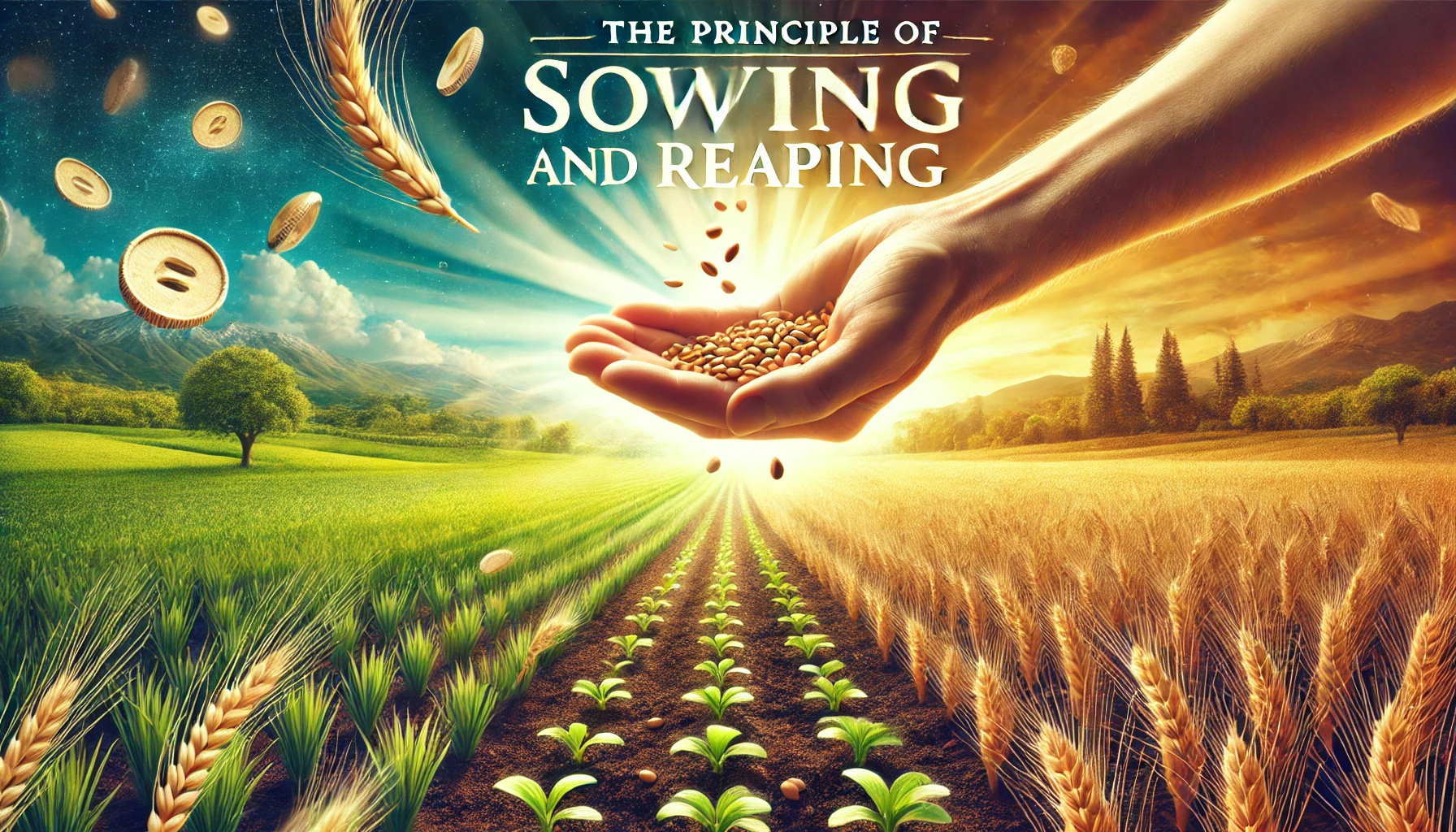
  • Day 13: The Principle of Sowing and Reaping

    Day 13: The Principle of Sowing and Reaping

    Welcome to Day 13 of our 30-day journey. Today, we explore the biblical principle of sowing and reaping. This principle is foundational to understanding how God’s kingdom operates, not just in agriculture but in every area of life, including our finances. The idea is simple: what you sow, you will reap. This applies to our actions, attitudes, and how we use the resources God has given us. Understanding this principle can transform how we approach giving, investing, and managing our finances.

    Revelation:
    The Bible teaches that you reap what you sow. This means that the choices you make today will determine the harvest you receive in the future. When you sow generously, you can expect to reap generously, both in the physical and spiritual realms. God’s kingdom operates on this principle of sowing and reaping, and it encourages us to be intentional about what we plant with our time, talents, and resources.

    Scripture Reference:
    Galatians 6:7 – “Do not be deceived: God cannot be mocked. A man reaps what he sows.”

    This verse serves as both a warning and an encouragement. It reminds us that our actions have consequences, and that the seeds we plant will determine the harvest we receive. Whether it’s in relationships, work, or finances, we should be mindful of what we are sowing, knowing that it will eventually produce fruit.

    Direction:
    Today, consider the seeds you are planting in your financial life. Are you sowing seeds of generosity, diligence, and faithfulness? Or are you sowing seeds of selfishness, greed, or negligence? Reflect on the areas of your life where you need to be more intentional about what you are planting. Ask God to help you sow seeds that will produce a harvest of blessings, not just for yourself but for others as well. Remember that the quality of the harvest is directly related to the quality of the seeds you sow.

    Meditation:
    Reflect on the Parable of the Sower in Matthew 13:1-23. In this parable, Jesus describes a farmer who sows seeds on different types of soil. Some seeds fall along the path, some on rocky ground, some among thorns, and some on good soil. The seeds that fall on good soil produce a crop—some yielding a hundred, sixty, or thirty times what was sown. Jesus explains that the seed represents the word of God, and the different types of soil represent the conditions of people’s hearts.

    This parable teaches us about the importance of the condition of our hearts and the intentionality with which we sow seeds. Just as a farmer carefully prepares the soil and sows good seeds, we too must be deliberate in how we plant seeds in our financial lives. Whether it’s through our giving, our work ethic, or how we manage our resources, the seeds we plant should be aligned with God’s word and purposes.

    As you meditate on this parable, ask yourself: What kind of soil are you sowing into? Are your financial practices rooted in good soil—guided by biblical principles and a heart for God’s kingdom? Consider how you can better prepare the “soil” of your life to receive and nurture the seeds you plant, ensuring they grow into a fruitful harvest.

    Prayer:
    “Lord, I thank You for the principle of sowing and reaping that You have established in Your kingdom. I recognize that the seeds I plant today will determine the harvest I receive in the future. Help me to be intentional about sowing seeds of generosity, faithfulness, and diligence in my financial life. Teach me to align my actions with Your word and to trust in Your timing for the harvest. May the seeds I plant not only bless me but also be a blessing to others and bring glory to Your name. In Jesus’ name, Amen.”

    Deeper Reflection:
    After your prayer, spend some time reflecting on the seeds you have been planting in your life—both positive and negative. Are there areas where you need to change the type of seeds you are sowing? Perhaps you need to be more generous, more disciplined, or more focused on eternal values rather than temporary gains. Write down any insights or changes you need to make and commit to sowing seeds that will lead to a bountiful and God-honoring harvest.

    Action Step:
    As a practical step, identify one specific area in your financial life where you can start sowing better seeds. This could involve increasing your giving, being more diligent in your work, or investing your time and resources in something that will have lasting value. Create a plan for how you will nurture these seeds over time, ensuring they are planted in good soil and watered with prayer, faith, and consistent effort.

    Closing Thought:
    The principle of sowing and reaping is a powerful reminder that our actions have lasting consequences. By intentionally planting seeds that align with God’s word and His purposes, we can expect a harvest of blessings in due time. As you continue on this journey, trust that God is faithful to bring forth a harvest that reflects the seeds you have sown. Be patient, be diligent, and always seek to sow seeds that will glorify God and advance His kingdom.