
Category: Faith In Action

Christian Affirmations are positive, faith-based statements rooted in Scripture that help believers align their thoughts with God’s truth. These affirmations are designed to reinforce one’s identity in Christ, strengthen faith, and encourage a mindset of hope, peace, and victory in daily life. By regularly speaking and meditating on these affirmations, believers can renew their minds, overcome negative thinking, and grow in their relationship with God.

  • Day 15: Avoiding the Love of Money

    Day 15: Avoiding the Love of Money

    Welcome to Day 15 of our 30-day journey. Today, we focus on a topic that is often misunderstood: the love of money. The Bible does not condemn money itself but warns against the love of money, which can lead to all kinds of problems, including greed, dishonesty, and a life centered around materialism rather than God. Understanding the dangers of loving money helps us keep our hearts aligned with God’s purposes and ensures that our financial pursuits do not become stumbling blocks in our walk with Christ.

    Revelation:
    The love of money is a root of all kinds of evil. Money itself is a neutral tool that can be used for good or bad purposes. However, when money becomes an idol—something we prioritize above God—it leads to spiritual decay and destruction. The Bible teaches us to be content with what we have and to place our trust in God, not in our wealth or possessions. When we love money, we are more likely to compromise our values and make decisions that dishonor God.

    Scripture Reference:
    1 Timothy 6:10 – “For the love of money is a root of all kinds of evil. Some people, eager for money, have wandered from the faith and pierced themselves with many griefs.”

    This verse serves as a stark warning about the dangers of loving money. It reminds us that an unhealthy desire for wealth can lead us away from God and cause deep sorrow and regret. The pursuit of money, when it becomes our primary focus, can lead to moral and spiritual compromises that distance us from God’s will.

    Direction:
    Today, take a moment to reflect on your relationship with money. Are there areas in your life where the love of money may be influencing your decisions or attitudes? Consider how you can cultivate contentment and a healthy perspective on money, seeing it as a tool to be used for God’s glory rather than an end in itself. Ask God to help you keep money in its proper place in your life and to guard your heart against the temptation to idolize wealth.

    Meditation:
    Reflect on the story of the rich fool in Luke 12:16-21. In this parable, Jesus tells the story of a wealthy man who had an abundant harvest and decided to store up his excess grain and goods, thinking he could relax and enjoy life for many years. However, God said to him, “You fool! This very night your life will be demanded from you. Then who will get what you have prepared for yourself?” Jesus concludes the parable by saying, “This is how it will be with whoever stores up things for themselves but is not rich toward God.”

    The rich fool’s mistake was not in being wealthy, but in placing his security in his wealth and neglecting his relationship with God. His love for material possessions led him to focus on temporal things rather than eternal treasures. As you meditate on this story, ask yourself: Are there areas in my life where I am placing my security or identity in wealth rather than in God? How can I shift my focus from accumulating material wealth to being “rich toward God”? Consider what it means to invest in things that have eternal value rather than just earthly gain.

    Prayer:
    “Lord, I thank You for the blessings and resources You have provided in my life. I confess that there have been times when I have placed too much importance on money and material possessions. Help me to keep my heart focused on You and to resist the temptation to love money. Teach me to be content with what I have and to trust in You as my provider. May I use the resources You have given me to glorify Your name and to further Your kingdom. Guard my heart against greed, and help me to seek first Your kingdom and righteousness. In Jesus’ name, Amen.”

    Deeper Reflection:
    After your prayer, take some time to examine your financial goals and motivations. Are they aligned with God’s purposes, or are they driven by a desire for more wealth? Write down any areas where you feel convicted to make changes, and consider practical steps you can take to ensure that money does not become an idol in your life. This might involve setting new priorities, being more generous, or simplifying your lifestyle.

    Action Step:
    As a practical step, consider how you can actively counter the love of money in your life. One way to do this is by practicing generosity. Choose to give to someone in need, support a ministry, or donate to a cause that advances God’s kingdom. By giving generously, you demonstrate that your trust is in God, not in your wealth. Additionally, consider evaluating your financial goals to ensure they reflect a heart that seeks to honor God rather than accumulate material wealth.

    Closing Thought:
    The love of money is a subtle yet powerful force that can lead us away from God’s purposes. By keeping our hearts focused on God and using money as a tool to glorify Him, we can avoid the pitfalls that come with loving wealth. As you continue on this journey, remember that true contentment and security come from a relationship with God, not from material possessions. Seek to be rich in the things that matter to God, and you will find lasting joy and fulfillment.

  • Day 14: God’s Provision in Times of Need

    Day 14: God’s Provision in Times of Need

    Welcome to Day 14 of our 30-day journey. Today, we focus on God’s unfailing provision in times of need. Throughout the Bible, we see countless examples of God providing for His people, even in the most challenging and desperate situations. God’s provision is not just about meeting our physical needs; it’s about His faithfulness, love, and care for us as His children. Understanding and trusting in God’s provision allows us to face difficult times with confidence, knowing that He will always supply what we need.

    Revelation:
    God promises to provide for your needs, even in times of scarcity. He is Jehovah-Jireh, “The Lord Will Provide.” His provision is not limited by circumstances or resources; it flows from His limitless love and power. Trusting in God’s provision means believing that He knows exactly what you need and when you need it. It’s about releasing control and allowing God to work in ways that exceed our expectations.

    Scripture Reference:
    Philippians 4:19 – “And my God will meet all your needs according to the riches of his glory in Christ Jesus.”

    This verse is a powerful reminder that God’s resources are boundless. He is more than able to meet all of your needs, not according to your own resources or circumstances, but according to His glorious riches in Christ. Whether your need is financial, emotional, spiritual, or physical, God is ready and willing to provide.

    Direction:
    Today, reflect on any areas of need in your life where you are struggling to trust in God’s provision. Are you facing financial difficulties, emotional challenges, or spiritual dryness? Bring these needs before God in prayer, and trust that He will provide in His perfect timing and way. Remember that God’s provision often comes in ways we don’t expect, so keep your heart and mind open to how He may choose to meet your needs.

    Meditation:
    Reflect on the story of Elijah and the widow at Zarephath in 1 Kings 17:8-16. During a severe famine, God sent Elijah to a widow in Zarephath who was on the brink of starvation. Despite having only a handful of flour and a little oil, she obeyed Elijah’s request to make him a small loaf of bread first. Because of her faith and obedience, God miraculously provided enough flour and oil for her, her son, and Elijah to eat until the famine ended.

    This story teaches us about God’s miraculous provision and the importance of faith and obedience. The widow’s situation seemed hopeless, yet she trusted God’s word through Elijah and witnessed a miracle. As you meditate on this story, ask yourself: Where do I need to trust God more in my life? How can I demonstrate faith and obedience in my current situation, even when the resources seem insufficient? Remember that God is able to multiply even the smallest offerings of faith.

    Prayer:
    “Lord, I thank You for being my provider and for Your promise to meet all my needs according to Your riches in glory. I confess that there are times when I struggle to trust You, especially when resources seem scarce. Help me to place my trust fully in You, knowing that You are faithful to provide. Teach me to be obedient to Your word, even when it doesn’t make sense, and to trust that You will work all things together for my good. Thank You for the many ways You have provided for me in the past, and I trust that You will continue to do so in the future. In Jesus’ name, Amen.”

    Deeper Reflection:
    After your prayer, take some time to reflect on past experiences where God provided for you in unexpected ways. How did those experiences strengthen your faith? Write down any instances where you’ve seen God’s provision in your life, and use these as reminders of His faithfulness during times of need. Consider also how you can encourage others by sharing your testimony of God’s provision.

    Action Step:
    As a practical step, identify someone in your life who is currently in need, and consider how you can be a vessel of God’s provision for them. This might involve offering financial assistance, emotional support, or simply being present for them in a difficult time. By helping others, you become a tangible expression of God’s love and provision in their lives. Additionally, if you are currently in a time of need, reach out to your community or church for support, trusting that God often provides through the hands and hearts of His people.

    Closing Thought:
    God’s provision is a testament to His love and faithfulness. When we trust Him to meet our needs, we acknowledge His sovereignty and goodness in our lives. As you continue on this journey, remember that God is always with you, ready to provide for you in every situation. Trust in His timing, rely on His strength, and have faith that He will supply all that you need according to His glorious riches.

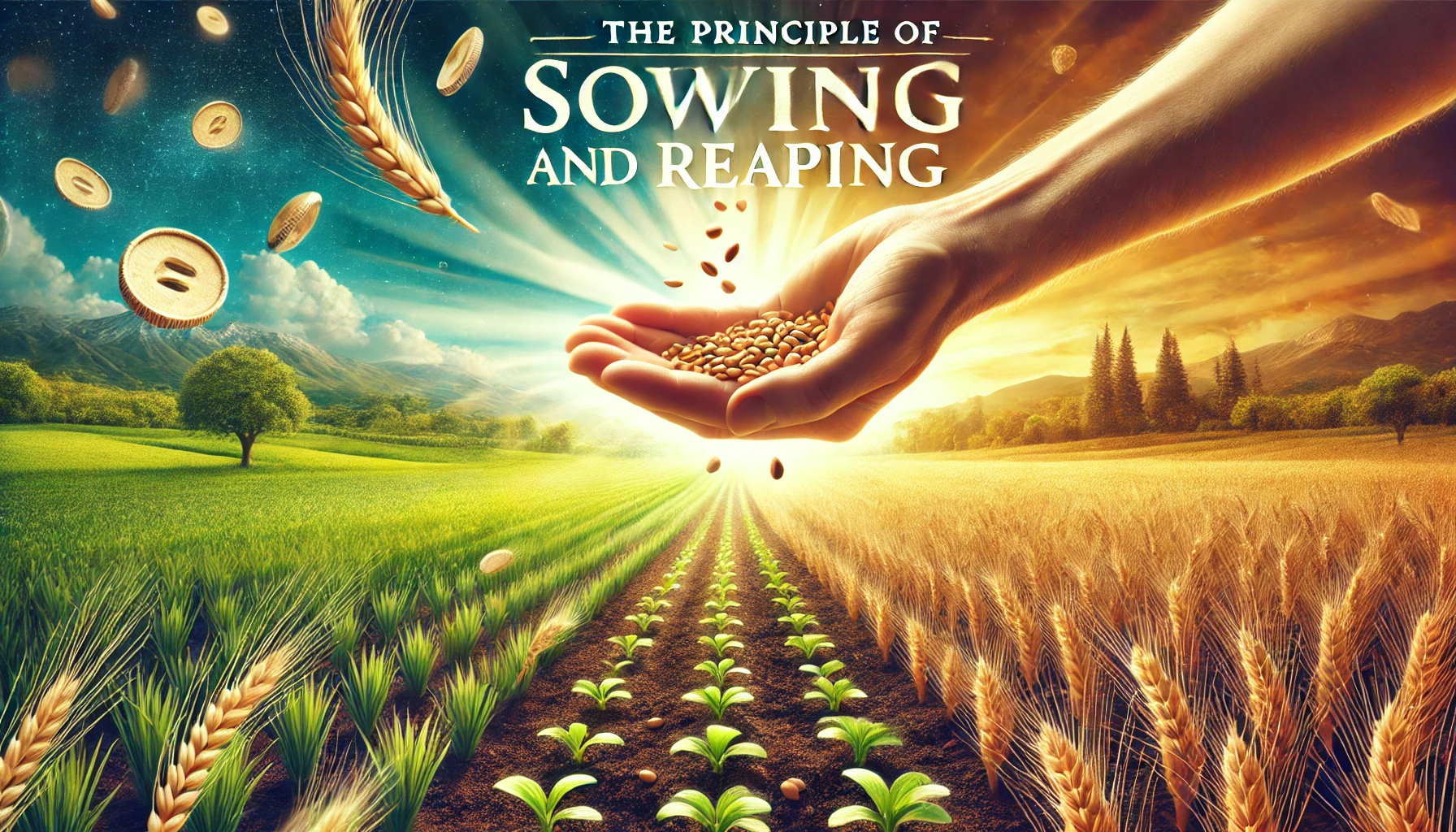
  • Day 13: The Principle of Sowing and Reaping

    Day 13: The Principle of Sowing and Reaping

    Welcome to Day 13 of our 30-day journey. Today, we explore the biblical principle of sowing and reaping. This principle is foundational to understanding how God’s kingdom operates, not just in agriculture but in every area of life, including our finances. The idea is simple: what you sow, you will reap. This applies to our actions, attitudes, and how we use the resources God has given us. Understanding this principle can transform how we approach giving, investing, and managing our finances.

    Revelation:
    The Bible teaches that you reap what you sow. This means that the choices you make today will determine the harvest you receive in the future. When you sow generously, you can expect to reap generously, both in the physical and spiritual realms. God’s kingdom operates on this principle of sowing and reaping, and it encourages us to be intentional about what we plant with our time, talents, and resources.

    Scripture Reference:
    Galatians 6:7 – “Do not be deceived: God cannot be mocked. A man reaps what he sows.”

    This verse serves as both a warning and an encouragement. It reminds us that our actions have consequences, and that the seeds we plant will determine the harvest we receive. Whether it’s in relationships, work, or finances, we should be mindful of what we are sowing, knowing that it will eventually produce fruit.

    Direction:
    Today, consider the seeds you are planting in your financial life. Are you sowing seeds of generosity, diligence, and faithfulness? Or are you sowing seeds of selfishness, greed, or negligence? Reflect on the areas of your life where you need to be more intentional about what you are planting. Ask God to help you sow seeds that will produce a harvest of blessings, not just for yourself but for others as well. Remember that the quality of the harvest is directly related to the quality of the seeds you sow.

    Meditation:
    Reflect on the Parable of the Sower in Matthew 13:1-23. In this parable, Jesus describes a farmer who sows seeds on different types of soil. Some seeds fall along the path, some on rocky ground, some among thorns, and some on good soil. The seeds that fall on good soil produce a crop—some yielding a hundred, sixty, or thirty times what was sown. Jesus explains that the seed represents the word of God, and the different types of soil represent the conditions of people’s hearts.

    This parable teaches us about the importance of the condition of our hearts and the intentionality with which we sow seeds. Just as a farmer carefully prepares the soil and sows good seeds, we too must be deliberate in how we plant seeds in our financial lives. Whether it’s through our giving, our work ethic, or how we manage our resources, the seeds we plant should be aligned with God’s word and purposes.

    As you meditate on this parable, ask yourself: What kind of soil are you sowing into? Are your financial practices rooted in good soil—guided by biblical principles and a heart for God’s kingdom? Consider how you can better prepare the “soil” of your life to receive and nurture the seeds you plant, ensuring they grow into a fruitful harvest.

    Prayer:
    “Lord, I thank You for the principle of sowing and reaping that You have established in Your kingdom. I recognize that the seeds I plant today will determine the harvest I receive in the future. Help me to be intentional about sowing seeds of generosity, faithfulness, and diligence in my financial life. Teach me to align my actions with Your word and to trust in Your timing for the harvest. May the seeds I plant not only bless me but also be a blessing to others and bring glory to Your name. In Jesus’ name, Amen.”

    Deeper Reflection:
    After your prayer, spend some time reflecting on the seeds you have been planting in your life—both positive and negative. Are there areas where you need to change the type of seeds you are sowing? Perhaps you need to be more generous, more disciplined, or more focused on eternal values rather than temporary gains. Write down any insights or changes you need to make and commit to sowing seeds that will lead to a bountiful and God-honoring harvest.

    Action Step:
    As a practical step, identify one specific area in your financial life where you can start sowing better seeds. This could involve increasing your giving, being more diligent in your work, or investing your time and resources in something that will have lasting value. Create a plan for how you will nurture these seeds over time, ensuring they are planted in good soil and watered with prayer, faith, and consistent effort.

    Closing Thought:
    The principle of sowing and reaping is a powerful reminder that our actions have lasting consequences. By intentionally planting seeds that align with God’s word and His purposes, we can expect a harvest of blessings in due time. As you continue on this journey, trust that God is faithful to bring forth a harvest that reflects the seeds you have sown. Be patient, be diligent, and always seek to sow seeds that will glorify God and advance His kingdom.

  • Day 12: Wisdom in Financial Decisions

    Day 12: Wisdom in Financial Decisions

    Welcome to Day 12 of our 30-day journey. Today, we will focus on the importance of seeking God’s wisdom in financial decisions. Financial decisions, whether large or small, can have a significant impact on our lives and the lives of those around us. God offers us His wisdom, which is far greater than any human knowledge, to guide us in making sound financial choices that align with His will.

    Revelation:
    God grants wisdom to those who seek it. When making financial decisions, it is essential to seek God’s wisdom to ensure that your choices align with His will. The Bible teaches that wisdom is more valuable than gold, and it is through wisdom that we can navigate the complexities of life, including our finances. By seeking God’s wisdom, you can avoid pitfalls, make sound investments, and manage your resources in a way that honors Him.

    Scripture Reference:
    James 1:5 – “If any of you lacks wisdom, you should ask God, who gives generously to all without finding fault, and it will be given to you.”

    This verse encourages us to turn to God when we need wisdom. God is generous and willing to provide the wisdom we need, especially when we are faced with difficult or complex decisions. All we need to do is ask with faith, trusting that He will guide us.

    Direction:
    Today, think about any financial decisions you are currently facing or will face in the near future. These could be decisions related to budgeting, investing, spending, or giving. Bring these decisions before God in prayer, asking Him for the wisdom to make choices that are in line with His will. Be open to the guidance of the Holy Spirit, and be willing to wait for His direction rather than making hasty decisions based on fear or pressure.

    Meditation:
    Reflect on the story of King Solomon in 1 Kings 3:5-14. When Solomon became king, God appeared to him in a dream and offered to give him whatever he asked for. Instead of asking for wealth, long life, or victory over his enemies, Solomon asked for wisdom to govern God’s people. God was pleased with Solomon’s request and granted him unparalleled wisdom, as well as wealth and honor.

    Solomon’s story teaches us the importance of prioritizing wisdom over material gain. When we seek God’s wisdom first, He often blesses us in ways that exceed our expectations. As you meditate on this story, ask yourself: What are the areas in your financial life where you need God’s wisdom? Are you willing to prioritize wisdom over short-term gains or immediate gratification? Consider how you can make wisdom your primary focus in your financial decisions.

    Prayer:
    “Lord, I thank You for the promise that You generously give wisdom to those who ask. I confess that I often rely on my own understanding instead of seeking Your guidance. Today, I bring my financial decisions before You and ask for Your wisdom. Help me to make choices that are in line with Your will and that honor You. Teach me to be patient and to wait on Your direction, trusting that You know what is best for me. May Your wisdom guide every aspect of my financial life. In Jesus’ name, Amen.”

    Deeper Reflection:
    After your prayer, take a few moments to reflect on past financial decisions that you made without seeking God’s wisdom. What were the outcomes? How might those decisions have been different if you had sought God’s guidance? Write down any insights or lessons you’ve learned, and commit to seeking God’s wisdom in all future financial decisions. Consider also how you can cultivate a habit of praying for wisdom regularly, not just in times of crisis, but as a daily practice.

    Action Step:
    As a practical step, make a commitment to seek God’s wisdom before making any financial decisions this week. This could involve praying before making a purchase, consulting God’s Word before setting a budget, or seeking the advice of a godly mentor or financial advisor. Additionally, consider setting aside time each day to pray specifically for wisdom in your finances, asking God to guide your steps and give you discernment in all areas of your financial life.

    Closing Thought:
    Wisdom is one of the greatest gifts God offers to His children, and it is essential for making sound financial decisions. By seeking God’s wisdom, you can navigate the complexities of financial life with confidence and peace, knowing that your decisions are guided by His perfect knowledge. As you continue on this journey, trust that God will provide the wisdom you need to manage your resources in a way that honors Him and blesses others.

  • Day 11: Faith in Times of Financial Uncertainty

    Day 11: Faith in Times of Financial Uncertainty

    Welcome to Day 11 of our 30-day journey. Today, we will focus on maintaining faith during times of financial uncertainty. Financial challenges can be overwhelming, and it’s natural to feel anxious or fearful when the future seems unclear. However, as followers of Christ, we are called to trust in God’s provision and sovereignty, even when our circumstances are uncertain. Faith in God’s promises gives us the strength to navigate financial difficulties with peace and confidence.

    Revelation:
    In times of financial uncertainty, God calls you to trust in Him rather than relying on your own understanding. While it’s natural to be concerned about your financial situation, God invites you to place your trust in His ability to provide. The Bible teaches that God is our source of security, and He promises to meet our needs according to His riches in glory. Faith in God’s provision allows us to face financial uncertainty with peace and hope.

    Scripture Reference:
    Proverbs 3:5-6 – “Trust in the Lord with all your heart and lean not on your own understanding; in all your ways submit to him, and he will make your paths straight.”

    This verse reminds us that true wisdom comes from trusting in God rather than relying on our own understanding. When we submit our financial concerns to God and trust Him with all our heart, He promises to guide us and direct our steps.

    Direction:
    Today, reflect on any financial uncertainties or challenges you are facing. Are you struggling with anxiety or fear about the future? Take time to surrender these concerns to God, acknowledging that He is in control and that His plans for you are good. Ask God to increase your faith and to help you trust Him more deeply, even when the path ahead is unclear. Remember that faith is not the absence of fear, but the choice to trust God despite your fears.

    Meditation:
    Reflect on the story of Jesus calming the storm in Mark 4:35-41. In this passage, Jesus and His disciples were crossing the Sea of Galilee when a furious storm arose, threatening to capsize the boat. Despite the storm, Jesus was asleep, completely at peace. The disciples, terrified, woke Him and asked, “Teacher, don’t you care if we drown?” Jesus got up, rebuked the wind, and said to the waves, “Quiet! Be still!” The wind died down, and it was completely calm. He then asked His disciples, “Why are you so afraid? Do you still have no faith?”

    This story illustrates the power of faith in the midst of fear and uncertainty. The disciples were focused on the storm, but Jesus was focused on His Father’s will. He knew that God was in control, and He demonstrated that faith by calming the storm. As you meditate on this story, ask yourself: What “storms” are you facing in your financial life? How can you trust God to calm those storms and bring peace to your situation? Remember, Jesus is with you in the boat, and He has the power to bring calm to your financial challenges.

    Prayer:
    “Lord, I thank You for being my source of peace and security, even in times of financial uncertainty. I confess that I have been anxious and fearful about my financial situation, and I ask for Your forgiveness. Help me to trust in You with all my heart and to lean not on my own understanding. Increase my faith, and give me the courage to face the challenges ahead with confidence in Your provision. I surrender my financial concerns to You, knowing that You are in control and that Your plans for me are good. Thank You for calming the storms in my life and for guiding me on the path of peace. In Jesus’ name, Amen.”

    Deeper Reflection:
    After your prayer, take some time to reflect on the specific financial challenges you are facing. Write down any fears or anxieties that have been weighing on your heart, and then write a corresponding prayer of surrender for each one. This exercise can help you release your worries to God and remind you of His faithfulness. Consider also how you can cultivate a habit of trusting God in your daily life, whether through prayer, meditation on His Word, or seeking godly counsel.

    Action Step:
    As a practical step, consider creating a “Faith in Finances” journal where you can document your financial concerns, prayers, and how God answers them over time. This journal can serve as a reminder of God’s faithfulness and as a tool to help you grow in trust. Additionally, if you are facing a significant financial decision, take time to pray specifically for God’s guidance, and be willing to wait on His timing rather than rushing into a decision out of fear or anxiety.

    Closing Thought:
    Faith in times of financial uncertainty is a powerful testimony of your trust in God. When you choose to trust God rather than giving in to fear, you demonstrate that your security is not in your financial situation but in God’s unchanging character. As you continue on this journey, remember that God is your provider and protector, and He will never leave you nor forsake you. Trust Him to guide you through the uncertainties and to bring you to a place of peace and provision.

  • Day 10: Seeking God’s Kingdom First

    Day 10: Seeking God’s Kingdom First

    Welcome to Day 10 of our 30-day journey. Today, we will focus on the importance of seeking God’s kingdom first in all areas of our lives, including our finances. Jesus teaches us that when we prioritize God’s kingdom, everything else we need will be provided. This principle challenges us to re-evaluate our priorities and ensure that our financial decisions align with God’s will and purpose.

    Revelation:
    God promises to provide for your needs when you prioritize His kingdom. Seeking His kingdom first means aligning your financial decisions, goals, and lifestyle with God’s values and purposes. It’s about putting God at the center of your financial life and trusting that He will take care of everything else. When we seek God’s kingdom first, we shift our focus from accumulating material wealth to pursuing eternal treasures.

    Scripture Reference:
    Matthew 6:33 – “But seek first his kingdom and his righteousness, and all these things will be given to you as well.”

    This verse is a powerful reminder that God’s provision is connected to our priorities. When we seek God’s kingdom and righteousness above all else, He promises to meet our needs. This doesn’t mean we neglect our responsibilities, but it means that our primary focus is on God’s purposes rather than our own material gain.

    Direction:
    Today, take time to evaluate your financial goals and priorities. Are they aligned with God’s kingdom, or are they primarily focused on personal gain? Consider the ways in which you can reorient your financial decisions to reflect a kingdom-first mindset. This might involve making changes to your budget, giving more generously, or investing in causes that advance God’s work. Ask God to guide you in making these adjustments and to help you trust Him for your provision.

    Meditation:
    Reflect on the story of the rich young ruler in Matthew 19:16-30. This young man approached Jesus with the question, “What good thing must I do to get eternal life?” Despite his obedience to the commandments, when Jesus asked him to sell his possessions and give to the poor, the young man went away sad because he had great wealth. Jesus then told His disciples that it is difficult for a rich person to enter the kingdom of heaven, but He also assured them that with God, all things are possible.

    This story challenges us to consider what we value most. The rich young ruler was unable to prioritize God’s kingdom over his wealth, and as a result, he missed out on the greater blessings that come from following Jesus. As you meditate on this story, ask yourself: What are the things in your life that might be hindering you from fully seeking God’s kingdom? Are there financial goals, possessions, or desires that have taken precedence over your relationship with God? Consider how you can let go of these things and fully commit to seeking God’s kingdom first.

    Prayer:
    “Lord, I thank You for the reminder to seek Your kingdom first in every area of my life, including my finances. I confess that I have sometimes placed my own desires and goals above Your will. Help me to reorient my priorities so that my financial decisions reflect a kingdom-first mindset. Teach me to trust in Your provision and to focus on what truly matters—my relationship with You and advancing Your kingdom. May my life be a reflection of Your love, grace, and righteousness. In Jesus’ name, Amen.”

    Deeper Reflection:
    After your prayer, spend some time reflecting on the specific ways you can seek God’s kingdom first in your financial life. Write down any insights or ideas that come to mind, and make a plan to implement them. This might involve setting new financial goals that prioritize giving, supporting ministry work, or simplifying your lifestyle to focus more on spiritual growth. Consider also how you can involve your family or community in this journey of seeking God’s kingdom first.

    Action Step:
    As a practical step, identify one area of your financial life where you can make a change to better align with God’s kingdom. This could involve increasing your giving, volunteering your time for a ministry, or reallocating resources to support a cause that advances God’s work. Make a commitment to take this step within the next week, and trust that God will honor your decision to put His kingdom first.

    Closing Thought:
    Seeking God’s kingdom first is not just a financial decision; it’s a way of life. When you prioritize God’s kingdom, you are aligning your life with His purposes and opening yourself up to His abundant provision. As you continue on this journey, trust that God will provide for your needs and bless you in ways that far exceed material wealth. Remember, the true treasures are those that are stored up in heaven, where they will never fade away.

  • Day 9: The Joy of Generosity

    Day 9: The Joy of Generosity

    Welcome to Day 9 of our 30-day journey. Today, we will explore the joy that comes

    from living a life of generosity. Generosity is not just about giving money; it’s about sharing your time, talents, and resources with others. When we give, we are participating in God’s work, and we experience a deep sense of joy and fulfillment. Generosity is a reflection of God’s character, and it allows us to bless others while also enriching our own lives.

    Revelation:
    There is great joy in giving. When you give generously, you are aligning yourself with God’s heart and participating in His kingdom work. The Bible teaches that it is more blessed to give than to receive. Generosity not only blesses those who receive, but it also brings joy and fulfillment to the giver. As you give freely and cheerfully, you reflect the love and grace of God to others and experience the abundant life that Jesus promised.

    Scripture Reference:
    Acts 20:35 – “In everything I did, I showed you that by this kind of hard work we must help the weak, remembering the words the Lord Jesus himself said: ‘It is more blessed to give than to receive.’”

    This verse reminds us of the blessing that comes from giving. Jesus taught that giving is a greater blessing than receiving because it allows us to express love, compassion, and kindness to others. Generosity is a powerful way to demonstrate our faith and trust in God’s provision.

    Direction:
    Today, reflect on how you can practice generosity in your daily life. Are there specific ways you can give more of your time, talents, or resources to bless others? Consider the people in your life, your community, or your church who may be in need of encouragement, support, or assistance. Ask God to open your eyes to opportunities to be generous and to give you the courage to act on those opportunities. As you give, do so with a joyful heart, trusting that God will use your generosity to bless others and bring glory to His name.

    Meditation:
    Reflect on the story of the Good Samaritan in Luke 10:25-37. In this parable, Jesus tells the story of a man who was attacked by robbers and left for dead on the side of the road. Several people passed by without helping him, but a Samaritan, moved with compassion, stopped to help. He bandaged the man’s wounds, took him to an inn, and paid for his care.

    The Good Samaritan’s generosity went beyond mere words; it was demonstrated through his actions. He gave his time, resources, and care to someone in need, even though it was inconvenient and costly. This story challenges us to consider how we can show generosity to those around us, especially to those who may be overlooked or marginalized.

    As you meditate on this story, ask yourself: Who are the “neighbors” in your life that you can show generosity to? How can you go beyond words and demonstrate love through your actions? Remember, true generosity often requires sacrifice, but it also brings great joy and fulfillment.

    Prayer:
    “Lord, thank You for the opportunity to give and bless others. I recognize that everything I have comes from You, and I want to use my resources to reflect Your love and grace. Help me to be generous with my time, talents, and resources, and to do so with a joyful heart. Open my eyes to the needs around me, and give me the courage to act when I see opportunities to help. May my generosity bring glory to Your name and draw others closer to You. In Jesus’ name, Amen.”

    Deeper Reflection:
    After your prayer, spend a few moments reflecting on the ways you can cultivate a lifestyle of generosity. Consider areas where you may have been holding back, either out of fear or a desire to protect your own resources. Write down any specific actions you can take to be more generous, whether it’s giving financially, volunteering your time, or using your talents to serve others. Ask God to help you overcome any barriers to generosity and to fill your heart with the joy that comes from giving.

    Action Step:
    As a practical step, make a plan to give in a specific and intentional way this week. This could involve donating to a charity, supporting a friend or family member in need, or volunteering your time for a cause you care about. Consider also setting up a regular giving plan, whether it’s through tithing, charitable donations, or acts of service, to ensure that generosity becomes a consistent part of your life.

    Closing Thought:
    Generosity is not just about what you give; it’s about the heart behind your giving. When you give freely and cheerfully, you participate in God’s work and experience the joy that comes from aligning your life with His purposes. As you cultivate a lifestyle of generosity, you will find that you are blessed beyond measure, and your life will be a reflection of God’s abundant grace and love.

  • Day 8: Integrity in Financial Transactions

    Day 8: Integrity in Financial Transactions

    Welcome to Day 8 of our 30-day journey. Today, we focus on the importance of integrity in financial transactions. Integrity is a foundational principle in the Christian life, and it is especially important when it comes to handling finances. Whether in business, personal finance, or day-to-day transactions, God calls us to conduct ourselves with honesty, transparency, and fairness. Integrity in finances not only honors God but also builds trust and credibility in our relationships with others.

    Revelation:
    God calls you to conduct all financial dealings with integrity and honesty. Integrity is about doing the right thing, even when no one is watching. It means being truthful, fair, and just in all your financial transactions, whether large or small. When we act with integrity, we reflect the character of God, who is always truthful and just. Integrity in finances is not just about avoiding dishonest practices; it’s about proactively seeking to do what is right in every situation.

    Scripture Reference:
    Proverbs 11:1 – “The Lord detests dishonest scales, but accurate weights find favor with him.”

    This verse highlights the importance of honesty and fairness in financial dealings. In biblical times, scales were used in trade to measure goods, and dishonest scales were a way to cheat others. God detests dishonesty, but He delights in those who conduct their business with integrity and fairness.

    Direction:
    Today, take time to reflect on your financial practices. Are there areas where you might be tempted to cut corners or be less than completely honest? Whether it’s in your business dealings, personal finances, or even small day-to-day transactions, commit to conducting yourself with integrity. Ask God to reveal any areas where you need to improve and to give you the strength to do what is right, even when it’s difficult.

    Meditation:
    Reflect on the story of Zacchaeus in Luke 19:1-10. Zacchaeus was a tax collector who had gained wealth by dishonest means. When he encountered Jesus, his life was transformed, and he publicly committed to making amends by giving half of his possessions to the poor and repaying those he had cheated four times the amount he had taken. Zacchaeus’s story shows us that true repentance leads to a change in behavior, particularly in the area of finances.

    As you meditate on this story, ask yourself: Are there areas in your financial life where you need to make amends? Are there past mistakes that you need to address, or relationships that need to be restored? Consider how you can take steps to bring your financial life in line with the principles of integrity and honesty.

    Prayer:
    “Lord, I thank You for the resources and opportunities You have given me. I recognize that integrity is essential in every aspect of my life, especially in my financial dealings. Help me to conduct all my financial transactions with honesty, fairness, and transparency. Reveal any areas where I need to improve and give me the courage to make things right if I have fallen short. May my financial dealings reflect Your character and bring glory to Your name. In Jesus’ name, Amen.”

    Deeper Reflection:
    After your prayer, take some time to think about specific situations where you have been tempted to compromise your integrity in financial matters. Are there past actions that you regret or need to make right? Write down your reflections and any commitments you need to make to align your financial life with God’s principles of honesty and integrity. Consider also how you can be proactive in ensuring that all your financial dealings are conducted with the highest ethical standards.

    Action Step:
    As a practical step, consider setting up accountability measures to help you maintain integrity in your financial transactions. This could involve seeking the counsel of a trusted friend or mentor, implementing more transparent practices in your business or personal finances, or regularly reviewing your financial activities to ensure they align with biblical principles. Additionally, if there are any past wrongs that need to be corrected, take the necessary steps to make amends, just as Zacchaeus did.

    Closing Thought:
    Integrity in financial transactions is a powerful testimony of your faith in God. When you conduct your finances with honesty and fairness, you not only honor God but also build trust and credibility with others. As you commit to living with integrity, remember that God sees and values every act of honesty, no matter how small. Trust that He will bless your efforts to do what is right and guide you in all your financial decisions.

  • Day 7: The Power of Prayer in Finances

    Day 7: The Power of Prayer in Finances


    Welcome to Day 7 of our 30-day journey. Today, we will focus on the power of prayer in your financial life. Prayer is a direct line of communication with God, and it’s through prayer that we can invite His wisdom, guidance, and provision into our finances. Whether you are facing financial difficulties, making important decisions, or seeking to align your finances with God’s will, prayer is a powerful tool that can transform your situation and bring peace.

    Revelation:
    Prayer is not just a ritual; it’s a powerful means of connecting with God and inviting His intervention in every area of your life, including your finances. When we bring our financial concerns to God in prayer, we acknowledge His sovereignty and invite His guidance. The Bible teaches us to pray about everything, trusting that God cares about even the smallest details of our lives.

    Scripture Reference:
    Matthew 7:7-8 – “Ask and it will be given to you; seek and you will find; knock and the door will be opened to you. For everyone who asks receives; the one who seeks finds; and to the one who knocks, the door will be opened.”

    This passage encourages us to approach God with confidence, knowing that He hears our prayers and responds according to His will. It reminds us that God is always ready to listen and that we should not hesitate to bring our financial concerns before Him.

    Direction:
    Today, spend some time in prayer specifically for your financial needs and goals. Whether you are dealing with debt, planning for the future, or seeking to be a better steward of your resources, bring these concerns to God in prayer. Ask Him for wisdom, guidance, and provision, and trust that He will answer according to His perfect will. As you pray, also ask God to help you align your financial decisions with His purposes and to give you peace in the midst of any financial uncertainty.

    Meditation:
    Reflect on the story of Elijah and the widow at Zarephath in 1 Kings 17:8-16. During a severe famine, God sent Elijah to a widow in Zarephath, who was preparing to make a final meal for herself and her son before they ran out of food. Elijah asked her for bread, promising that God would provide for her needs if she obeyed. Despite her dire situation, the widow trusted Elijah’s words, and God miraculously provided enough flour and oil to sustain her, her son, and Elijah throughout the famine.

    This story illustrates the power of trusting God’s word and the importance of prayerful obedience. The widow’s situation seemed hopeless, but her willingness to trust and obey God’s instruction led to His miraculous provision. As you meditate on this story, consider how you can apply the principles of faith and prayer in your financial life. Are there areas where you need to trust God more deeply? How can you be more intentional about seeking God’s guidance through prayer in your financial decisions?

    Prayer:
    “Lord, I bring my financial needs and concerns before You today, trusting that You are able to provide for all my needs according to Your riches in glory. I ask for Your wisdom and guidance in my financial decisions, and I pray that You will align my heart and mind with Your will. Help me to trust You in all circumstances, knowing that You are in control and that You care about every detail of my life. I surrender my financial worries to You and ask for Your peace to fill my heart. Thank You for hearing my prayers and for Your faithfulness in answering them. In Jesus’ name, Amen.”

    Deeper Reflection:
    After your prayer, take a moment to listen for God’s voice. Is there anything specific He is speaking to you about your finances? Write down any impressions or insights you receive during this time of reflection. Consider also how you can incorporate regular prayer into your financial planning and decision-making. This could be as simple as praying before making a purchase, seeking God’s guidance before setting a budget, or spending time in prayer before making a significant financial decision.

    Action Step:
    As a practical step, consider setting aside a specific time each day or week to pray for your finances. Create a list of financial goals, concerns, and decisions that you want to bring before God in prayer. This could include things like paying off debt, saving for the future, giving more generously, or seeking wisdom for a financial decision. Make prayer a regular part of your financial life, and trust that God will guide and provide as you seek Him.

    Closing Thought:
    Prayer is a powerful tool that can bring transformation to your financial life. By consistently bringing your financial needs and decisions before God, you invite His wisdom, guidance, and provision into every area of your finances. Trust that God cares about your financial well-being and that He will answer your prayers according to His perfect will. As you grow in your prayer life, you will experience greater peace, clarity, and confidence in your financial journey.

  • Day 6: Contentment in Christ

    Day 6: Contentment in Christ

    Introduction:
    Welcome to Day 6 of our 30-day journey. Today, we explore the concept of contentment in Christ. In a world that often measures success by material wealth and possessions, it can be challenging to find true contentment. Yet, the Bible teaches us that real contentment is not found in what we have, but in who we are in Christ. Contentment is about finding peace and satisfaction in God’s provision, no matter our circumstances.

    Revelation:
    True contentment comes from knowing Christ and trusting in His provision. It is not dependent on the accumulation of wealth or possessions, but on a deep and abiding relationship with God. When we are content in Christ, we are free from the constant desire for more and can live with peace and gratitude. Contentment allows us to focus on what truly matters—our relationship with God, our loved ones, and our purpose in life.

    Scripture Reference:
    Philippians 4:11-13 – “I am not saying this because I am in need, for I have learned to be content whatever the circumstances. I know what it is to be in need, and I know what it is to have plenty. I have learned the secret of being content in any and every situation, whether well fed or hungry, whether living in plenty or in want. I can do all this through him who gives me strength.”

    In these verses, the Apostle Paul reveals the secret to contentment: it is found in Christ, who gives us the strength to endure all circumstances. Paul’s contentment was not based on his material situation, but on his trust in God’s provision and sovereignty.

    Direction:
    Today, reflect on your current financial situation and ask yourself if you are truly content. Are you constantly striving for more, or are you at peace with what God has provided? Take a moment to identify any areas where you may be struggling with discontentment. Pray and ask God to help you find contentment in Him alone, rather than in material possessions or financial security.

    Meditation:
    Reflect on the story of the rich young ruler in Matthew 19:16-22. This young man came to Jesus seeking eternal life, confident in his adherence to the commandments. However, when Jesus told him to sell his possessions, give to the poor, and follow Him, the young man went away sad because he had great wealth. This story illustrates the dangers of placing our security and identity in material wealth rather than in Christ.

    As you meditate on this story, consider the following questions: What are you holding on to that may be hindering your contentment in Christ? Are there possessions, goals, or desires that have become idols in your life? How can you begin to release these things and find true satisfaction in your relationship with God?

    Prayer:
    “Lord, I thank You for the provision and blessings You have given me. I confess that I have sometimes placed my contentment in material things rather than in You. Help me to find true satisfaction in my relationship with You, knowing that You are more than enough. Teach me to be content in all circumstances, trusting that You will meet my needs according to Your riches in glory. May I live each day with gratitude and peace, knowing that my worth and security are found in You alone. In Jesus’ name, Amen.”

    Deeper Reflection:
    After your prayer, take some time to reflect on the areas of your life where you may be experiencing discontentment. Are there specific things or situations that you are struggling to let go of? Write down your thoughts and ask God to help you release these burdens and find peace in His provision. Consider also how you can cultivate a habit of gratitude, focusing on the blessings you already have rather than what you lack.

    Action Step:
    As a practical step, consider starting a gratitude journal. Each day, write down three things you are thankful for, no matter how small. This practice can help shift your focus from what you don’t have to what God has already provided. Additionally, consider simplifying your life by decluttering your possessions or reducing unnecessary expenses. These actions can help you break free from the cycle of consumerism and find contentment in living with less.

    Closing Thought:
    Contentment in Christ is a powerful testimony to the world. When we are content, we demonstrate that our hope and security are not found in material wealth, but in our relationship with God. As you grow in contentment, you will find that you are more at peace, more generous, and more focused on the things that truly matter. Trust in God’s provision and live with the assurance that He is more than enough.