Kedua

8id.One

Ingat nama domain resmi: 8id.One

Cara menggambar
#FaithAndFinances – Biblical Wealth Wisdom

Tag: #FaithAndFinances

  • Day 23: Wisdom in Financial Planning

    Day 23: Wisdom in Financial Planning

    Welcome to Day 23 of our 30-day journey. Today, we will focus on the importance of wisdom in financial planning. Planning your finances with wisdom is essential to living a life of stewardship and responsibility. The Bible speaks often about the value of planning, preparation, and seeking wisdom, especially when it comes to managing resources. By inviting God into your financial planning, you can make decisions that honor Him and set you on a path to financial stability and generosity.

    Revelation:
    Wisdom is a vital component of successful financial planning. The Bible encourages us to seek wisdom in all that we do, and this includes how we manage our finances. Proverbs 21:5 says, “The plans of the diligent lead to profit as surely as haste leads to poverty.” This verse highlights the importance of careful planning and diligence in achieving financial success. When you plan your finances with wisdom, you are better equipped to handle challenges, avoid unnecessary debt, and make decisions that align with God’s will for your life.

    Scripture Reference:
    Proverbs 24:3-4 – “By wisdom a house is built, and through understanding it is established; through knowledge its rooms are filled with rare and beautiful treasures.”

    These verses remind us that wisdom, understanding, and knowledge are the foundations of a stable and prosperous life. Just as a house is built and filled with treasures through careful planning and wise decisions, so too can our financial lives be established and enriched through the application of wisdom. Seeking God’s guidance in your financial planning ensures that your resources are used in ways that honor Him and build a strong foundation for the future.

    Direction:
    Today, take a close look at your current financial plans and goals. Are they rooted in wisdom and aligned with biblical principles? Consider how you can invite God into your financial planning process, seeking His guidance in setting goals, creating a budget, and making decisions about saving, investing, and giving. Ask God to give you the wisdom and discernment to make financial plans that reflect His priorities and lead to long-term stability and generosity.

    Meditation:
    Reflect on the story of Joseph in Genesis 41. Joseph was given wisdom by God to interpret Pharaoh’s dreams, which foretold seven years of abundance followed by seven years of famine. Joseph advised Pharaoh to store up a portion of the harvest during the years of abundance so that there would be enough food during the years of famine. Pharaoh followed Joseph’s advice, and as a result, Egypt was able to survive the famine and even provide for other nations.

    Joseph’s story is a powerful example of the importance of wise financial planning. By preparing for the future and managing resources wisely, Joseph was able to provide for an entire nation during a time of crisis. As you meditate on this story, ask yourself: How can I apply the principles of wisdom and foresight to my own financial planning? Are there areas where I need to be more diligent in preparing for the future or more intentional about managing my resources? Consider how you can incorporate God’s wisdom into your financial decisions, ensuring that your plans are both practical and aligned with His will.

    Prayer:
    “Lord, I thank You for the wisdom that comes from Your Word and the guidance You provide in every area of my life, including my finances. I ask for Your wisdom as I plan my financial future. Help me to set goals that honor You, to create a budget that reflects Your priorities, and to make decisions that lead to long-term stability and generosity. Teach me to be diligent in my planning and to trust in Your provision, knowing that You are the source of all wisdom and understanding. May my financial plans be a reflection of my trust in You and my desire to live a life that glorifies Your name. In Jesus’ name, Amen.”

    Deeper Reflection:
    After your prayer, take some time to review your financial plans and goals. Are there adjustments you need to make to align them more closely with biblical principles? Write down any changes you want to implement and consider setting up regular times to review your financial plans with God in prayer. Reflect also on how you can use the wisdom God gives you to bless others, whether through wise investments, charitable giving, or sharing your financial knowledge with those in need.

    Action Step:
    As a practical step, create or review your current budget to ensure it aligns with your financial goals and God’s priorities. If you haven’t already, consider setting up specific savings goals, such as an emergency fund, retirement savings, or a fund for giving. Additionally, seek wise counsel from trusted financial advisors or mentors who can help you make informed decisions. Remember, financial planning is not just about managing money; it’s about stewarding the resources God has entrusted to you in a way that honors Him and prepares you for the future.

    Closing Thought:
    Wisdom in financial planning is a crucial aspect of living a life that honors God. By seeking His guidance and applying biblical principles to your financial decisions, you can build a strong foundation for the future and experience the peace that comes from knowing your resources are being used wisely. As you continue on this journey, trust that God will provide the wisdom you need to navigate the complexities of financial planning and to make decisions that reflect His will and bring glory to His name.
  • Day 21: Breaking the Chains of Debt

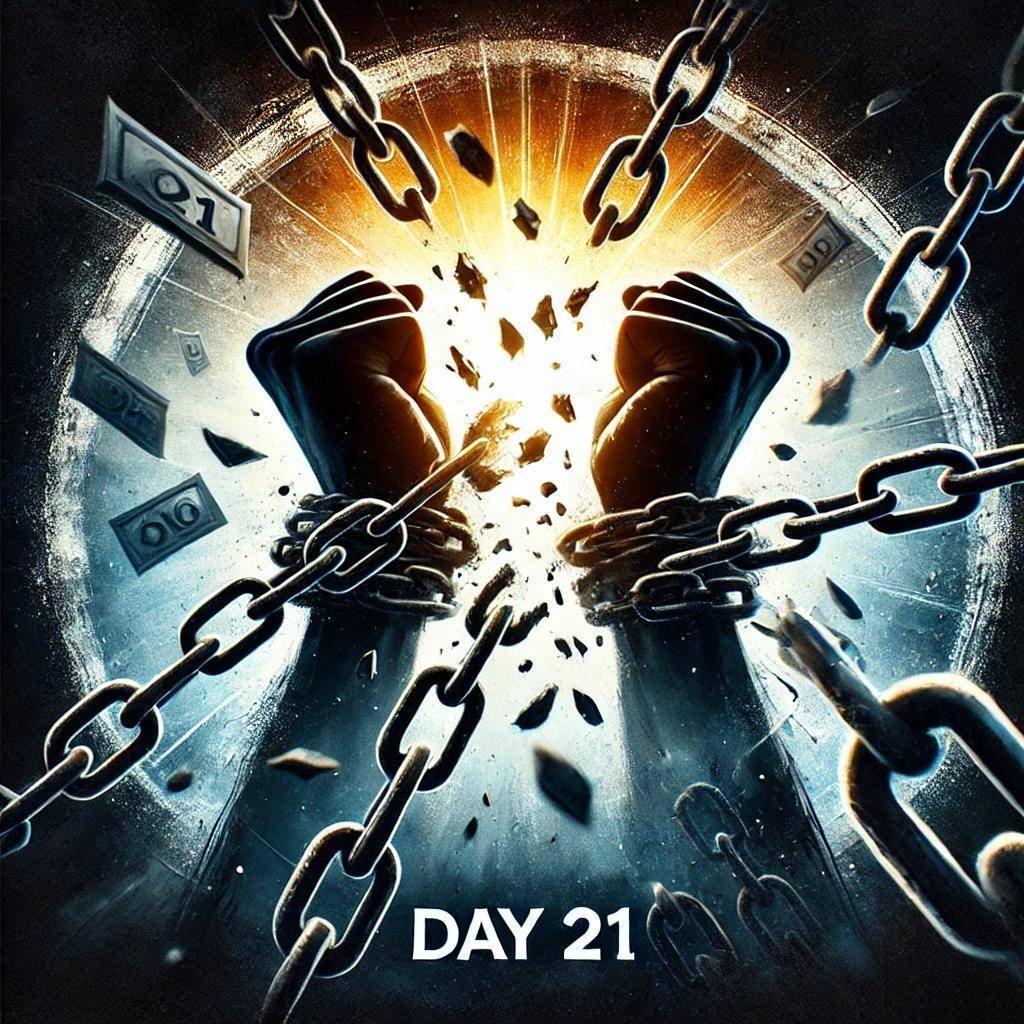
    Day 21: Breaking the Chains of Debt

    Welcome to Day 21 of our 30-day journey. Today, we will focus on breaking the chains of debt. Debt can be a heavy burden that affects every area of our lives—financially, emotionally, and even spiritually. It can create stress, limit our freedom, and hinder our ability to live generously. However, the Bible offers wisdom and guidance on how to manage and overcome debt, reminding us that God desires for us to live in financial freedom. Breaking free from debt requires a combination of practical steps and a strong reliance on God’s guidance and provision.

    Revelation:
    God desires for you to live in financial freedom. Debt can be a form of bondage that restricts your ability to fully serve God and others. The Bible teaches that “the borrower is slave to the lender” (Proverbs 22:7), highlighting the burden that debt can impose. However, God provides wisdom and strength to help you break free from this bondage. By following biblical principles and seeking God’s guidance, you can take steps toward financial freedom and experience the peace that comes with being debt-free.

    Scripture Reference:
    Proverbs 22:7 – “The rich rule over the poor, and the borrower is slave to the lender.”

    This verse serves as a reminder of the power that debt can have over our lives. When we are in debt, we are not fully free to make decisions that align with God’s will because our financial obligations can dictate our choices. However, God’s desire is for us to be free from this burden so that we can fully live out our purpose and serve Him without hindrance.

    Direction:
    Today, take a close look at your financial situation and any debts you may have. Acknowledge the impact that debt has had on your life, and commit to taking steps toward financial freedom. Begin by bringing your situation before God in prayer, asking for His wisdom and guidance as you create a plan to reduce and eliminate your debt. Trust that God will provide the resources, opportunities, and discipline you need to achieve this goal.

    Meditation:
    Reflect on the story of the widow’s oil in 2 Kings 4:1-7. In this story, a widow came to the prophet Elisha, desperate for help because her deceased husband had left debts, and the creditors were coming to take her sons as slaves. Elisha instructed her to gather empty jars and fill them with the little oil she had left. Miraculously, the oil kept flowing until all the jars were filled. She was then able to sell the oil, pay off her debts, and live on the rest.

    This story teaches us about God’s miraculous provision and the importance of following His guidance in times of financial distress. The widow’s obedience and faith in God’s provision allowed her to break free from the chains of debt. As you meditate on this story, ask yourself: How can I demonstrate faith and obedience in my own financial situation? What practical steps can I take to manage and eliminate my debt, trusting that God will provide for my needs along the way?

    Prayer:
    “Lord, I thank You for Your desire to see me live in financial freedom. I confess that I have allowed debt to become a burden in my life, and I ask for Your forgiveness and guidance as I work to overcome it. Give me the wisdom, discipline, and faith to take the necessary steps to reduce and eliminate my debt. Help me to trust in Your provision and to rely on Your strength as I move forward. May I experience the freedom that comes from being debt-free, and may I use that freedom to serve You and others more fully. In Jesus’ name, Amen.”

    Deeper Reflection:
    After your prayer, take some time to reflect on the specific actions you need to take to break free from debt. Write down a plan that includes practical steps such as creating a budget, cutting unnecessary expenses, increasing your income, or seeking financial counseling. Consider also how you can develop a long-term strategy to avoid falling back into debt in the future. Reflect on the ways in which becoming debt-free will allow you to live more fully for God and to be a blessing to others.

    Action Step:
    As a practical step, create a debt repayment plan that outlines how you will tackle your debts one by one. This plan might involve focusing on paying off the smallest debt first (the “debt snowball” method) or targeting the debt with the highest interest rate (the “debt avalanche” method). Whichever method you choose, commit to following your plan with discipline and persistence. Additionally, consider finding an accountability partner or joining a financial support group to help you stay on track and encouraged as you work toward financial freedom.

    Closing Thought:
    Breaking free from debt is a journey that requires both practical action and spiritual reliance on God. As you take steps to eliminate your debt, remember that God is with you every step of the way, providing the wisdom, strength, and resources you need. Trust in His provision, stay disciplined in your efforts, and look forward to the freedom and peace that come with being debt-free. With God’s help, you can overcome the burden of debt and experience the abundant life He desires for you.

  • Day 17: The Power of Tithing

    Day 17: The Power of Tithing

    Welcome to Day 17 of our 30-day journey. Today, we will focus on the spiritual practice of tithing and its profound impact on our relationship with God. Tithing, the act of giving the first 10% of your income to God, is a biblical principle that teaches us to put God first in our finances. It’s a tangible expression of our trust in His provision and our commitment to His kingdom. Understanding the power of tithing can transform how we view our resources and deepen our faith.

    Revelation:
    Tithing is an act of obedience and trust in God’s provision. It is a way of acknowledging that everything we have comes from God and belongs to Him. By giving the first portion of our income back to God, we demonstrate our faith that He will provide for our needs and bless the remaining portion. The Bible teaches that tithing opens the door to God’s blessings and protection over our finances, allowing us to experience His provision in a powerful way.

    Scripture Reference:
    Malachi 3:10 – “Bring the whole tithe into the storehouse, that there may be food in my house. Test me in this,” says the Lord Almighty, “and see if I will not throw open the floodgates of heaven and pour out so much blessing that there will not be room enough to store it.”

    This verse is one of the few places in the Bible where God invites us to test Him. He promises that if we are faithful in our tithing, He will pour out blessings so abundant that we won’t have room to contain them. Tithing is not just about giving; it’s about trusting God with our finances and believing in His promise to bless us in return.

    Direction:
    Today, reflect on your approach to tithing. Are you giving God the first and best of what you have, or are you giving Him what is left over? Consider how tithing is an opportunity to align your finances with God’s will and to experience His blessings in a deeper way. If you haven’t been tithing regularly, ask God to help you take that step of faith. Trust that He will provide for your needs and bless you as you honor Him with your resources.

    Meditation:
    Reflect on the story of the widow’s offering in Mark 12:41-44. Jesus observed people giving their offerings at the temple, and He noticed a poor widow who put in two small copper coins—everything she had to live on. Jesus commended her, saying that she had given more than all the others because she gave out of her poverty, while they gave out of their wealth.

    This story highlights the heart behind giving. It’s not about the amount we give, but the sacrifice and trust involved. The widow’s offering was small in monetary value, but it was priceless in God’s eyes because it represented her total reliance on Him. As you meditate on this story, ask yourself: Am I giving out of my abundance, or am I giving sacrificially and with a heart of trust? How can I better reflect the widow’s faith and devotion in my own giving?

    Prayer:
    “Lord, I thank You for the principle of tithing and the opportunity to honor You with my finances. I recognize that everything I have comes from You, and I want to give back to You the first and best of what You have given me. Help me to trust in Your provision and to give with a heart of gratitude and faith. I ask for Your blessing over my finances as I commit to tithing faithfully. Teach me to rely on You, knowing that You are my provider and that You will meet all my needs according to Your riches in glory. In Jesus’ name, Amen.”

    Deeper Reflection:
    After your prayer, take some time to evaluate your current giving practices. Are you tithing consistently and joyfully, or is it something you struggle with? Write down any thoughts or commitments you want to make regarding your tithing and giving. Consider setting up a plan to ensure that your tithe is given as the first part of your income, not the last. Reflect on the ways in which you’ve seen God’s faithfulness in your life when you’ve trusted Him with your finances.

    Action Step:
    As a practical step, if you are not currently tithing, consider starting today. Begin by setting aside the first 10% of your income for God’s work, whether it’s through your local church, a ministry, or a charitable organization that aligns with biblical principles. If you are already tithing, consider ways you can go beyond the tithe by giving offerings or supporting additional causes that advance God’s kingdom. Keep a journal of how God blesses and provides for you as you faithfully give.

    Closing Thought:
    Tithing is more than just a financial transaction; it’s a spiritual discipline that deepens our trust in God and aligns our hearts with His purposes. By giving the first and best of what we have to God, we honor Him and open ourselves to His blessings. As you continue on this journey, remember that God’s promises are true, and He is faithful to provide for all your needs as you put Him first in your finances.

  • Day 13: The Principle of Sowing and Reaping

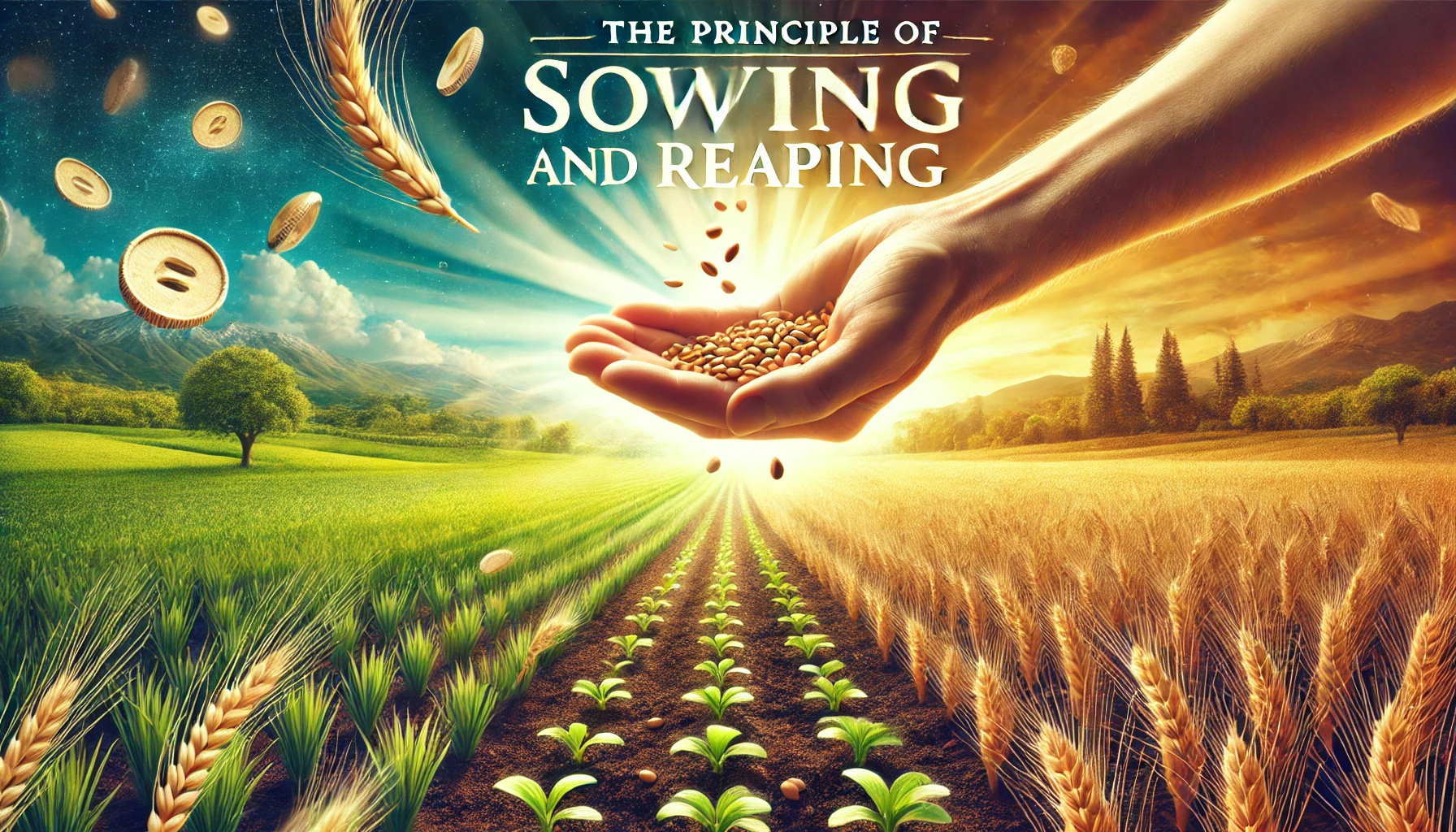
    Day 13: The Principle of Sowing and Reaping

    Welcome to Day 13 of our 30-day journey. Today, we explore the biblical principle of sowing and reaping. This principle is foundational to understanding how God’s kingdom operates, not just in agriculture but in every area of life, including our finances. The idea is simple: what you sow, you will reap. This applies to our actions, attitudes, and how we use the resources God has given us. Understanding this principle can transform how we approach giving, investing, and managing our finances.

    Revelation:
    The Bible teaches that you reap what you sow. This means that the choices you make today will determine the harvest you receive in the future. When you sow generously, you can expect to reap generously, both in the physical and spiritual realms. God’s kingdom operates on this principle of sowing and reaping, and it encourages us to be intentional about what we plant with our time, talents, and resources.

    Scripture Reference:
    Galatians 6:7 – “Do not be deceived: God cannot be mocked. A man reaps what he sows.”

    This verse serves as both a warning and an encouragement. It reminds us that our actions have consequences, and that the seeds we plant will determine the harvest we receive. Whether it’s in relationships, work, or finances, we should be mindful of what we are sowing, knowing that it will eventually produce fruit.

    Direction:
    Today, consider the seeds you are planting in your financial life. Are you sowing seeds of generosity, diligence, and faithfulness? Or are you sowing seeds of selfishness, greed, or negligence? Reflect on the areas of your life where you need to be more intentional about what you are planting. Ask God to help you sow seeds that will produce a harvest of blessings, not just for yourself but for others as well. Remember that the quality of the harvest is directly related to the quality of the seeds you sow.

    Meditation:
    Reflect on the Parable of the Sower in Matthew 13:1-23. In this parable, Jesus describes a farmer who sows seeds on different types of soil. Some seeds fall along the path, some on rocky ground, some among thorns, and some on good soil. The seeds that fall on good soil produce a crop—some yielding a hundred, sixty, or thirty times what was sown. Jesus explains that the seed represents the word of God, and the different types of soil represent the conditions of people’s hearts.

    This parable teaches us about the importance of the condition of our hearts and the intentionality with which we sow seeds. Just as a farmer carefully prepares the soil and sows good seeds, we too must be deliberate in how we plant seeds in our financial lives. Whether it’s through our giving, our work ethic, or how we manage our resources, the seeds we plant should be aligned with God’s word and purposes.

    As you meditate on this parable, ask yourself: What kind of soil are you sowing into? Are your financial practices rooted in good soil—guided by biblical principles and a heart for God’s kingdom? Consider how you can better prepare the “soil” of your life to receive and nurture the seeds you plant, ensuring they grow into a fruitful harvest.

    Prayer:
    “Lord, I thank You for the principle of sowing and reaping that You have established in Your kingdom. I recognize that the seeds I plant today will determine the harvest I receive in the future. Help me to be intentional about sowing seeds of generosity, faithfulness, and diligence in my financial life. Teach me to align my actions with Your word and to trust in Your timing for the harvest. May the seeds I plant not only bless me but also be a blessing to others and bring glory to Your name. In Jesus’ name, Amen.”

    Deeper Reflection:
    After your prayer, spend some time reflecting on the seeds you have been planting in your life—both positive and negative. Are there areas where you need to change the type of seeds you are sowing? Perhaps you need to be more generous, more disciplined, or more focused on eternal values rather than temporary gains. Write down any insights or changes you need to make and commit to sowing seeds that will lead to a bountiful and God-honoring harvest.

    Action Step:
    As a practical step, identify one specific area in your financial life where you can start sowing better seeds. This could involve increasing your giving, being more diligent in your work, or investing your time and resources in something that will have lasting value. Create a plan for how you will nurture these seeds over time, ensuring they are planted in good soil and watered with prayer, faith, and consistent effort.

    Closing Thought:
    The principle of sowing and reaping is a powerful reminder that our actions have lasting consequences. By intentionally planting seeds that align with God’s word and His purposes, we can expect a harvest of blessings in due time. As you continue on this journey, trust that God is faithful to bring forth a harvest that reflects the seeds you have sown. Be patient, be diligent, and always seek to sow seeds that will glorify God and advance His kingdom.

  • Day 11: Faith in Times of Financial Uncertainty

    Day 11: Faith in Times of Financial Uncertainty

    Welcome to Day 11 of our 30-day journey. Today, we will focus on maintaining faith during times of financial uncertainty. Financial challenges can be overwhelming, and it’s natural to feel anxious or fearful when the future seems unclear. However, as followers of Christ, we are called to trust in God’s provision and sovereignty, even when our circumstances are uncertain. Faith in God’s promises gives us the strength to navigate financial difficulties with peace and confidence.

    Revelation:
    In times of financial uncertainty, God calls you to trust in Him rather than relying on your own understanding. While it’s natural to be concerned about your financial situation, God invites you to place your trust in His ability to provide. The Bible teaches that God is our source of security, and He promises to meet our needs according to His riches in glory. Faith in God’s provision allows us to face financial uncertainty with peace and hope.

    Scripture Reference:
    Proverbs 3:5-6 – “Trust in the Lord with all your heart and lean not on your own understanding; in all your ways submit to him, and he will make your paths straight.”

    This verse reminds us that true wisdom comes from trusting in God rather than relying on our own understanding. When we submit our financial concerns to God and trust Him with all our heart, He promises to guide us and direct our steps.

    Direction:
    Today, reflect on any financial uncertainties or challenges you are facing. Are you struggling with anxiety or fear about the future? Take time to surrender these concerns to God, acknowledging that He is in control and that His plans for you are good. Ask God to increase your faith and to help you trust Him more deeply, even when the path ahead is unclear. Remember that faith is not the absence of fear, but the choice to trust God despite your fears.

    Meditation:
    Reflect on the story of Jesus calming the storm in Mark 4:35-41. In this passage, Jesus and His disciples were crossing the Sea of Galilee when a furious storm arose, threatening to capsize the boat. Despite the storm, Jesus was asleep, completely at peace. The disciples, terrified, woke Him and asked, “Teacher, don’t you care if we drown?” Jesus got up, rebuked the wind, and said to the waves, “Quiet! Be still!” The wind died down, and it was completely calm. He then asked His disciples, “Why are you so afraid? Do you still have no faith?”

    This story illustrates the power of faith in the midst of fear and uncertainty. The disciples were focused on the storm, but Jesus was focused on His Father’s will. He knew that God was in control, and He demonstrated that faith by calming the storm. As you meditate on this story, ask yourself: What “storms” are you facing in your financial life? How can you trust God to calm those storms and bring peace to your situation? Remember, Jesus is with you in the boat, and He has the power to bring calm to your financial challenges.

    Prayer:
    “Lord, I thank You for being my source of peace and security, even in times of financial uncertainty. I confess that I have been anxious and fearful about my financial situation, and I ask for Your forgiveness. Help me to trust in You with all my heart and to lean not on my own understanding. Increase my faith, and give me the courage to face the challenges ahead with confidence in Your provision. I surrender my financial concerns to You, knowing that You are in control and that Your plans for me are good. Thank You for calming the storms in my life and for guiding me on the path of peace. In Jesus’ name, Amen.”

    Deeper Reflection:
    After your prayer, take some time to reflect on the specific financial challenges you are facing. Write down any fears or anxieties that have been weighing on your heart, and then write a corresponding prayer of surrender for each one. This exercise can help you release your worries to God and remind you of His faithfulness. Consider also how you can cultivate a habit of trusting God in your daily life, whether through prayer, meditation on His Word, or seeking godly counsel.

    Action Step:
    As a practical step, consider creating a “Faith in Finances” journal where you can document your financial concerns, prayers, and how God answers them over time. This journal can serve as a reminder of God’s faithfulness and as a tool to help you grow in trust. Additionally, if you are facing a significant financial decision, take time to pray specifically for God’s guidance, and be willing to wait on His timing rather than rushing into a decision out of fear or anxiety.

    Closing Thought:
    Faith in times of financial uncertainty is a powerful testimony of your trust in God. When you choose to trust God rather than giving in to fear, you demonstrate that your security is not in your financial situation but in God’s unchanging character. As you continue on this journey, remember that God is your provider and protector, and He will never leave you nor forsake you. Trust Him to guide you through the uncertainties and to bring you to a place of peace and provision.

  • Day 10: Seeking God’s Kingdom First

    Day 10: Seeking God’s Kingdom First

    Welcome to Day 10 of our 30-day journey. Today, we will focus on the importance of seeking God’s kingdom first in all areas of our lives, including our finances. Jesus teaches us that when we prioritize God’s kingdom, everything else we need will be provided. This principle challenges us to re-evaluate our priorities and ensure that our financial decisions align with God’s will and purpose.

    Revelation:
    God promises to provide for your needs when you prioritize His kingdom. Seeking His kingdom first means aligning your financial decisions, goals, and lifestyle with God’s values and purposes. It’s about putting God at the center of your financial life and trusting that He will take care of everything else. When we seek God’s kingdom first, we shift our focus from accumulating material wealth to pursuing eternal treasures.

    Scripture Reference:
    Matthew 6:33 – “But seek first his kingdom and his righteousness, and all these things will be given to you as well.”

    This verse is a powerful reminder that God’s provision is connected to our priorities. When we seek God’s kingdom and righteousness above all else, He promises to meet our needs. This doesn’t mean we neglect our responsibilities, but it means that our primary focus is on God’s purposes rather than our own material gain.

    Direction:
    Today, take time to evaluate your financial goals and priorities. Are they aligned with God’s kingdom, or are they primarily focused on personal gain? Consider the ways in which you can reorient your financial decisions to reflect a kingdom-first mindset. This might involve making changes to your budget, giving more generously, or investing in causes that advance God’s work. Ask God to guide you in making these adjustments and to help you trust Him for your provision.

    Meditation:
    Reflect on the story of the rich young ruler in Matthew 19:16-30. This young man approached Jesus with the question, “What good thing must I do to get eternal life?” Despite his obedience to the commandments, when Jesus asked him to sell his possessions and give to the poor, the young man went away sad because he had great wealth. Jesus then told His disciples that it is difficult for a rich person to enter the kingdom of heaven, but He also assured them that with God, all things are possible.

    This story challenges us to consider what we value most. The rich young ruler was unable to prioritize God’s kingdom over his wealth, and as a result, he missed out on the greater blessings that come from following Jesus. As you meditate on this story, ask yourself: What are the things in your life that might be hindering you from fully seeking God’s kingdom? Are there financial goals, possessions, or desires that have taken precedence over your relationship with God? Consider how you can let go of these things and fully commit to seeking God’s kingdom first.

    Prayer:
    “Lord, I thank You for the reminder to seek Your kingdom first in every area of my life, including my finances. I confess that I have sometimes placed my own desires and goals above Your will. Help me to reorient my priorities so that my financial decisions reflect a kingdom-first mindset. Teach me to trust in Your provision and to focus on what truly matters—my relationship with You and advancing Your kingdom. May my life be a reflection of Your love, grace, and righteousness. In Jesus’ name, Amen.”

    Deeper Reflection:
    After your prayer, spend some time reflecting on the specific ways you can seek God’s kingdom first in your financial life. Write down any insights or ideas that come to mind, and make a plan to implement them. This might involve setting new financial goals that prioritize giving, supporting ministry work, or simplifying your lifestyle to focus more on spiritual growth. Consider also how you can involve your family or community in this journey of seeking God’s kingdom first.

    Action Step:
    As a practical step, identify one area of your financial life where you can make a change to better align with God’s kingdom. This could involve increasing your giving, volunteering your time for a ministry, or reallocating resources to support a cause that advances God’s work. Make a commitment to take this step within the next week, and trust that God will honor your decision to put His kingdom first.

    Closing Thought:
    Seeking God’s kingdom first is not just a financial decision; it’s a way of life. When you prioritize God’s kingdom, you are aligning your life with His purposes and opening yourself up to His abundant provision. As you continue on this journey, trust that God will provide for your needs and bless you in ways that far exceed material wealth. Remember, the true treasures are those that are stored up in heaven, where they will never fade away.

  • Day 7: The Power of Prayer in Finances

    Day 7: The Power of Prayer in Finances


    Welcome to Day 7 of our 30-day journey. Today, we will focus on the power of prayer in your financial life. Prayer is a direct line of communication with God, and it’s through prayer that we can invite His wisdom, guidance, and provision into our finances. Whether you are facing financial difficulties, making important decisions, or seeking to align your finances with God’s will, prayer is a powerful tool that can transform your situation and bring peace.

    Revelation:
    Prayer is not just a ritual; it’s a powerful means of connecting with God and inviting His intervention in every area of your life, including your finances. When we bring our financial concerns to God in prayer, we acknowledge His sovereignty and invite His guidance. The Bible teaches us to pray about everything, trusting that God cares about even the smallest details of our lives.

    Scripture Reference:
    Matthew 7:7-8 – “Ask and it will be given to you; seek and you will find; knock and the door will be opened to you. For everyone who asks receives; the one who seeks finds; and to the one who knocks, the door will be opened.”

    This passage encourages us to approach God with confidence, knowing that He hears our prayers and responds according to His will. It reminds us that God is always ready to listen and that we should not hesitate to bring our financial concerns before Him.

    Direction:
    Today, spend some time in prayer specifically for your financial needs and goals. Whether you are dealing with debt, planning for the future, or seeking to be a better steward of your resources, bring these concerns to God in prayer. Ask Him for wisdom, guidance, and provision, and trust that He will answer according to His perfect will. As you pray, also ask God to help you align your financial decisions with His purposes and to give you peace in the midst of any financial uncertainty.

    Meditation:
    Reflect on the story of Elijah and the widow at Zarephath in 1 Kings 17:8-16. During a severe famine, God sent Elijah to a widow in Zarephath, who was preparing to make a final meal for herself and her son before they ran out of food. Elijah asked her for bread, promising that God would provide for her needs if she obeyed. Despite her dire situation, the widow trusted Elijah’s words, and God miraculously provided enough flour and oil to sustain her, her son, and Elijah throughout the famine.

    This story illustrates the power of trusting God’s word and the importance of prayerful obedience. The widow’s situation seemed hopeless, but her willingness to trust and obey God’s instruction led to His miraculous provision. As you meditate on this story, consider how you can apply the principles of faith and prayer in your financial life. Are there areas where you need to trust God more deeply? How can you be more intentional about seeking God’s guidance through prayer in your financial decisions?

    Prayer:
    “Lord, I bring my financial needs and concerns before You today, trusting that You are able to provide for all my needs according to Your riches in glory. I ask for Your wisdom and guidance in my financial decisions, and I pray that You will align my heart and mind with Your will. Help me to trust You in all circumstances, knowing that You are in control and that You care about every detail of my life. I surrender my financial worries to You and ask for Your peace to fill my heart. Thank You for hearing my prayers and for Your faithfulness in answering them. In Jesus’ name, Amen.”

    Deeper Reflection:
    After your prayer, take a moment to listen for God’s voice. Is there anything specific He is speaking to you about your finances? Write down any impressions or insights you receive during this time of reflection. Consider also how you can incorporate regular prayer into your financial planning and decision-making. This could be as simple as praying before making a purchase, seeking God’s guidance before setting a budget, or spending time in prayer before making a significant financial decision.

    Action Step:
    As a practical step, consider setting aside a specific time each day or week to pray for your finances. Create a list of financial goals, concerns, and decisions that you want to bring before God in prayer. This could include things like paying off debt, saving for the future, giving more generously, or seeking wisdom for a financial decision. Make prayer a regular part of your financial life, and trust that God will guide and provide as you seek Him.

    Closing Thought:
    Prayer is a powerful tool that can bring transformation to your financial life. By consistently bringing your financial needs and decisions before God, you invite His wisdom, guidance, and provision into every area of your finances. Trust that God cares about your financial well-being and that He will answer your prayers according to His perfect will. As you grow in your prayer life, you will experience greater peace, clarity, and confidence in your financial journey.

  • Day 2: Stewardship and Responsibility

    Day 2: Stewardship and Responsibility

    Welcome to Day 2 of our 30-day journey. Today, we focus on the biblical principle of stewardship and responsibility. God has entrusted each of us with resources—time, talents, and finances—and He calls us to manage them wisely. Stewardship is not just about managing money; it’s about recognizing that everything we have belongs to God and using it to glorify Him.

    Revelation:
    God calls us to be wise stewards of the resources He has given us. This includes our time, talents, and finances. Stewardship is about more than just keeping track of our money—it’s about managing all the gifts and opportunities God provides in a way that honors Him. When we understand that everything we have is a gift from God, it changes the way we approach our responsibilities.

    Scripture Reference:
    Luke 16:10 – “Whoever can be trusted with very little can also be trusted with much, and whoever is dishonest with very little will also be dishonest with much.”

    This verse teaches us the importance of faithfulness in managing both small and large responsibilities. God is watching how we handle what we have now, and our faithfulness with little will open doors for greater blessings and responsibilities in the future.

    Direction:
    Today, take a moment to evaluate how you are managing the resources God has entrusted to you. Consider your time, talents, and finances. Are you using them in ways that glorify God and advance His kingdom? Reflect on any areas where you may need to improve your stewardship. Perhaps you need to be more intentional with your time, invest your talents in service to others, or manage your finances more wisely. Write down specific steps you can take to be a better steward in each area.

    Meditation:
    Reflect on the Parable of the Talents found in Matthew 25:14-30. In this parable, a master entrusts his servants with varying amounts of money (talents) before leaving on a journey. The servants who wisely invested and multiplied their talents were praised and rewarded upon the master’s return, while the servant who buried his talent out of fear was reprimanded.

    This parable illustrates the principle that God expects us to use what He has given us to produce fruit. Take time today to meditate on how you can multiply the talents and resources God has entrusted to you. Are you investing your time in activities that bear spiritual fruit? Are you using your talents to serve others and build the kingdom of God? Are you managing your finances in a way that honors God and reflects His priorities?

    Consider also the broader impact of your stewardship. When you are faithful with what God has given you, not only are you blessed, but you also become a blessing to others. Your wise management can have a ripple effect, influencing your family, community, and even future generations.

    Prayer:
    “Lord, I thank You for the resources You have entrusted to me. I recognize that everything I have comes from You, and I want to use it wisely. Help me to be a faithful steward of my time, talents, and finances. Show me where I need to make changes, and give me the wisdom and discipline to manage all that You’ve given me in a way that honors You. May I multiply the blessings You’ve placed in my care and use them to further Your kingdom. In Jesus’ name, Amen.”

    Deeper Reflection:
    After your prayer, spend a few minutes in silence, asking God to reveal any specific areas where your stewardship may need improvement. As you listen, jot down any thoughts or impressions that come to mind. This might include practical steps like creating a budget, setting aside time for a specific ministry, or developing a new skill that God can use.

    Action Step:
    As a practical application, consider creating a stewardship plan. This could involve setting goals for how you will manage your time, talents, and finances over the next month, quarter, or year. For example, you might set a goal to dedicate a certain number of hours each week to serving in your church or community or to start a savings plan that allows you to give more generously. Share this plan with a trusted friend or mentor who can hold you accountable and provide encouragement.

    Closing Thought:
    Stewardship is a daily practice, not just a one-time decision. As you commit to being a wise and faithful steward, remember that God is your partner in this journey. He will give you the wisdom, strength, and resources you need to manage His gifts well. Stewardship is ultimately about aligning your heart with God’s purposes and being a conduit of His blessings to the world.

  • Day 1: Trusting God with Your Finances

    Day 1: Trusting God with Your Finances

    Introduction:
    Welcome to Day 1 of our 30-day journey towards financial wisdom and spiritual growth. Today, we begin with the foundational principle of trusting God with your finances. Trust is the bedrock of our relationship with God, and this extends to every area of our lives, including our financial decisions and worries.

    Revelation:
    God is your ultimate provider, and His provision is limitless. Trusting Him with your finances means releasing control and allowing Him to guide your financial decisions. It’s easy to feel overwhelmed by financial pressures, especially in a world that often values self-reliance and material success. However, God invites you to trust Him completely. He knows your needs, even before you ask, and He promises to meet them according to His riches in glory.

    Scripture Reference:
    Philippians 4:19 – “And my God will meet all your needs according to the riches of his glory in Christ Jesus.”

    This verse serves as a powerful reminder that God’s resources are infinite. He is not limited by the economy, your job situation, or any other circumstance. His riches in glory far surpass anything we can imagine, and He is more than able to meet your needs.

    Direction:
    Today, take a moment to surrender your financial worries to God. Identify the specific areas where you are struggling to trust Him—whether it’s debt, bills, future expenses, or financial uncertainty. Write down these concerns in a journal or on a piece of paper. As you write them down, pray over each one, asking God to take control. Release these burdens to Him, and trust that He will provide for you in His perfect timing and way. Remember, trusting God with your finances is not just a one-time event but a daily choice to rely on His wisdom and provision.

    Meditation:
    Reflect on the times in your life when God has provided for you, even when the circumstances seemed dire. Take a few moments to meditate on His faithfulness. Ask yourself: How did God come through for you in the past? How did His provision exceed your expectations? Use these reflections to strengthen your trust in God for your current and future financial needs.

    Consider also the story of Elijah and the widow in 1 Kings 17:8-16. In a time of severe famine, God sent Elijah to a widow in Zarephath. Despite having only a handful of flour and a little oil, the widow trusted God’s word through Elijah and provided him with bread. Miraculously, her jar of flour and jug of oil never ran dry. This story illustrates the power of trusting God with what little you have and watching Him multiply it to meet your needs.

    Prayer:
    “Lord, I come before You today with my financial worries and concerns. I surrender them to You, knowing that You are my ultimate provider. I trust that You will meet all my needs according to Your riches in glory. Help me to release control and rely on You completely. Teach me to walk in faith, trusting that You have a plan for my finances. As I trust You more each day, may I see Your hand at work in my life, providing for me in ways that only You can. Thank You for Your provision and for the peace that comes from trusting in You. In Jesus’ name, Amen.”

    Deeper Reflection:
    After your prayer, take a few moments to sit in silence and allow the peace of God to fill your heart. Imagine handing over your financial worries to God, one by one, and receiving His peace in return. Consider writing a letter to God, expressing your trust in His provision and your gratitude for all He has already done. This can be a powerful way to solidify your commitment to trusting Him with your finances.

    Action Step:
    As a practical step of trust, consider setting aside a small amount of money today as a “Trust Fund.” This isn’t a savings account in the traditional sense, but a symbolic act of faith. Whenever you feel anxious about money, add to this fund as a reminder that you are trusting God with your finances. Over time, you may feel led to use this money for a specific purpose, such as blessing someone in need or supporting a ministry. Let this be a tangible expression of your trust in God’s provision.

    Closing Thought:
    Trusting God with your finances is a journey, not a destination. Each day offers a new opportunity to deepen your faith and reliance on His provision. As you move forward in this 30-day devotion, remember that God is faithful and His promises are true. He will provide for you, guide you, and bless you as you trust in Him.