
Tag: #FaithfulLiving

  • Day 27: Sowing Seeds of Faith

    Day 27: Sowing Seeds of Faith

    Welcome to Day 27 of our 30-day journey. Today, we will focus on the concept of sowing seeds of faith. The Bible often uses agricultural metaphors to describe spiritual principles, and one of the most powerful is the principle of sowing and reaping. Just as a farmer plants seeds with the expectation of a harvest, we too are called to sow seeds of faith in our lives, trusting that God will bring about a harvest in His perfect timing. Sowing seeds of faith involves not only our actions and decisions but also our prayers, words, and attitudes. By planting seeds of faith, we are investing in a future harvest of God’s blessings and provision.

    Revelation:
    Sowing seeds of faith is an act of trust in God’s promises. The Bible teaches that what we sow, we will also reap (Galatians 6:7). This principle applies not only to our finances but to every area of our lives. When we sow seeds of faith—whether through our actions, words, or prayers—we are aligning ourselves with God’s will and trusting Him to bring about a harvest. Sowing requires patience and perseverance, as the results are often not immediate, but God is faithful to honor the seeds we plant in faith.

    Scripture Reference:
    2 Corinthians 9:6 – “Remember this: Whoever sows sparingly will also reap sparingly, and whoever sows generously will also reap generously.”

    This verse emphasizes the importance of the attitude with which we sow. Generosity in our sowing leads to a generous harvest. Whether it’s in giving, serving, or praying, the principle remains the same: the more we invest in God’s kingdom with faith and generosity, the more we will see His blessings in our lives and the lives of others. Sowing seeds of faith is about giving our best to God, trusting that He will multiply our efforts and bring forth a bountiful harvest.

    Direction:
    Today, reflect on the seeds you are sowing in your life. Are you sowing seeds of faith, generosity, and kindness, or are there areas where you are holding back? Consider how you can be more intentional about sowing seeds that align with God’s will and purpose for your life. This might involve stepping out in faith in a specific area, speaking words of encouragement, or investing your time and resources in something that advances God’s kingdom. Trust that God will honor your faith and bring about a harvest in due time.

    Meditation:
    Reflect on the Parable of the Sower in Matthew 13:3-9, 18-23. In this parable, Jesus describes a sower who scatters seeds on different types of soil: the path, rocky ground, among thorns, and on good soil. The seeds that fell on good soil produced a crop, multiplying thirty, sixty, or even a hundred times what was sown. Jesus explains that the good soil represents those who hear the word, understand it, and produce a harvest.

    This parable teaches us about the importance of the condition of our hearts when sowing seeds of faith. Just as good soil is necessary for a fruitful harvest, so too is a receptive and obedient heart necessary for spiritual growth and blessing. As you meditate on this parable, ask yourself: What kind of soil is my heart? Am I receptive to God’s word and obedient in sowing seeds of faith? Consider how you can cultivate a heart that is ready to receive and nurture the seeds God has given you to plant.

    Prayer:
    “Lord, I thank You for the seeds of faith that You have entrusted to me. I recognize that every act of faith, every word of encouragement, and every prayer is a seed that You can use to bring about a harvest. Help me to sow generously, trusting that You will multiply my efforts and bring forth fruit in due time. Teach me to be patient and faithful, even when I don’t see immediate results. May my heart be like good soil, ready to receive Your word and produce a harvest that glorifies You. In Jesus’ name, Amen.”

    Deeper Reflection:
    After your prayer, take some time to think about the specific seeds of faith you are called to sow in this season of your life. Are there areas where you need to step out in faith or invest more intentionally? Write down your thoughts and make a plan to sow these seeds with purpose and prayer. Reflect also on the ways in which God has brought about a harvest from seeds you’ve sown in the past, and let these testimonies encourage you to continue sowing in faith.

    Action Step:
    As a practical step, choose one specific seed of faith to sow today. This could be a financial gift, an act of service, a word of encouragement, or a step of faith in a particular area of your life. Whatever it is, do it with the intention of planting a seed that will produce a harvest for God’s kingdom. Additionally, consider starting a “faith journal” where you can record the seeds you’ve sown and the ways in which God brings about a harvest in your life. This practice can help you stay focused on God’s faithfulness and encourage you to keep sowing, even when the results are not immediately visible.

    Closing Thought:
    Sowing seeds of faith is a powerful way to participate in God’s work and to invest in His kingdom. While the results may not always be immediate, God is faithful to bring about a harvest in His perfect timing. As you continue on this journey, remember that every act of faith, no matter how small, has the potential to produce great fruit. Keep sowing generously, trust in God’s provision, and look forward to the abundant harvest that He will bring forth in your life.
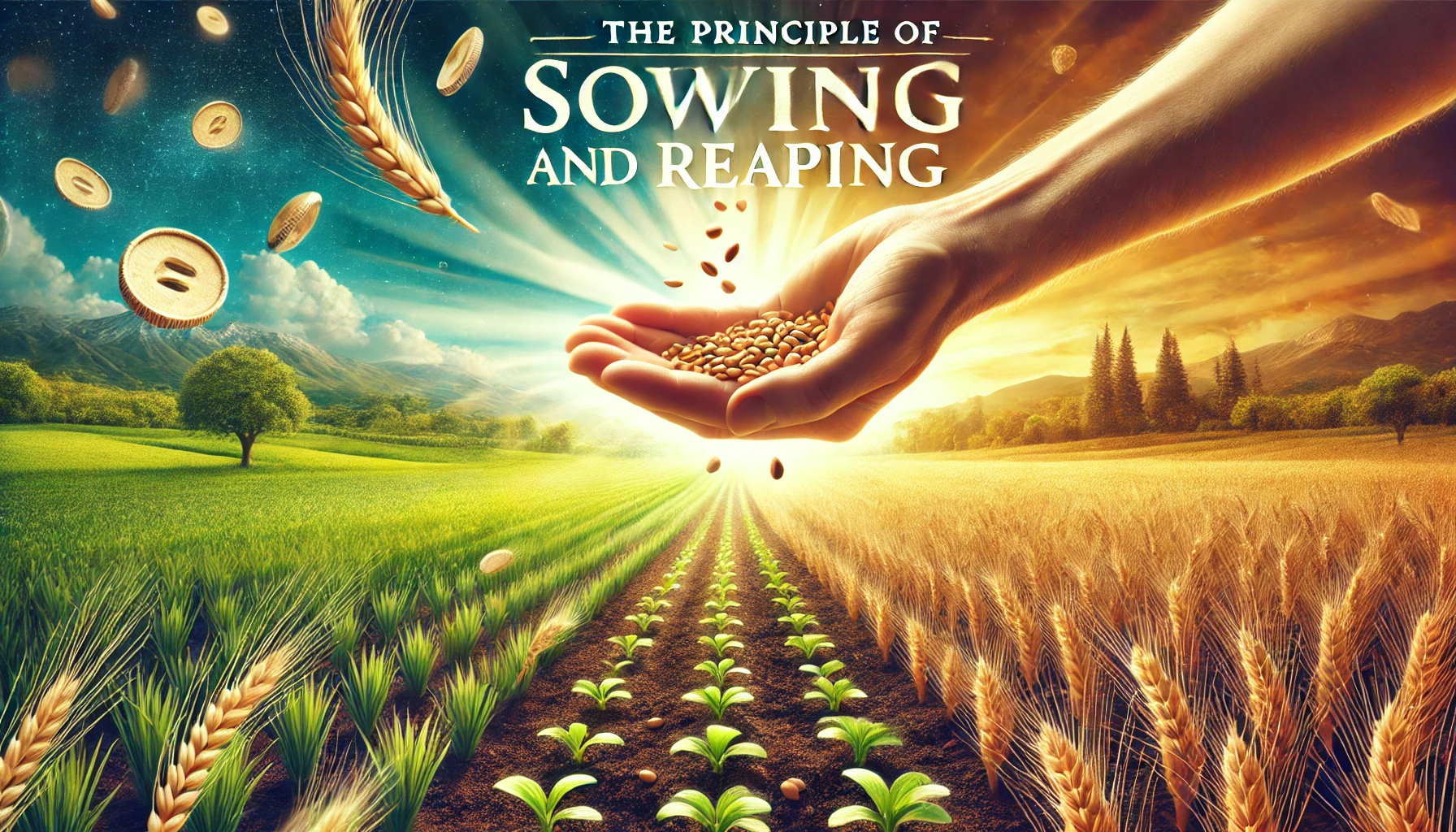
  • Day 13: The Principle of Sowing and Reaping

    Day 13: The Principle of Sowing and Reaping

    Welcome to Day 13 of our 30-day journey. Today, we explore the biblical principle of sowing and reaping. This principle is foundational to understanding how God’s kingdom operates, not just in agriculture but in every area of life, including our finances. The idea is simple: what you sow, you will reap. This applies to our actions, attitudes, and how we use the resources God has given us. Understanding this principle can transform how we approach giving, investing, and managing our finances.

    Revelation:
    The Bible teaches that you reap what you sow. This means that the choices you make today will determine the harvest you receive in the future. When you sow generously, you can expect to reap generously, both in the physical and spiritual realms. God’s kingdom operates on this principle of sowing and reaping, and it encourages us to be intentional about what we plant with our time, talents, and resources.

    Scripture Reference:
    Galatians 6:7 – “Do not be deceived: God cannot be mocked. A man reaps what he sows.”

    This verse serves as both a warning and an encouragement. It reminds us that our actions have consequences, and that the seeds we plant will determine the harvest we receive. Whether it’s in relationships, work, or finances, we should be mindful of what we are sowing, knowing that it will eventually produce fruit.

    Direction:
    Today, consider the seeds you are planting in your financial life. Are you sowing seeds of generosity, diligence, and faithfulness? Or are you sowing seeds of selfishness, greed, or negligence? Reflect on the areas of your life where you need to be more intentional about what you are planting. Ask God to help you sow seeds that will produce a harvest of blessings, not just for yourself but for others as well. Remember that the quality of the harvest is directly related to the quality of the seeds you sow.

    Meditation:
    Reflect on the Parable of the Sower in Matthew 13:1-23. In this parable, Jesus describes a farmer who sows seeds on different types of soil. Some seeds fall along the path, some on rocky ground, some among thorns, and some on good soil. The seeds that fall on good soil produce a crop—some yielding a hundred, sixty, or thirty times what was sown. Jesus explains that the seed represents the word of God, and the different types of soil represent the conditions of people’s hearts.

    This parable teaches us about the importance of the condition of our hearts and the intentionality with which we sow seeds. Just as a farmer carefully prepares the soil and sows good seeds, we too must be deliberate in how we plant seeds in our financial lives. Whether it’s through our giving, our work ethic, or how we manage our resources, the seeds we plant should be aligned with God’s word and purposes.

    As you meditate on this parable, ask yourself: What kind of soil are you sowing into? Are your financial practices rooted in good soil—guided by biblical principles and a heart for God’s kingdom? Consider how you can better prepare the “soil” of your life to receive and nurture the seeds you plant, ensuring they grow into a fruitful harvest.

    Prayer:
    “Lord, I thank You for the principle of sowing and reaping that You have established in Your kingdom. I recognize that the seeds I plant today will determine the harvest I receive in the future. Help me to be intentional about sowing seeds of generosity, faithfulness, and diligence in my financial life. Teach me to align my actions with Your word and to trust in Your timing for the harvest. May the seeds I plant not only bless me but also be a blessing to others and bring glory to Your name. In Jesus’ name, Amen.”

    Deeper Reflection:
    After your prayer, spend some time reflecting on the seeds you have been planting in your life—both positive and negative. Are there areas where you need to change the type of seeds you are sowing? Perhaps you need to be more generous, more disciplined, or more focused on eternal values rather than temporary gains. Write down any insights or changes you need to make and commit to sowing seeds that will lead to a bountiful and God-honoring harvest.

    Action Step:
    As a practical step, identify one specific area in your financial life where you can start sowing better seeds. This could involve increasing your giving, being more diligent in your work, or investing your time and resources in something that will have lasting value. Create a plan for how you will nurture these seeds over time, ensuring they are planted in good soil and watered with prayer, faith, and consistent effort.

    Closing Thought:
    The principle of sowing and reaping is a powerful reminder that our actions have lasting consequences. By intentionally planting seeds that align with God’s word and His purposes, we can expect a harvest of blessings in due time. As you continue on this journey, trust that God is faithful to bring forth a harvest that reflects the seeds you have sown. Be patient, be diligent, and always seek to sow seeds that will glorify God and advance His kingdom.

  • Day 5: Building Wealth God’s Way

    Day 5: Building Wealth God’s Way

    Welcome to Day 5 of our 30-day journey. Today, we will focus on building wealth in a way that honors God. Wealth, in and of itself, is not inherently good or bad; it is a tool that can be used for both positive and negative purposes. The key is how we acquire and use wealth. God desires for His people to prosper, but His definition of prosperity goes beyond material wealth. True prosperity includes spiritual growth, generosity, and using our resources to further His kingdom.

    Revelation:
    God desires for you to prosper, but true prosperity is more than just financial gain. It includes spiritual and emotional well-being, strong relationships, and the ability to impact others positively. Wealth that is built on godly principles is a blessing, not just for you but for those around you. When we build wealth in God’s way, we ensure that our financial success is aligned with His will and purpose for our lives.

    Scripture Reference:
    Proverbs 3:9-10 – “Honor the Lord with your wealth, with the first fruits of all your crops; then your barns will be filled to overflowing, and your vats will brim over with new wine.”

    This passage emphasizes the importance of honoring God with the wealth He blesses us with. When we put God first in our finances—through tithing, giving, and responsible management—we open the door to His blessings. The overflowing barns and brimming vats symbolize the abundance that comes from putting God first.

    Direction:
    Today, take time to reflect on how you are building wealth. Are your financial goals aligned with God’s principles? Consider how you can honor God with your wealth. This might include prioritizing tithing, giving generously, investing in ethical and responsible ways, and avoiding financial practices that conflict with biblical values. Write down specific actions you can take to ensure that your approach to building wealth is rooted in godly wisdom and integrity.

    Meditation:
    Reflect on the story of King Solomon in 1 Kings 3:5-14. When Solomon became king, God appeared to him in a dream and offered to grant him anything he asked for. Instead of asking for wealth or a long life, Solomon asked for wisdom to govern God’s people. Pleased with Solomon’s request, God not only granted him unparalleled wisdom but also blessed him with wealth and honor beyond what he had asked for.

    Solomon’s story teaches us that when we prioritize God’s wisdom and purposes over personal gain, God blesses us abundantly. The pursuit of wealth should never come at the expense of our spiritual growth or our relationship with God. Instead, wealth should be a byproduct of living a life that is aligned with God’s will.

    As you meditate on this story, ask yourself: Are you seeking God’s wisdom in your financial decisions? Are your priorities in line with His purposes? Remember that true wealth is not measured solely by material possessions but by the richness of your relationship with God and the impact you have on others.

    Prayer:
    “Lord, I thank You for the resources and opportunities You have given me to build wealth. I recognize that true prosperity comes from You and includes not just financial success but also spiritual growth, strong relationships, and a life that honors You. Help me to build wealth in a way that aligns with Your principles and purposes. Give me the wisdom to make sound financial decisions and to use my resources to further Your kingdom. May my wealth be a blessing, not just to me, but to those around me. In Jesus’ name, Amen.”

    Deeper Reflection:
    After your prayer, spend some time evaluating your financial goals and strategies. Are there areas where you have been focused on personal gain at the expense of spiritual growth or integrity? Are there changes you need to make to ensure that your pursuit of wealth is pleasing to God? Write down any insights you receive during this reflection and make a plan to implement them.

    Action Step:
    As a practical step, consider setting specific goals for how you will honor God with your wealth. This could involve increasing your giving, supporting a ministry or charitable organization, or investing in ways that align with your values. Create a plan for allocating your resources to reflect your commitment to building wealth in God’s way. Share this plan with a trusted friend or mentor who can provide accountability and encouragement.

    Closing Thought:
    Building wealth in God’s way is about more than just accumulating money; it’s about creating a life that reflects God’s character and purposes. As you commit to this process, remember that God is your provider and that He desires for you to prosper in every area of your life. By honoring Him with your wealth, you will experience true prosperity—one that blesses you and those around you.

  • Day 2: Stewardship and Responsibility

    Day 2: Stewardship and Responsibility

    Welcome to Day 2 of our 30-day journey. Today, we focus on the biblical principle of stewardship and responsibility. God has entrusted each of us with resources—time, talents, and finances—and He calls us to manage them wisely. Stewardship is not just about managing money; it’s about recognizing that everything we have belongs to God and using it to glorify Him.

    Revelation:
    God calls us to be wise stewards of the resources He has given us. This includes our time, talents, and finances. Stewardship is about more than just keeping track of our money—it’s about managing all the gifts and opportunities God provides in a way that honors Him. When we understand that everything we have is a gift from God, it changes the way we approach our responsibilities.

    Scripture Reference:
    Luke 16:10 – “Whoever can be trusted with very little can also be trusted with much, and whoever is dishonest with very little will also be dishonest with much.”

    This verse teaches us the importance of faithfulness in managing both small and large responsibilities. God is watching how we handle what we have now, and our faithfulness with little will open doors for greater blessings and responsibilities in the future.

    Direction:
    Today, take a moment to evaluate how you are managing the resources God has entrusted to you. Consider your time, talents, and finances. Are you using them in ways that glorify God and advance His kingdom? Reflect on any areas where you may need to improve your stewardship. Perhaps you need to be more intentional with your time, invest your talents in service to others, or manage your finances more wisely. Write down specific steps you can take to be a better steward in each area.

    Meditation:
    Reflect on the Parable of the Talents found in Matthew 25:14-30. In this parable, a master entrusts his servants with varying amounts of money (talents) before leaving on a journey. The servants who wisely invested and multiplied their talents were praised and rewarded upon the master’s return, while the servant who buried his talent out of fear was reprimanded.

    This parable illustrates the principle that God expects us to use what He has given us to produce fruit. Take time today to meditate on how you can multiply the talents and resources God has entrusted to you. Are you investing your time in activities that bear spiritual fruit? Are you using your talents to serve others and build the kingdom of God? Are you managing your finances in a way that honors God and reflects His priorities?

    Consider also the broader impact of your stewardship. When you are faithful with what God has given you, not only are you blessed, but you also become a blessing to others. Your wise management can have a ripple effect, influencing your family, community, and even future generations.

    Prayer:
    “Lord, I thank You for the resources You have entrusted to me. I recognize that everything I have comes from You, and I want to use it wisely. Help me to be a faithful steward of my time, talents, and finances. Show me where I need to make changes, and give me the wisdom and discipline to manage all that You’ve given me in a way that honors You. May I multiply the blessings You’ve placed in my care and use them to further Your kingdom. In Jesus’ name, Amen.”

    Deeper Reflection:
    After your prayer, spend a few minutes in silence, asking God to reveal any specific areas where your stewardship may need improvement. As you listen, jot down any thoughts or impressions that come to mind. This might include practical steps like creating a budget, setting aside time for a specific ministry, or developing a new skill that God can use.

    Action Step:
    As a practical application, consider creating a stewardship plan. This could involve setting goals for how you will manage your time, talents, and finances over the next month, quarter, or year. For example, you might set a goal to dedicate a certain number of hours each week to serving in your church or community or to start a savings plan that allows you to give more generously. Share this plan with a trusted friend or mentor who can hold you accountable and provide encouragement.

    Closing Thought:
    Stewardship is a daily practice, not just a one-time decision. As you commit to being a wise and faithful steward, remember that God is your partner in this journey. He will give you the wisdom, strength, and resources you need to manage His gifts well. Stewardship is ultimately about aligning your heart with God’s purposes and being a conduit of His blessings to the world.