Tag: #FinancialFreedom

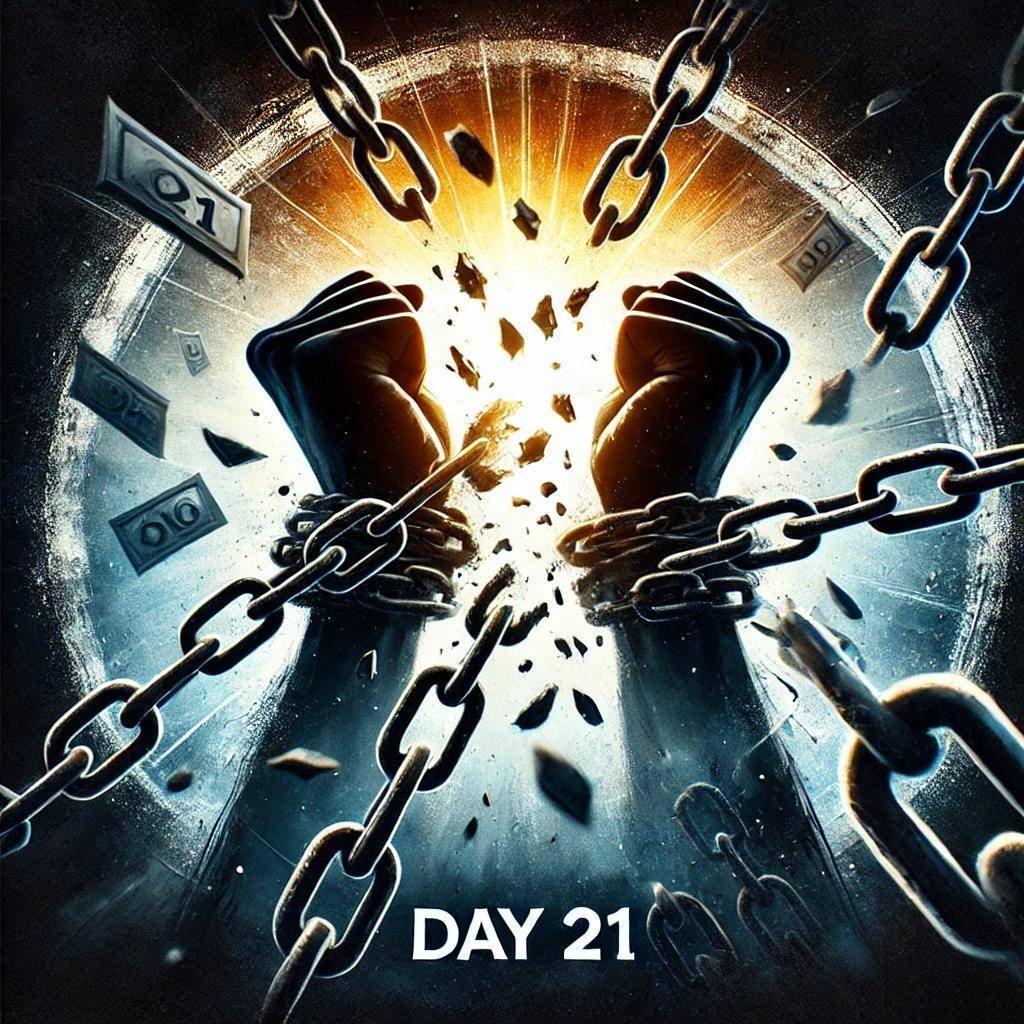
  • Day 21: Breaking the Chains of Debt

    Day 21: Breaking the Chains of Debt

    Welcome to Day 21 of our 30-day journey. Today, we will focus on breaking the chains of debt. Debt can be a heavy burden that affects every area of our lives—financially, emotionally, and even spiritually. It can create stress, limit our freedom, and hinder our ability to live generously. However, the Bible offers wisdom and guidance on how to manage and overcome debt, reminding us that God desires for us to live in financial freedom. Breaking free from debt requires a combination of practical steps and a strong reliance on God’s guidance and provision.

    Revelation:
    God desires for you to live in financial freedom. Debt can be a form of bondage that restricts your ability to fully serve God and others. The Bible teaches that “the borrower is slave to the lender” (Proverbs 22:7), highlighting the burden that debt can impose. However, God provides wisdom and strength to help you break free from this bondage. By following biblical principles and seeking God’s guidance, you can take steps toward financial freedom and experience the peace that comes with being debt-free.

    Scripture Reference:
    Proverbs 22:7 – “The rich rule over the poor, and the borrower is slave to the lender.”

    This verse serves as a reminder of the power that debt can have over our lives. When we are in debt, we are not fully free to make decisions that align with God’s will because our financial obligations can dictate our choices. However, God’s desire is for us to be free from this burden so that we can fully live out our purpose and serve Him without hindrance.

    Direction:
    Today, take a close look at your financial situation and any debts you may have. Acknowledge the impact that debt has had on your life, and commit to taking steps toward financial freedom. Begin by bringing your situation before God in prayer, asking for His wisdom and guidance as you create a plan to reduce and eliminate your debt. Trust that God will provide the resources, opportunities, and discipline you need to achieve this goal.

    Meditation:
    Reflect on the story of the widow’s oil in 2 Kings 4:1-7. In this story, a widow came to the prophet Elisha, desperate for help because her deceased husband had left debts, and the creditors were coming to take her sons as slaves. Elisha instructed her to gather empty jars and fill them with the little oil she had left. Miraculously, the oil kept flowing until all the jars were filled. She was then able to sell the oil, pay off her debts, and live on the rest.

    This story teaches us about God’s miraculous provision and the importance of following His guidance in times of financial distress. The widow’s obedience and faith in God’s provision allowed her to break free from the chains of debt. As you meditate on this story, ask yourself: How can I demonstrate faith and obedience in my own financial situation? What practical steps can I take to manage and eliminate my debt, trusting that God will provide for my needs along the way?

    Prayer:
    “Lord, I thank You for Your desire to see me live in financial freedom. I confess that I have allowed debt to become a burden in my life, and I ask for Your forgiveness and guidance as I work to overcome it. Give me the wisdom, discipline, and faith to take the necessary steps to reduce and eliminate my debt. Help me to trust in Your provision and to rely on Your strength as I move forward. May I experience the freedom that comes from being debt-free, and may I use that freedom to serve You and others more fully. In Jesus’ name, Amen.”

    Deeper Reflection:
    After your prayer, take some time to reflect on the specific actions you need to take to break free from debt. Write down a plan that includes practical steps such as creating a budget, cutting unnecessary expenses, increasing your income, or seeking financial counseling. Consider also how you can develop a long-term strategy to avoid falling back into debt in the future. Reflect on the ways in which becoming debt-free will allow you to live more fully for God and to be a blessing to others.

    Action Step:
    As a practical step, create a debt repayment plan that outlines how you will tackle your debts one by one. This plan might involve focusing on paying off the smallest debt first (the “debt snowball” method) or targeting the debt with the highest interest rate (the “debt avalanche” method). Whichever method you choose, commit to following your plan with discipline and persistence. Additionally, consider finding an accountability partner or joining a financial support group to help you stay on track and encouraged as you work toward financial freedom.

    Closing Thought:
    Breaking free from debt is a journey that requires both practical action and spiritual reliance on God. As you take steps to eliminate your debt, remember that God is with you every step of the way, providing the wisdom, strength, and resources you need. Trust in His provision, stay disciplined in your efforts, and look forward to the freedom and peace that come with being debt-free. With God’s help, you can overcome the burden of debt and experience the abundant life He desires for you.

  • Day 18: The Role of Contentment in Financial Freedom

    Day 18: The Role of Contentment in Financial Freedom

    Welcome to Day 18 of our 30-day journey. Today, we will explore the crucial role that contentment plays in achieving financial freedom. In a world that constantly pushes us to want more, buy more, and spend more, contentment can often feel elusive. However, the Bible teaches that true financial freedom is not found in accumulating wealth, but in learning to be content with what we have. Contentment frees us from the endless pursuit of material possessions and allows us to live with peace, gratitude, and joy.

    Revelation:
    Contentment is key to achieving financial freedom. When you are content with what you have, you are less likely to overspend, go into debt, or make financial decisions driven by fear or envy. The Bible teaches that godliness with contentment is great gain. True contentment comes from trusting in God’s provision and being satisfied with the blessings He has already given you. It allows you to live within your means, avoid the traps of materialism, and focus on what truly matters.

    Scripture Reference:
    1 Timothy 6:6 – “But godliness with contentment is great gain.”

    This verse reminds us that contentment, when coupled with godliness, is a source of true wealth. It challenges the notion that financial gain alone is the path to happiness, and instead points us to the spiritual and emotional benefits of living a content and godly life. When we are content, we are free from the anxiety and stress that often accompany the pursuit of wealth and possessions.

    Direction:
    Today, take time to evaluate your current level of contentment. Are there areas in your life where you are constantly striving for more, even at the expense of your peace and well-being? Consider how you can cultivate contentment by focusing on the blessings you already have rather than what you lack. Ask God to help you develop a heart of gratitude and to find joy in the simple things. Remember, contentment is not about settling for less, but about recognizing and appreciating the sufficiency of God’s provision.

    Meditation:
    Reflect on the Apostle Paul’s words in Philippians 4:11-13, where he writes, “I am not saying this because I am in need, for I have learned to be content whatever the circumstances. I know what it is to be in need, and I know what it is to have plenty. I have learned the secret of being content in any and every situation, whether well fed or hungry, whether living in plenty or in want. I can do all this through him who gives me strength.”

    Paul’s contentment was not dependent on his circumstances but on his relationship with Christ. He had experienced both abundance and need, yet he learned to be content in every situation because of his trust in God’s provision and strength. As you meditate on this passage, ask yourself: What is the source of my contentment? Is it rooted in my circumstances, or in my relationship with God? How can I learn to be content, regardless of my financial situation, by trusting in God’s strength and provision?

    Prayer:
    “Lord, I thank You for the many blessings You have given me. I confess that there are times when I struggle with discontentment and the desire for more. Help me to find true contentment in You, knowing that You are my provider and that Your grace is sufficient for me. Teach me to appreciate the blessings I already have and to live within my means. May my heart be filled with gratitude, and may I experience the peace and joy that come from living a content and godly life. In Jesus’ name, Amen.”

    Deeper Reflection:
    After your prayer, take some time to reflect on the areas of your life where you may be experiencing discontentment. Is it in your finances, your possessions, your relationships, or your circumstances? Write down your thoughts and any steps you can take to cultivate contentment in those areas. Consider also how you can simplify your life, reduce unnecessary expenses, and focus on the things that truly matter. Contentment often comes from shifting our focus from what we don’t have to what we already possess in Christ.

    Action Step:
    As a practical step, consider starting a gratitude journal where you can record the blessings in your life each day. This simple practice can help you develop a habit of focusing on the positive aspects of your life and cultivate a heart of contentment. Additionally, if you find that you are overspending or accumulating unnecessary debt, create a budget that reflects your current needs and commit to living within your means. By doing so, you will experience greater financial freedom and peace.

    Closing Thought:
    Contentment is a powerful tool in achieving financial freedom. When you learn to be content with what you have, you free yourself from the pressures of materialism and the stress of financial overreach. As you continue on this journey, remember that true contentment is found in Christ, not in the accumulation of wealth or possessions. Trust in God’s provision, cultivate gratitude, and live with the peace that comes from knowing that God’s grace is sufficient for you.

  • Day 3: Reflecting on God’s Faithfulness

    Day 3: Reflecting on God’s Faithfulness

    Scripture: Lamentations 3:22-23 (NIV)
    “Because of the Lord’s great love we are not consumed, for his compassions never fail. They are new every morning; great is your faithfulness.

    Revelation:
    Welcome to Day 3 of our 30-day journey. it’s fitting to reflect on the constant and unchanging faithfulness of God. Lamentations 3:22-23 reminds us that it is because of the Lord’s great love that we are sustained. His compassion and mercy are renewed every morning, offering us fresh grace each day. This verse is a powerful reminder that no matter what we face, God’s faithfulness remains steadfast.

    Direction:
    Take a moment today to look back over the past 30 days. Reflect on how God has been faithful to you throughout this journey. Consider the prayers He has answered, the peace He has provided, and the ways He has strengthened your faith. Write down specific instances where you’ve seen His hand at work in your life. Let this reflection deepen your gratitude and trust in God’s continual presence and love. As you move forward, carry this awareness of His faithfulness into every area of your life, knowing that His mercies are new every morning.

    Prayer:
    Heavenly Father, I thank You for Your unfailing love and faithfulness. As I reflect on these past 30 days, I am overwhelmed by Your goodness and the ways You have worked in my life. Your mercies truly are new every morning, and I am grateful for the fresh grace You provide each day. Help me to carry this awareness of Your faithfulness with me, trusting that You will continue to guide, protect, and provide for me. I commit to walking in faith, knowing that Your compassion never fails. Great is Your faithfulness, Lord. In Jesus’ name, I pray. Amen.