Tag: #GodsGuidance

  • Day 24: Trusting God with Long-Term Investments

    Day 24: Trusting God with Long-Term Investments

    Welcome to Day 24 of our 30-day journey. Today, we will focus on trusting God with long-term investments. Making long-term investments, whether in finances, relationships, or personal growth, requires a significant amount of faith and patience. Often, the results are not immediate, and it can be challenging to wait for the fruit of our efforts to manifest. However, the Bible encourages us to trust God with our investments, believing that He will bring about a harvest in due time. Trusting God with your long-term investments means committing them to Him and believing that He will guide and bless your efforts.

    Revelation:
    Long-term investments require trust in God’s timing and provision. Whether you are investing in your financial future, your relationships, or your spiritual growth, it’s essential to remember that God is in control. The Bible teaches that those who sow in faith will reap a harvest if they do not give up (Galatians 6:9). This principle applies to every area of life. By committing your long-term investments to God, you acknowledge His sovereignty and invite His blessing over your efforts. Trusting God with these investments means believing that He will work all things together for your good, even when the results are not immediately visible.

    Scripture Reference:
    Proverbs 16:3 – “Commit to the Lord whatever you do, and he will establish your plans.”

    This verse reminds us that when we commit our plans and investments to God, He is faithful to establish them. Trusting God with our long-term investments means placing them in His hands and believing that He will guide us to success. It’s about aligning our efforts with His will and relying on His wisdom and timing rather than our own understanding.

    Direction:
    Today, reflect on the long-term investments you are making in your life. Are you trusting God with these investments, or are you relying solely on your own strength and wisdom? Consider how you can commit your investments—whether financial, relational, or spiritual—to God, seeking His guidance and trusting in His timing. Remember that God is the ultimate provider, and He is able to bring about a harvest in due time if you remain faithful and patient.

    Meditation:
    Reflect on the Parable of the Mustard Seed in Matthew 13:31-32. Jesus described the mustard seed as the smallest of all seeds, yet when it grows, it becomes the largest of garden plants, providing shelter and shade for the birds. This parable illustrates the power of small beginnings and the importance of faith in long-term growth. Just as the mustard seed takes time to grow into a large plant, so too do our long-term investments require patience and trust in God’s process.

    The mustard seed represents the potential that lies within every investment we make. As you meditate on this parable, ask yourself: What seeds am I planting today that I trust God to grow in the future? How can I nurture these seeds with faith, patience, and prayer? Consider how God might be calling you to trust Him more deeply with the investments you are making, knowing that He is able to bring about a harvest far greater than you can imagine.

    Prayer:
    “Lord, I thank You for the opportunity to invest in the future, whether it’s through my finances, relationships, or personal growth. I recognize that true success comes from trusting You and committing my efforts to Your will. Help me to trust You with my long-term investments, knowing that You are faithful to establish my plans and bring about a harvest in due time. Give me the patience to wait on Your timing and the wisdom to make decisions that align with Your purposes. May my investments bear fruit for Your glory, and may I always trust in Your provision. In Jesus’ name, Amen.”

    Deeper Reflection:
    After your prayer, take some time to think about the specific long-term investments you are making. Are there areas where you need to trust God more or where you’ve been relying too much on your own strength? Write down any insights or commitments you want to make regarding your investments. Consider also how you can actively nurture these investments, whether through prayer, seeking godly counsel, or taking practical steps to ensure their growth. Reflect on how trusting God with your investments can lead to a greater sense of peace and confidence in His provision.

    Action Step:
    As a practical step, identify one long-term investment in your life—be it financial, relational, or spiritual—and commit it to God in prayer. Create a plan for how you will nurture this investment, and set specific goals for its growth. For financial investments, this might involve reviewing your portfolio and making decisions that align with your values and long-term goals. For relational or spiritual investments, consider how you can invest time and effort into fostering growth and deepening your commitment. Remember to regularly revisit and adjust your plans as God leads.

    Closing Thought:
    Trusting God with your long-term investments is an act of faith that acknowledges His sovereignty and goodness. By committing your efforts to Him, you invite His blessing and guidance, knowing that He will bring about a harvest in due time. As you continue on this journey, remember that God is faithful to establish your plans when they align with His will. Trust in His timing, nurture your investments with patience and prayer, and look forward to the abundant fruit that He will bring forth in your life.

  • Day 23: Wisdom in Financial Planning

    Day 23: Wisdom in Financial Planning

    Welcome to Day 23 of our 30-day journey. Today, we will focus on the importance of wisdom in financial planning. Planning your finances with wisdom is essential to living a life of stewardship and responsibility. The Bible speaks often about the value of planning, preparation, and seeking wisdom, especially when it comes to managing resources. By inviting God into your financial planning, you can make decisions that honor Him and set you on a path to financial stability and generosity.

    Revelation:
    Wisdom is a vital component of successful financial planning. The Bible encourages us to seek wisdom in all that we do, and this includes how we manage our finances. Proverbs 21:5 says, “The plans of the diligent lead to profit as surely as haste leads to poverty.” This verse highlights the importance of careful planning and diligence in achieving financial success. When you plan your finances with wisdom, you are better equipped to handle challenges, avoid unnecessary debt, and make decisions that align with God’s will for your life.

    Scripture Reference:
    Proverbs 24:3-4 – “By wisdom a house is built, and through understanding it is established; through knowledge its rooms are filled with rare and beautiful treasures.”

    These verses remind us that wisdom, understanding, and knowledge are the foundations of a stable and prosperous life. Just as a house is built and filled with treasures through careful planning and wise decisions, so too can our financial lives be established and enriched through the application of wisdom. Seeking God’s guidance in your financial planning ensures that your resources are used in ways that honor Him and build a strong foundation for the future.

    Direction:
    Today, take a close look at your current financial plans and goals. Are they rooted in wisdom and aligned with biblical principles? Consider how you can invite God into your financial planning process, seeking His guidance in setting goals, creating a budget, and making decisions about saving, investing, and giving. Ask God to give you the wisdom and discernment to make financial plans that reflect His priorities and lead to long-term stability and generosity.

    Meditation:
    Reflect on the story of Joseph in Genesis 41. Joseph was given wisdom by God to interpret Pharaoh’s dreams, which foretold seven years of abundance followed by seven years of famine. Joseph advised Pharaoh to store up a portion of the harvest during the years of abundance so that there would be enough food during the years of famine. Pharaoh followed Joseph’s advice, and as a result, Egypt was able to survive the famine and even provide for other nations.

    Joseph’s story is a powerful example of the importance of wise financial planning. By preparing for the future and managing resources wisely, Joseph was able to provide for an entire nation during a time of crisis. As you meditate on this story, ask yourself: How can I apply the principles of wisdom and foresight to my own financial planning? Are there areas where I need to be more diligent in preparing for the future or more intentional about managing my resources? Consider how you can incorporate God’s wisdom into your financial decisions, ensuring that your plans are both practical and aligned with His will.

    Prayer:
    “Lord, I thank You for the wisdom that comes from Your Word and the guidance You provide in every area of my life, including my finances. I ask for Your wisdom as I plan my financial future. Help me to set goals that honor You, to create a budget that reflects Your priorities, and to make decisions that lead to long-term stability and generosity. Teach me to be diligent in my planning and to trust in Your provision, knowing that You are the source of all wisdom and understanding. May my financial plans be a reflection of my trust in You and my desire to live a life that glorifies Your name. In Jesus’ name, Amen.”

    Deeper Reflection:
    After your prayer, take some time to review your financial plans and goals. Are there adjustments you need to make to align them more closely with biblical principles? Write down any changes you want to implement and consider setting up regular times to review your financial plans with God in prayer. Reflect also on how you can use the wisdom God gives you to bless others, whether through wise investments, charitable giving, or sharing your financial knowledge with those in need.

    Action Step:
    As a practical step, create or review your current budget to ensure it aligns with your financial goals and God’s priorities. If you haven’t already, consider setting up specific savings goals, such as an emergency fund, retirement savings, or a fund for giving. Additionally, seek wise counsel from trusted financial advisors or mentors who can help you make informed decisions. Remember, financial planning is not just about managing money; it’s about stewarding the resources God has entrusted to you in a way that honors Him and prepares you for the future.

    Closing Thought:
    Wisdom in financial planning is a crucial aspect of living a life that honors God. By seeking His guidance and applying biblical principles to your financial decisions, you can build a strong foundation for the future and experience the peace that comes from knowing your resources are being used wisely. As you continue on this journey, trust that God will provide the wisdom you need to navigate the complexities of financial planning and to make decisions that reflect His will and bring glory to His name.

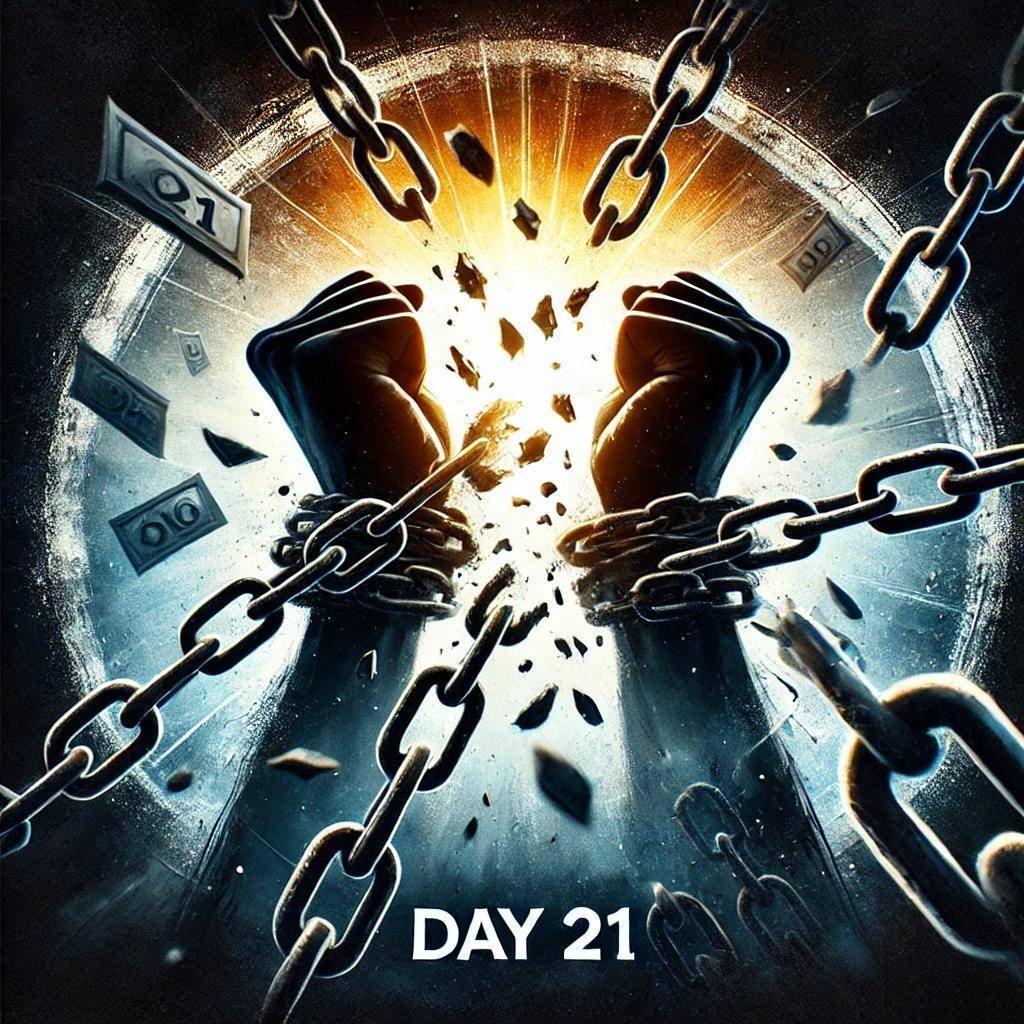
  • Day 21: Breaking the Chains of Debt

    Day 21: Breaking the Chains of Debt

    Welcome to Day 21 of our 30-day journey. Today, we will focus on breaking the chains of debt. Debt can be a heavy burden that affects every area of our lives—financially, emotionally, and even spiritually. It can create stress, limit our freedom, and hinder our ability to live generously. However, the Bible offers wisdom and guidance on how to manage and overcome debt, reminding us that God desires for us to live in financial freedom. Breaking free from debt requires a combination of practical steps and a strong reliance on God’s guidance and provision.

    Revelation:
    God desires for you to live in financial freedom. Debt can be a form of bondage that restricts your ability to fully serve God and others. The Bible teaches that “the borrower is slave to the lender” (Proverbs 22:7), highlighting the burden that debt can impose. However, God provides wisdom and strength to help you break free from this bondage. By following biblical principles and seeking God’s guidance, you can take steps toward financial freedom and experience the peace that comes with being debt-free.

    Scripture Reference:
    Proverbs 22:7 – “The rich rule over the poor, and the borrower is slave to the lender.”

    This verse serves as a reminder of the power that debt can have over our lives. When we are in debt, we are not fully free to make decisions that align with God’s will because our financial obligations can dictate our choices. However, God’s desire is for us to be free from this burden so that we can fully live out our purpose and serve Him without hindrance.

    Direction:
    Today, take a close look at your financial situation and any debts you may have. Acknowledge the impact that debt has had on your life, and commit to taking steps toward financial freedom. Begin by bringing your situation before God in prayer, asking for His wisdom and guidance as you create a plan to reduce and eliminate your debt. Trust that God will provide the resources, opportunities, and discipline you need to achieve this goal.

    Meditation:
    Reflect on the story of the widow’s oil in 2 Kings 4:1-7. In this story, a widow came to the prophet Elisha, desperate for help because her deceased husband had left debts, and the creditors were coming to take her sons as slaves. Elisha instructed her to gather empty jars and fill them with the little oil she had left. Miraculously, the oil kept flowing until all the jars were filled. She was then able to sell the oil, pay off her debts, and live on the rest.

    This story teaches us about God’s miraculous provision and the importance of following His guidance in times of financial distress. The widow’s obedience and faith in God’s provision allowed her to break free from the chains of debt. As you meditate on this story, ask yourself: How can I demonstrate faith and obedience in my own financial situation? What practical steps can I take to manage and eliminate my debt, trusting that God will provide for my needs along the way?

    Prayer:
    “Lord, I thank You for Your desire to see me live in financial freedom. I confess that I have allowed debt to become a burden in my life, and I ask for Your forgiveness and guidance as I work to overcome it. Give me the wisdom, discipline, and faith to take the necessary steps to reduce and eliminate my debt. Help me to trust in Your provision and to rely on Your strength as I move forward. May I experience the freedom that comes from being debt-free, and may I use that freedom to serve You and others more fully. In Jesus’ name, Amen.”

    Deeper Reflection:
    After your prayer, take some time to reflect on the specific actions you need to take to break free from debt. Write down a plan that includes practical steps such as creating a budget, cutting unnecessary expenses, increasing your income, or seeking financial counseling. Consider also how you can develop a long-term strategy to avoid falling back into debt in the future. Reflect on the ways in which becoming debt-free will allow you to live more fully for God and to be a blessing to others.

    Action Step:
    As a practical step, create a debt repayment plan that outlines how you will tackle your debts one by one. This plan might involve focusing on paying off the smallest debt first (the “debt snowball” method) or targeting the debt with the highest interest rate (the “debt avalanche” method). Whichever method you choose, commit to following your plan with discipline and persistence. Additionally, consider finding an accountability partner or joining a financial support group to help you stay on track and encouraged as you work toward financial freedom.

    Closing Thought:
    Breaking free from debt is a journey that requires both practical action and spiritual reliance on God. As you take steps to eliminate your debt, remember that God is with you every step of the way, providing the wisdom, strength, and resources you need. Trust in His provision, stay disciplined in your efforts, and look forward to the freedom and peace that come with being debt-free. With God’s help, you can overcome the burden of debt and experience the abundant life He desires for you.

  • Day 12: Wisdom in Financial Decisions

    Day 12: Wisdom in Financial Decisions

    Welcome to Day 12 of our 30-day journey. Today, we will focus on the importance of seeking God’s wisdom in financial decisions. Financial decisions, whether large or small, can have a significant impact on our lives and the lives of those around us. God offers us His wisdom, which is far greater than any human knowledge, to guide us in making sound financial choices that align with His will.

    Revelation:
    God grants wisdom to those who seek it. When making financial decisions, it is essential to seek God’s wisdom to ensure that your choices align with His will. The Bible teaches that wisdom is more valuable than gold, and it is through wisdom that we can navigate the complexities of life, including our finances. By seeking God’s wisdom, you can avoid pitfalls, make sound investments, and manage your resources in a way that honors Him.

    Scripture Reference:
    James 1:5 – “If any of you lacks wisdom, you should ask God, who gives generously to all without finding fault, and it will be given to you.”

    This verse encourages us to turn to God when we need wisdom. God is generous and willing to provide the wisdom we need, especially when we are faced with difficult or complex decisions. All we need to do is ask with faith, trusting that He will guide us.

    Direction:
    Today, think about any financial decisions you are currently facing or will face in the near future. These could be decisions related to budgeting, investing, spending, or giving. Bring these decisions before God in prayer, asking Him for the wisdom to make choices that are in line with His will. Be open to the guidance of the Holy Spirit, and be willing to wait for His direction rather than making hasty decisions based on fear or pressure.

    Meditation:
    Reflect on the story of King Solomon in 1 Kings 3:5-14. When Solomon became king, God appeared to him in a dream and offered to give him whatever he asked for. Instead of asking for wealth, long life, or victory over his enemies, Solomon asked for wisdom to govern God’s people. God was pleased with Solomon’s request and granted him unparalleled wisdom, as well as wealth and honor.

    Solomon’s story teaches us the importance of prioritizing wisdom over material gain. When we seek God’s wisdom first, He often blesses us in ways that exceed our expectations. As you meditate on this story, ask yourself: What are the areas in your financial life where you need God’s wisdom? Are you willing to prioritize wisdom over short-term gains or immediate gratification? Consider how you can make wisdom your primary focus in your financial decisions.

    Prayer:
    “Lord, I thank You for the promise that You generously give wisdom to those who ask. I confess that I often rely on my own understanding instead of seeking Your guidance. Today, I bring my financial decisions before You and ask for Your wisdom. Help me to make choices that are in line with Your will and that honor You. Teach me to be patient and to wait on Your direction, trusting that You know what is best for me. May Your wisdom guide every aspect of my financial life. In Jesus’ name, Amen.”

    Deeper Reflection:
    After your prayer, take a few moments to reflect on past financial decisions that you made without seeking God’s wisdom. What were the outcomes? How might those decisions have been different if you had sought God’s guidance? Write down any insights or lessons you’ve learned, and commit to seeking God’s wisdom in all future financial decisions. Consider also how you can cultivate a habit of praying for wisdom regularly, not just in times of crisis, but as a daily practice.

    Action Step:
    As a practical step, make a commitment to seek God’s wisdom before making any financial decisions this week. This could involve praying before making a purchase, consulting God’s Word before setting a budget, or seeking the advice of a godly mentor or financial advisor. Additionally, consider setting aside time each day to pray specifically for wisdom in your finances, asking God to guide your steps and give you discernment in all areas of your financial life.

    Closing Thought:
    Wisdom is one of the greatest gifts God offers to His children, and it is essential for making sound financial decisions. By seeking God’s wisdom, you can navigate the complexities of financial life with confidence and peace, knowing that your decisions are guided by His perfect knowledge. As you continue on this journey, trust that God will provide the wisdom you need to manage your resources in a way that honors Him and blesses others.

  • Day 11: Faith in Times of Financial Uncertainty

    Day 11: Faith in Times of Financial Uncertainty

    Welcome to Day 11 of our 30-day journey. Today, we will focus on maintaining faith during times of financial uncertainty. Financial challenges can be overwhelming, and it’s natural to feel anxious or fearful when the future seems unclear. However, as followers of Christ, we are called to trust in God’s provision and sovereignty, even when our circumstances are uncertain. Faith in God’s promises gives us the strength to navigate financial difficulties with peace and confidence.

    Revelation:
    In times of financial uncertainty, God calls you to trust in Him rather than relying on your own understanding. While it’s natural to be concerned about your financial situation, God invites you to place your trust in His ability to provide. The Bible teaches that God is our source of security, and He promises to meet our needs according to His riches in glory. Faith in God’s provision allows us to face financial uncertainty with peace and hope.

    Scripture Reference:
    Proverbs 3:5-6 – “Trust in the Lord with all your heart and lean not on your own understanding; in all your ways submit to him, and he will make your paths straight.”

    This verse reminds us that true wisdom comes from trusting in God rather than relying on our own understanding. When we submit our financial concerns to God and trust Him with all our heart, He promises to guide us and direct our steps.

    Direction:
    Today, reflect on any financial uncertainties or challenges you are facing. Are you struggling with anxiety or fear about the future? Take time to surrender these concerns to God, acknowledging that He is in control and that His plans for you are good. Ask God to increase your faith and to help you trust Him more deeply, even when the path ahead is unclear. Remember that faith is not the absence of fear, but the choice to trust God despite your fears.

    Meditation:
    Reflect on the story of Jesus calming the storm in Mark 4:35-41. In this passage, Jesus and His disciples were crossing the Sea of Galilee when a furious storm arose, threatening to capsize the boat. Despite the storm, Jesus was asleep, completely at peace. The disciples, terrified, woke Him and asked, “Teacher, don’t you care if we drown?” Jesus got up, rebuked the wind, and said to the waves, “Quiet! Be still!” The wind died down, and it was completely calm. He then asked His disciples, “Why are you so afraid? Do you still have no faith?”

    This story illustrates the power of faith in the midst of fear and uncertainty. The disciples were focused on the storm, but Jesus was focused on His Father’s will. He knew that God was in control, and He demonstrated that faith by calming the storm. As you meditate on this story, ask yourself: What “storms” are you facing in your financial life? How can you trust God to calm those storms and bring peace to your situation? Remember, Jesus is with you in the boat, and He has the power to bring calm to your financial challenges.

    Prayer:
    “Lord, I thank You for being my source of peace and security, even in times of financial uncertainty. I confess that I have been anxious and fearful about my financial situation, and I ask for Your forgiveness. Help me to trust in You with all my heart and to lean not on my own understanding. Increase my faith, and give me the courage to face the challenges ahead with confidence in Your provision. I surrender my financial concerns to You, knowing that You are in control and that Your plans for me are good. Thank You for calming the storms in my life and for guiding me on the path of peace. In Jesus’ name, Amen.”

    Deeper Reflection:
    After your prayer, take some time to reflect on the specific financial challenges you are facing. Write down any fears or anxieties that have been weighing on your heart, and then write a corresponding prayer of surrender for each one. This exercise can help you release your worries to God and remind you of His faithfulness. Consider also how you can cultivate a habit of trusting God in your daily life, whether through prayer, meditation on His Word, or seeking godly counsel.

    Action Step:
    As a practical step, consider creating a “Faith in Finances” journal where you can document your financial concerns, prayers, and how God answers them over time. This journal can serve as a reminder of God’s faithfulness and as a tool to help you grow in trust. Additionally, if you are facing a significant financial decision, take time to pray specifically for God’s guidance, and be willing to wait on His timing rather than rushing into a decision out of fear or anxiety.

    Closing Thought:
    Faith in times of financial uncertainty is a powerful testimony of your trust in God. When you choose to trust God rather than giving in to fear, you demonstrate that your security is not in your financial situation but in God’s unchanging character. As you continue on this journey, remember that God is your provider and protector, and He will never leave you nor forsake you. Trust Him to guide you through the uncertainties and to bring you to a place of peace and provision.