
Tag: #TrustAndObey

  • Day 27: Sowing Seeds of Faith

    Day 27: Sowing Seeds of Faith

    Welcome to Day 27 of our 30-day journey. Today, we will focus on the concept of sowing seeds of faith. The Bible often uses agricultural metaphors to describe spiritual principles, and one of the most powerful is the principle of sowing and reaping. Just as a farmer plants seeds with the expectation of a harvest, we too are called to sow seeds of faith in our lives, trusting that God will bring about a harvest in His perfect timing. Sowing seeds of faith involves not only our actions and decisions but also our prayers, words, and attitudes. By planting seeds of faith, we are investing in a future harvest of God’s blessings and provision.

    Revelation:
    Sowing seeds of faith is an act of trust in God’s promises. The Bible teaches that what we sow, we will also reap (Galatians 6:7). This principle applies not only to our finances but to every area of our lives. When we sow seeds of faith—whether through our actions, words, or prayers—we are aligning ourselves with God’s will and trusting Him to bring about a harvest. Sowing requires patience and perseverance, as the results are often not immediate, but God is faithful to honor the seeds we plant in faith.

    Scripture Reference:
    2 Corinthians 9:6 – “Remember this: Whoever sows sparingly will also reap sparingly, and whoever sows generously will also reap generously.”

    This verse emphasizes the importance of the attitude with which we sow. Generosity in our sowing leads to a generous harvest. Whether it’s in giving, serving, or praying, the principle remains the same: the more we invest in God’s kingdom with faith and generosity, the more we will see His blessings in our lives and the lives of others. Sowing seeds of faith is about giving our best to God, trusting that He will multiply our efforts and bring forth a bountiful harvest.

    Direction:
    Today, reflect on the seeds you are sowing in your life. Are you sowing seeds of faith, generosity, and kindness, or are there areas where you are holding back? Consider how you can be more intentional about sowing seeds that align with God’s will and purpose for your life. This might involve stepping out in faith in a specific area, speaking words of encouragement, or investing your time and resources in something that advances God’s kingdom. Trust that God will honor your faith and bring about a harvest in due time.

    Meditation:
    Reflect on the Parable of the Sower in Matthew 13:3-9, 18-23. In this parable, Jesus describes a sower who scatters seeds on different types of soil: the path, rocky ground, among thorns, and on good soil. The seeds that fell on good soil produced a crop, multiplying thirty, sixty, or even a hundred times what was sown. Jesus explains that the good soil represents those who hear the word, understand it, and produce a harvest.

    This parable teaches us about the importance of the condition of our hearts when sowing seeds of faith. Just as good soil is necessary for a fruitful harvest, so too is a receptive and obedient heart necessary for spiritual growth and blessing. As you meditate on this parable, ask yourself: What kind of soil is my heart? Am I receptive to God’s word and obedient in sowing seeds of faith? Consider how you can cultivate a heart that is ready to receive and nurture the seeds God has given you to plant.

    Prayer:
    “Lord, I thank You for the seeds of faith that You have entrusted to me. I recognize that every act of faith, every word of encouragement, and every prayer is a seed that You can use to bring about a harvest. Help me to sow generously, trusting that You will multiply my efforts and bring forth fruit in due time. Teach me to be patient and faithful, even when I don’t see immediate results. May my heart be like good soil, ready to receive Your word and produce a harvest that glorifies You. In Jesus’ name, Amen.”

    Deeper Reflection:
    After your prayer, take some time to think about the specific seeds of faith you are called to sow in this season of your life. Are there areas where you need to step out in faith or invest more intentionally? Write down your thoughts and make a plan to sow these seeds with purpose and prayer. Reflect also on the ways in which God has brought about a harvest from seeds you’ve sown in the past, and let these testimonies encourage you to continue sowing in faith.

    Action Step:
    As a practical step, choose one specific seed of faith to sow today. This could be a financial gift, an act of service, a word of encouragement, or a step of faith in a particular area of your life. Whatever it is, do it with the intention of planting a seed that will produce a harvest for God’s kingdom. Additionally, consider starting a “faith journal” where you can record the seeds you’ve sown and the ways in which God brings about a harvest in your life. This practice can help you stay focused on God’s faithfulness and encourage you to keep sowing, even when the results are not immediately visible.

    Closing Thought:
    Sowing seeds of faith is a powerful way to participate in God’s work and to invest in His kingdom. While the results may not always be immediate, God is faithful to bring about a harvest in His perfect timing. As you continue on this journey, remember that every act of faith, no matter how small, has the potential to produce great fruit. Keep sowing generously, trust in God’s provision, and look forward to the abundant harvest that He will bring forth in your life.
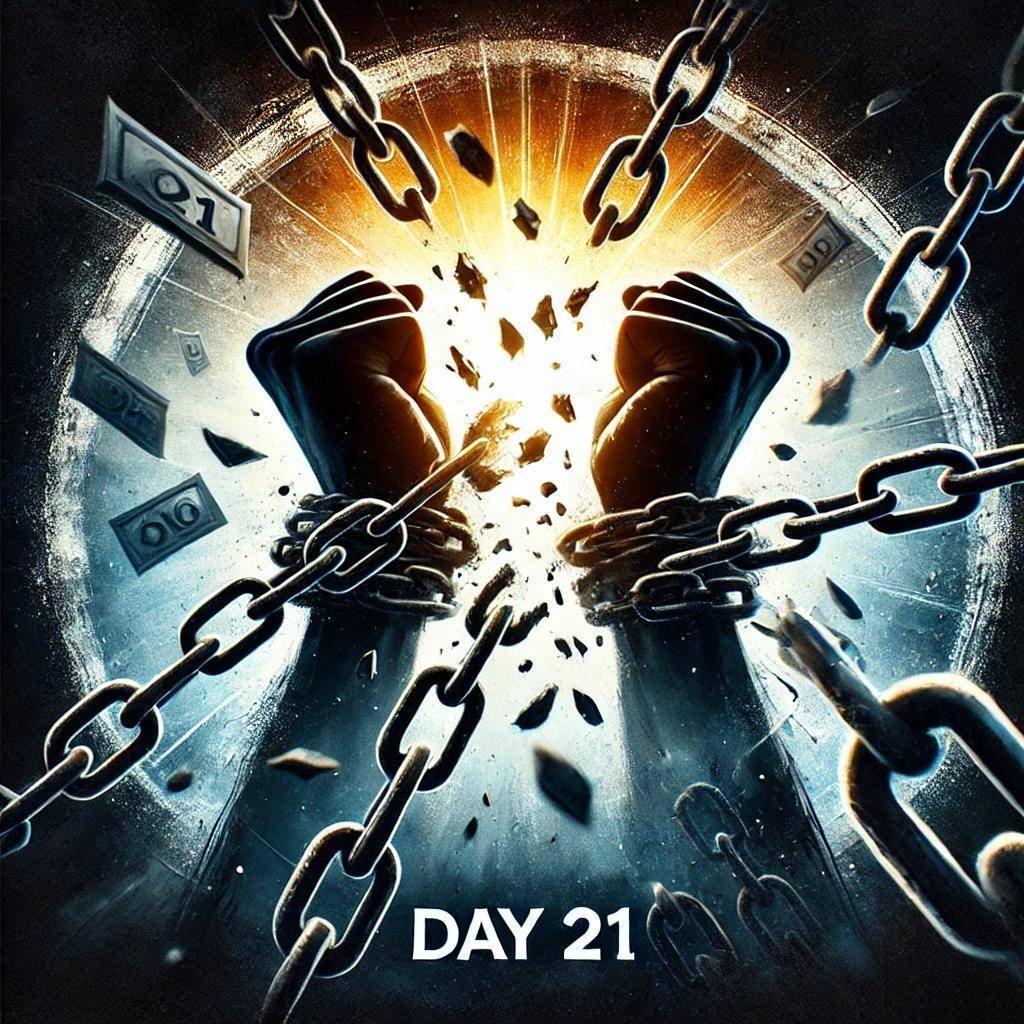
  • Day 21: Breaking the Chains of Debt

    Day 21: Breaking the Chains of Debt

    Welcome to Day 21 of our 30-day journey. Today, we will focus on breaking the chains of debt. Debt can be a heavy burden that affects every area of our lives—financially, emotionally, and even spiritually. It can create stress, limit our freedom, and hinder our ability to live generously. However, the Bible offers wisdom and guidance on how to manage and overcome debt, reminding us that God desires for us to live in financial freedom. Breaking free from debt requires a combination of practical steps and a strong reliance on God’s guidance and provision.

    Revelation:
    God desires for you to live in financial freedom. Debt can be a form of bondage that restricts your ability to fully serve God and others. The Bible teaches that “the borrower is slave to the lender” (Proverbs 22:7), highlighting the burden that debt can impose. However, God provides wisdom and strength to help you break free from this bondage. By following biblical principles and seeking God’s guidance, you can take steps toward financial freedom and experience the peace that comes with being debt-free.

    Scripture Reference:
    Proverbs 22:7 – “The rich rule over the poor, and the borrower is slave to the lender.”

    This verse serves as a reminder of the power that debt can have over our lives. When we are in debt, we are not fully free to make decisions that align with God’s will because our financial obligations can dictate our choices. However, God’s desire is for us to be free from this burden so that we can fully live out our purpose and serve Him without hindrance.

    Direction:
    Today, take a close look at your financial situation and any debts you may have. Acknowledge the impact that debt has had on your life, and commit to taking steps toward financial freedom. Begin by bringing your situation before God in prayer, asking for His wisdom and guidance as you create a plan to reduce and eliminate your debt. Trust that God will provide the resources, opportunities, and discipline you need to achieve this goal.

    Meditation:
    Reflect on the story of the widow’s oil in 2 Kings 4:1-7. In this story, a widow came to the prophet Elisha, desperate for help because her deceased husband had left debts, and the creditors were coming to take her sons as slaves. Elisha instructed her to gather empty jars and fill them with the little oil she had left. Miraculously, the oil kept flowing until all the jars were filled. She was then able to sell the oil, pay off her debts, and live on the rest.

    This story teaches us about God’s miraculous provision and the importance of following His guidance in times of financial distress. The widow’s obedience and faith in God’s provision allowed her to break free from the chains of debt. As you meditate on this story, ask yourself: How can I demonstrate faith and obedience in my own financial situation? What practical steps can I take to manage and eliminate my debt, trusting that God will provide for my needs along the way?

    Prayer:
    “Lord, I thank You for Your desire to see me live in financial freedom. I confess that I have allowed debt to become a burden in my life, and I ask for Your forgiveness and guidance as I work to overcome it. Give me the wisdom, discipline, and faith to take the necessary steps to reduce and eliminate my debt. Help me to trust in Your provision and to rely on Your strength as I move forward. May I experience the freedom that comes from being debt-free, and may I use that freedom to serve You and others more fully. In Jesus’ name, Amen.”

    Deeper Reflection:
    After your prayer, take some time to reflect on the specific actions you need to take to break free from debt. Write down a plan that includes practical steps such as creating a budget, cutting unnecessary expenses, increasing your income, or seeking financial counseling. Consider also how you can develop a long-term strategy to avoid falling back into debt in the future. Reflect on the ways in which becoming debt-free will allow you to live more fully for God and to be a blessing to others.

    Action Step:
    As a practical step, create a debt repayment plan that outlines how you will tackle your debts one by one. This plan might involve focusing on paying off the smallest debt first (the “debt snowball” method) or targeting the debt with the highest interest rate (the “debt avalanche” method). Whichever method you choose, commit to following your plan with discipline and persistence. Additionally, consider finding an accountability partner or joining a financial support group to help you stay on track and encouraged as you work toward financial freedom.

    Closing Thought:
    Breaking free from debt is a journey that requires both practical action and spiritual reliance on God. As you take steps to eliminate your debt, remember that God is with you every step of the way, providing the wisdom, strength, and resources you need. Trust in His provision, stay disciplined in your efforts, and look forward to the freedom and peace that come with being debt-free. With God’s help, you can overcome the burden of debt and experience the abundant life He desires for you.